(This past illustration describes something that I performed in my career, either for a Bredemarket client, for an employer, or as a volunteer. The entity for which I performed the work, or proposed to perform the work, is not listed for confidentiality reasons.)
A single company offered multiple products in multiple markets. Each product had its own web page, and the company itself had a web page.
The company requested that I analyze the products and recommend any necessary revisions to the marketing of the products.
SOLUTION
I analyzed the products and divided them into two groups based upon customer characteristics.
For one group, I recommended that the products in the group be marketed at the company level, and provided specific recommendations regarding how the products in this group be marketed.
For the second group, I recommended that the products in this group continue to be marketed at the product level. Again, I provided specific marketing recommendations for the products in this group.
RESULTS
The company thanked me for my thorough analysis. Unfortunately, due to external events, the company was unable to act on my recommendations at the time that I provided them.
As many of you already know, the Innocence Project is dedicated to freeing people who have been wrongfully incarcerated. At times, the people are freed after examining or re-examining biometric evidence, such as fingerprint evidence or DNA evidence.
The latter evidence was relevant in the case of Uriah Courtney, who was convicted and sentenced to life in prison for kidnapping and rape based upon eyewitness testimony. At the time of Courtney’s arrest, DNA testing did not return any meaningful results. Eight years later, however, DNA technology had advanced to the point where the perpetrator could be identified—and, as the California Innocence Project noted, the perpetrator wasn’t Uriah Courtney.
I’ve read Innocence Project stories before, and the one that sticks most in my mind was the case of Archie Williams, who was released (based upon fingerprint evidence) after being imprisoned for a quarter century. At the time that Williams’ wrongful conviction was vacated, Vanessa Potkin, director of post-conviction litigation at the Innocence Project, stated, “There is no way to quantify the loss and pain he has endured.”
But that doesn’t mean that people haven’t tried to (somewhat) quantify the loss.
In the Uriah Courtney case, while it’s impossible to quantify the loss to Courtney himself, it is possible to quantify the loss to the state of California. Using data from the California Legislative Analyst’s Office 2018-19 annual costs per California inmate, the California Innocence Project calculated a “cost of wrongful incarceration” of $649,624.
One can quibble with the methodology—after all, the 2018-19 costs presumably overestimate the costs of incarcerating someone who was released from custody on May 9, 2013—but at least it illustrates that a cost of wrongful incarceration CAN be calculated. Add to that the costs of prosecuting the wrong person (including jury duty daily fees), and the costs can be quantified.
I shared something on the Bredemarket LinkedIn page, and I also shared it on the Bredemarket Facebook page, but there are billions of people who don’t subscribe to either, so I thought I’d share it here too to VASTLY increase its reach.
“It” is an Andrea Olson article published this morning entitled “Why Positioning Is More Important Than Ever.” Olson believes that company positioning is mostly a lost art, and that some attempts to establish a unique company marketing position don’t really work in practice. For example, a Company X claim that it is “customer-focused” will only be effective if Company Y says that it is “not customer-focused.” (This doesn’t happen.)
I’m going to advance the hypothesis that it’s easier for very large companies and very small companies to establish unique market positions, but harder for medium sized firms.
Medium sized firms often do not have an established presence in our minds. Let’s say that you’ve just moved to a new city and you’re deciding where you’re going to buy a car. How do you tell one car dealer from another? Does one of them have a better coffee machine in its customer lounge? Is one of them customer-focused?
The very large companies DO conjure images in our minds. On one level, there’s no huge difference between what Walmart sells, what Target sells, and what Kmart sells. But if you read the names “Walmart,” “Target,” and “Kmart,” positive and/or negative images immediately pop into your brain.
Which brings us to the very small companies, and the question that I asked on LinkedIn and Facebook—what is MY company’s unique market position?
This is something that I’m working on enunciating, both in public forums such as this one and in more private ones such as emails to potential clients. There are certain things about the Bredemarket offerings that are clearly NOT unique:
Many writing companies offer a specified number of review cycles to their clients.
Many writing companies offer experience in writing about biometric technology.
Many writing companies offer experience in writing proposals.
But there’s one advantage that very small companies (sole proprietorships) offer—the uniqueness of the sole proprietor. This uniqueness is sometimes difficult to convey, especially in the current pandemic environment. But it’s there.
(This past illustration describes something that I performed in my career, either for a Bredemarket client, for an employer, or as a volunteer. The entity for which I performed the work, or proposed to perform the work, is not listed for confidentiality reasons.)
PROBLEM
Companies need to respond to questions from their potential customers. Often the company crafts a specific response to each potential customer, even when multiple potential customers are asking the exact same questions.
SOLUTION
As many people already know, the solution is to create a database of standard text.
In some cases, companies can create standard text by adapting previous text submitted to potential customers in the past. In other cases, new text must be written. Once developed, the standard text can be stored in a dedicated database designed for this purpose, or it can simply be stored in a Microsoft Word document of officially approved responses.
RESULTS
I have created (or tried to create) a lot of standard text over the years.
For two companies, I was one of the people responsible for gathering standard text from subject matter experts (SMEs), or for writing new standard text myself. This standard text had to be reviewed with SMEs at regular intervals, and any necessary updates had to be incorporated.
For a third company, I was the SME responsible for reviewing and updating the standard text.
For a fourth company, I suggested that the company create standard text, but the company chose not to act on my suggestion.
For a fifth company, I was asked to create a simple database of standard text, addressing multiple markets for a particular product line.
And, of course, I’ve created standard text for my own company, suitable for repurposing in multiple formats.
The Thales website has an article that apparently was originally written in late 2018 or early 2019, but was (as of today) last updated in October 2020. The article is entitled “Digital identity trends – 5 forces that are shaping 2020.”
For purposes of this post (and yes, “for purposes of this post” is a common phrase I use when encountering a listicle), I’m going to focus on the third of the five forces, an accelerating shift towards smart cities.
I first encountered smart cities six years ago, when MorphoTrak’s Vice President of Sales sent a colleague and myself to a smart cities conference. Inasmuch as MorphoTrak was a biometric company, I was obviously paying attention to the presentations that related to biometric identity, but I also paid attention to one of the speakers from my area – Acquanetta Warren, then (and now) mayor of the city of Fontana, California. I wasn’t able to find any accounts of her 2014 presentation, but Warren spoke about smart city needs in 2017.
Fontana (Calif.) Mayor Acquanetta Warren said that Smart City developments can be particularly important in light of natural disasters and emergencies, such as the destruction Hurricane Harvey caused in Texas.
“What happens when that happens?” Warren said. “Does everything stop? Are we able to text or email each other to let each other know ‘we’re trapped, we’re in these positions, come and help us?’ ”
Mayor Warren’s comments illustrate that there is clearly a continuum on the smart city spectrum. When you read some smart city concepts and implementations, you get a view of systems of systems tracking automobiles and parking spaces, calculating anticipated carbon monoxide levels, and doing other “smart” stuff.
Mayor Warren is interested in more basic needs, such as the ability of a Fontana citizen to get help if the San Andreas Fault does its thing.
This is a much simpler model than what Thales envisions in its article. In Fontana, I can report a graffiti violation anonymously. In the Thales model, “digital identity is the key that unlocks the individual’s access to a rich array of services and support.” And no, your Facebook or Google login doesn’t count.
Smarter cities worry privacy advocates, Back in 2018, the ACLU was urging public discussion about proposals in Portland, Maine to outfit street lights with wi-fi hotspots – and other monitoring sensors.
Proponents said there was nothing to worry about.
“We are very interested in deploying a variety of sensors that may be able to help with vehicle counts in intersections, numbers of pedestrians or bikes using a trail or bike path,” said Troy Moon, the city’s sustainability coordinator. “Some of these may look like a camera but only detect shapes.”
Opponents were not reassured.
“I always figured Big Brother was going to be some giant face on a wall, not a tiny camera hidden inside a light bulb,” said Chad Marlow, advocacy and policy counsel for the ACLU. “But what is particularly troubling here is the stealthy way in which the product is being marketed and pitched to the press; to wit, as an energy-efficient light bulb with built-in monitoring technology.”
And those who have followed the topic know that concerns have only accelerated since 2018. Just to cite one example, San Francisco has passed a strict ordinance regulating introduction of any surveillance technology.
This has resulted in a near-bifurcation in the adoption of smart city technologies, as countries such as India adopt a leading role in smart city adoption, while countries with greater privacy concerns such as the United States are slower to adopt the technologies.
I guess you can call these latter countries leaders in the “average intelligence” city movement. These countries will adopt some digital measures to improve city management, but will not go all out and do everything that is technologically possible. For example, a municipality may use technology such as Adobe Experience Manager Forms to enable digital form submission – but they’re not going to track your movements after you submit the form.
Because of the debate and the concerns, these latter countries will continue to be “average intelligence” cities in the future, while cities in other parts of the world will become smarter, for better or worse.
(This past illustration describes something that I performed in my career, either for a Bredemarket client, for an employer, or as a volunteer. The entity for which I performed the work, or proposed to perform the work, is not listed for confidentiality reasons.)
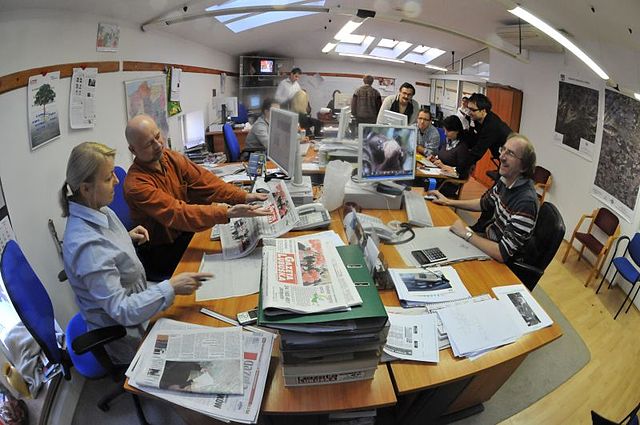
In an unused conference room, a company had multiple stacks of pages that needed to be collated. Each person had to visit each stack, in order, to collate the documents. Because of the arrangement of the stacks, it was taking forever to collate the documents.
SOLUTION
I recommended that the stacks be arranged, in order, on a table. Each person would then walk around the table, deposit the collated document at the end, and simply walk around the table again and assemble a new document.
RESULTS
The documents were collated much more quickly.
When the entity was able to designate its own dedicated workspace, replacing the unused conference room, the workspace was designed with tables at the ideal height to assemble documents.
I received an email yesterday evening from a former colleague who alerted me to an issue with one of my posts. When she went to the Bredemarket website, one of my post titles had a misspelling – “circumstanc” without an ending E.
I checked myself via three separate methods and found the correctly-spelled word “circumstance” in all instances.
She the rechecked and found that the word appeared properly in one case, and didn’t appear properly in another.
I dropped it until this morning, when I visited the main page of the Bredemarket website and saw this.
Even in WordPress, which has years of experience with this, apparently there are still these teeny glitches here and there.
(This incident never happened. Imagine if it had.)
It was a sunny weekend afternoon in southern California – Sunday, July 5, 2020, to be precise about it. I was sitting around, wishing that there was a baseball game to listen to, when all of a sudden a mysterious woman appeared in front of me.
“John, it’s time for you to start your own company.”
“Mysterious woman, you are crazy. I’m not going to just leave my job and start a company on a whim.”
She smiled, but said nothing as I continued.
“First off, a company has to offer something. What am I going to offer – to write blog posts for people? And what else could I offer?”
My brain was frantically ticking off objections to the mysterious woman’s insane idea. “Second off, a company needs customers. Where is an unknown company going to get customers? It’s not like people are just going to walk up to me and ask me to do things for them. So I’ll have to reach out in a sales mode, and I’ve never really done that consistently before.”
“Third off, to really run a company properly, you need to do all sorts of setup things. That’s a lot of work. So if you don’t mind, mysterious woman, I don’t think I’ll start a company at this time.”
She paused for a bit. “I believe that you can figure out how to do all these things.” And then she added, ominously, “You have to.” She then disappeared.
I sat there, thinking that the mysterious woman was completely crazy.
PAUL HARVEY REST OF THE STORY POSTSCRIPT
No, that conversation never happened, but what did happen was even stranger. On Monday, July 6, I received a layoff notice from the company that had employed me for 25 years. Within the first two months of my layoff, three people actually DID approach me about writing blog posts, and doing many other things besides. By necessity (“You have to”), I did perform “all sorts of setup things” to start a company and reach out to potential clients. And yes, people still do approach me.
(This past illustration describes something that I performed in my career, either for a Bredemarket client, for an employer, or as a volunteer. The entity for which I performed the work, or proposed to perform the work, is not listed for confidentiality reasons.)
After a merger of two companies, the combined company needed to know which customers used solutions from the combined company, which customers used competitor solutions, and which used both.
For example, a customer may use the combined company’s solution for one product line, but a competitor solution for another product line.
As the combined company introduced new products and entered new markets, this information was also required for the new product lines and markets.
SOLUTION
While others worked on front-end presentations of public portions of the data, I gathered the underlying data.
For multiple product lines, I recorded (when known/applicable) the type of customer (for example, a statewide government agency), current vendor, previous vendor, initial and extended contract value, product version, relevant statistics about the customer, and a designated reviewer for future quarterly updates.
The data was both stored separately for each product line and was also summarized.
Information was color-coded to highlight the combined company’s market position.
Data could be filtered as necessary (for example, only showing statewide government agencies).
The complete collection of highly sensitive data was tightly held.
Portions of the data were passed to selected subject matter experts on a quarterly basis for updating, allowing front-end presentations to be updated quarterly.
Additional information was gathered as new markets were entered and new products were launched.
RESULTS
The combined company had a better view of its positions in its various markets.
The resulting actionable information could be used to target specific customers and replace competitor products with the combined company’s products.
I’m going to stop talking about writing text for a bit and look at the latest goings-on in the forensic world. Why? After seeing a recent LinkedIn post from Itiel Dror, I began wondering what Simon A. Cole was doing these days.
Cole is probably most famous for his book Suspect Identities, which (among other things) questioned the way in which fingerprint evidence was presented as irrefutable. Cole’s book was published in 2001, and in the following years, additional questions on fingerprint conclusions (such as the contradictory conclusions in the Brandon Mayfield case) culminated in the 2009 release of a landmark report from the National Academy of Sciences, Strengthening Forensic Science in the United States: A Path Forward. Among other things, this report changed the way in which forensic scientists expressed their conclusions.
Which brings us back to the question of what Simon A. Cole is doing these days.
OK, I lied. I DIDN’T stop talking about writing text. Because Cole’s forensic studies are all about the words that are used when talking about forensic conclusions.
The decade since the publication of the 2009 National Research Council report on forensic science has seen the increasing use of a new word to describe forensic results. What were once called “facts,” “determinations,” “conclusions,” or “opinions,” are increasingly described as “decisions.”
Cole’s and Biedermann’s paper looks at that one word, “decisions,” from both a lay perspective and a scientific perspective. It also looks at other words that could be used, such as “interpretation” and “findings.” In the conclusion, the paper leans toward the latter.
…we tend to think that “findings” is the most appropriate of all the reporting terms floating around. “Findings” does the best job of conveying—to the expert and customer alike—that the report concerns the evidence alone. Not the evidence combined with other evidence. And, not the evidence combined with preferences. “Findings” helps more clearly distinguish between the analysis of the evidence and the inference to be drawn from that analysis. And, “findings” is commonly used in other fields of science to describe the analysis of (empirical) evidence.
The whole discussion might seem like a bunch of quibbling, but if I’m in court being charged with a murder I didn’t commit, it makes a huge difference to me whether a fingerprint comparison is reported as a “fact,” a “likelihood ratio,” a “decision,” a “finding”…or an “interpretation”…or an “opinion.” That list of possible words covers the entire spectrum.
Even if you’re not a forensic examiner (and I’m not), this precision in word choice is admirable. Especially when the life or death of a person is potentially at stake.







 Bredemarket

