I’ve been interested in brand archetypes for years. You’ll recall my first post on the topic, after which I used Kaye Putnam’s quiz to determine my archetypes: primarily Sage, with some others.
Sage, Explorer, Royalty, Entertainer.
This morning I attended a webinar, sponsored by Verizon and under the auspices of SCORE and BizHuub, on the topic of budget-friendly branding. It was presented by Warrick and Takicha Roundtree.
After some preliminary discussions, the Roundtrees focused on the topic of the 12 brand archetypes. They then encouraged us to explore our brand archetypes, with the help of our favorite generative AI tool.
The first prompt, and the response
I am Bredemarket. I offer marketing and writing services (content, proposal, analysis) to identity, biometrics, and technology firms. I sell these services to marketing leaders at these firms. Give me a list of psychographic characteristics of my most likely buyer.
Here is a list of psychographic characteristics of your most likely buyer, the marketing leader at an identity, biometrics, or technology firm. These characteristics go beyond simple demographics and aim to uncover their motivations, challenges, and attitudes.
Core Motivations and Goals
Career-Driven and Results-Oriented: They are primarily motivated by professional success. They need to demonstrate a positive ROI on their marketing budget and show tangible results in the form of lead generation, increased brand awareness, or successful product launches.
Aspirational: They want to be seen as innovative and forward-thinking within their company and the industry. They are looking for solutions that will help them gain a competitive edge and establish their firm as a leader in its field.
Driven by Urgency: They are often facing deadlines and a “need it yesterday” mentality. They have projects to complete, campaigns to launch, and are looking for a reliable partner who can jump in and deliver high-quality work quickly and efficiently.
Seeking Strategic Partnership: While they need a service provider, they are really looking for a partner who can provide fresh, objective insights and strategic thinking. They value an external perspective that isn’t clouded by internal biases or politics.
Challenges and Pain Points
Overwhelmed and Under-Resourced: They are likely managing a lean team and a multitude of responsibilities, from content creation to campaign management and analytics. They may not have the in-house expertise or bandwidth for every project, especially specialized ones like proposal writing or complex analysis.
Need for Specialized Expertise: They are acutely aware that their firm’s technology is complex and niche. They need a writer and marketer who can understand the technical nuances of identity and biometrics and translate them into compelling, clear, and trustworthy content for a B2B audience.
Information and Privacy Concerns: The identity and biometrics space is sensitive. They are concerned with navigating complex issues like data privacy regulations, ethical considerations, and public perception. They need content that addresses these concerns and builds trust with their audience.
Difficulty Demonstrating Value: They struggle to effectively communicate the value of their complex, often-invisible, technology to different stakeholders, from technical users to C-suite executives.
Attitudes and Behaviors
Risk-Averse (to a point): While they want to innovate, they are also responsible for their budget and brand reputation. They will seek out a provider with a proven track record, relevant case studies, and a clear understanding of their industry.
Values Efficiency: They appreciate a streamlined, no-fuss process. They don’t have time for extensive hand-holding or for a provider who needs a lot of training on the basics of their industry.
Prefers a Collaborative Approach: They don’t want to simply hand over a task. They want a partner who will engage in a dialogue, provide strategic recommendations, and work with their team to achieve a shared vision.
Values Trust and Reliability: Given the sensitive nature of their business, they need to feel completely confident that their partner is stable, consistent, and committed to the project. They value a partner who is responsive and transparent in their operations.
The second prompt, and the response
Which of the 12 brand archetypes would appeal to my customers?
Based on the psychographic characteristics of your target customer—the marketing leader at a technology, biometrics, or identity firm—several brand archetypes would likely resonate most strongly.
The key is to choose an archetype that speaks to their professional motivations, pain points, and desire for a strategic, trustworthy partner.
Here are the most relevant archetypes for Bredemarket:
1. The Sage
Why it works: This is the most natural fit. The Sage is the expert, the thought leader, and the trusted advisor. Your customers are seeking knowledge, analysis, and strategic insights. They don’t just want content written; they want content that is well-researched, accurate, and authoritative.
How to embody it:
Focus on data-driven insights and analysis.
Create content that educates and informs, such as white papers, in-depth reports, and industry analysis.
Position yourself as an expert who understands the complex nuances of their industry, not just a content mill.
Your tone should be knowledgeable, wise, and credible.
2. The Creator
Why it works: Your services are inherently creative. You are creating content, proposals, and narratives from scratch. Marketing leaders at tech firms are looking for someone who can translate complex technical information into compelling, engaging stories that resonate with their audience.
How to embody it:
Showcase your ability to build something from nothing—a strong narrative, a winning proposal, or a memorable campaign.
Use a portfolio to highlight diverse, imaginative work you’ve done for other clients.
Emphasize your process, from ideation to final execution.
Your messaging should focus on innovation, originality, and the power of well-crafted communication.
3. The Hero
Why it works: This archetype addresses your customer’s pain points directly. They are heroes within their own companies, tasked with generating leads and demonstrating ROI. You, as Bredemarket, can be their sidekick or a “hero for hire” who helps them conquer their challenges.
How to embody it:
Frame your services as a solution to their problems. Instead of “We write proposals,” say “We write proposals that help you win bids.”
Use success stories and testimonials that highlight how you helped a client overcome a major challenge (e.g., “Helped Company X generate 50% more leads with a new content strategy”).
Your tone should be confident, courageous, and results-oriented.
Secondary, Supporting Archetype: The Ruler
Why it works: While this may not be your primary archetype, it’s a good supporting one. Marketing leaders are often in a position of power and authority. By positioning yourself as a professional and organized partner, you align with their desire for order and control.
How to embody it:
Emphasize your clear processes, reliability, and project management skills.
Communicate with precision and confidence, demonstrating your command of the subject matter and the project.
Show that you bring order to the chaos of their marketing needs.
Summary & Recommendation
For Bredemarket, the Sage and Creator are your strongest primary archetypes.
Sage establishes your expertise and credibility, which is paramount in a technical field.
Creator highlights your specific skill set and ability to build compelling narratives.
You can then use the Hero archetype to frame your marketing messages around the problems you solve, and the Ruler to reassure potential clients about your professionalism and reliability.
By combining these, you can craft a brand identity that is both intelligent and innovative, while also being trustworthy and empowering for your target customer.
What I need to do
So what have I learned from the Roundtrees’ prompts and Google Gemini’s responses?
I need to analyze the rest of the two responses and perhaps make some changes in direction in my self-promotional content. After all, Google never lies.
In truth, why is Google happy that I’m ignoring its marketing advice?
Is the medical facility working with the right patient?
Hackensack Meridian Health in New Jersey claims that it knows who its patients are. It has partnered with CLEAR for patient identification, according to AInvest. Among the listed benefits of the partnership are enhanced security:
“CLEAR1 meets NIST’s Identity Assurance Level 2 (IAL2) standards, a rare feat in the healthcare sector, ensuring robust protection against fraud.”
I just published a new edition of Bredemarket’s LinkedIn newsletter this afternoon. Here’s how I started it:
“For years I maintained a negative stance on generative AI-authored text. But I recently tried relaxing it. By doing this I learned what AI authors are capable of…and what they clearly CANNOT do.”
Much of the article rehashes material I’ve shared before, but I did provide a little detail on the temperamental writer’s emotional hurt when Zoominfo turned to the bots:
“My first reaction was akin to a river in Egypt. I remain a temperamental writer, you know.”
Psst…check the book title.
But at least I closed the thing with a call to action.
“But if you are a marketing leader at an identity, biometric, or technology company, and you want an experienced human to help you with your content, proposals, and analysis, why don’t you schedule a free meeting with me to talk about your needs. Visit https://bredemarket.com/mark/ to find out more.”
“I was asked to list the 10 essential elements of product marketing. Honestly, there probably isn’t a magic number…”
Never mind if there aren’t 10 essential elements. I told Bredebot to list 10, so it listed 10. Even though (as you will see) I think there are only four.
Product messaging and positioning
Buyer personas
Go-to-market strategy
Sales enablement
Product launches
Market and competitive intelligence
Customer feedback loop
Pricing and packaging
Content strategy
Performance metrics and analysis
Bredemarket’s four essential elements of product marketing
So what are the REAL essential elements?
I could ask 20 product marketers to boil this AI-generated 10-item list down to a select few, and I would get 21 different answers.
But I’ll take my shot anyway, warning you that my list may not contain the really cool product marketing buzzwords like “positioning” and “target audience.”
I’ve identified four essential elements:
Product marketing strategy.
Product marketing environment.
Product marketing content.
Product marketing performance.
Strategy
Strategy comes first, which not only refers to the two “strategy” elements in the list, but also to things I’ve talked about in the past, including why, how, what, and process.
Environment
Here’s where I put “Market and competitive intelligence” and “Customer feedback loop” from the list above. This also includes the internal environment in the company; if the CEO emphatically insists that a go-to-market effort should last three days, then a go-to-market effort will last three days, regardless of what anyone else says.
Content
I’ve previously discussed the non-difference between content marketers and product marketers, noting that product marketers have to product a lot of content about the product, both external and internal. Most of Bredebot’s 10 items fall into this category in one way or another: positioning, personas, go-to-market, sales enablement, launches, pricing, and packaging. You can also throw proposals into this list, and I just did.
Performance
The metrics stuff, including Objectives and Key Results (OKRs). Because if you don’t know how you did, you don’t know how you did. Sleep-inducing but essential.
“By the end of Q4 2025 I will establish and obtain approval for a multi-tiered go-to-market process identifying the go-to-market tiers, the customer-facing and internal deliverables for each tier, as well as the responsible, accountable, consulted, and informed organizations for each deliverable.”
Yes, I talk like that. Sometimes.
What is your list?
So I’ve concluded that the four essential elements of product marketing are strategy, environment, content, and performance.
Prove me wrong.
Is there validity is the traditional lists, such as HubSpot’s list? With the recognizable buzzwords such as “target audience”?
Researching and monitoring your target audience.
Ensuring your product meets the needs of your target audience.
Determining your product’s positioning in the market.
Creating, managing, and carrying out your product marketing strategy.
Enabling sales to attract the right customers for your new product.
Influencing marketing strategy and product development.
Keeping your product relevant over time.
You tell me what the proper list should be.
Imagen 4.
And regardless of your list, if you need a technology product marketing expert to assist with any aspect of your product marketing, contact me.
Take a look at your most recent content. If you extracted this content from your channels, changed the names, and injected it into the channels of one of your competitors, would anyone know the difference?
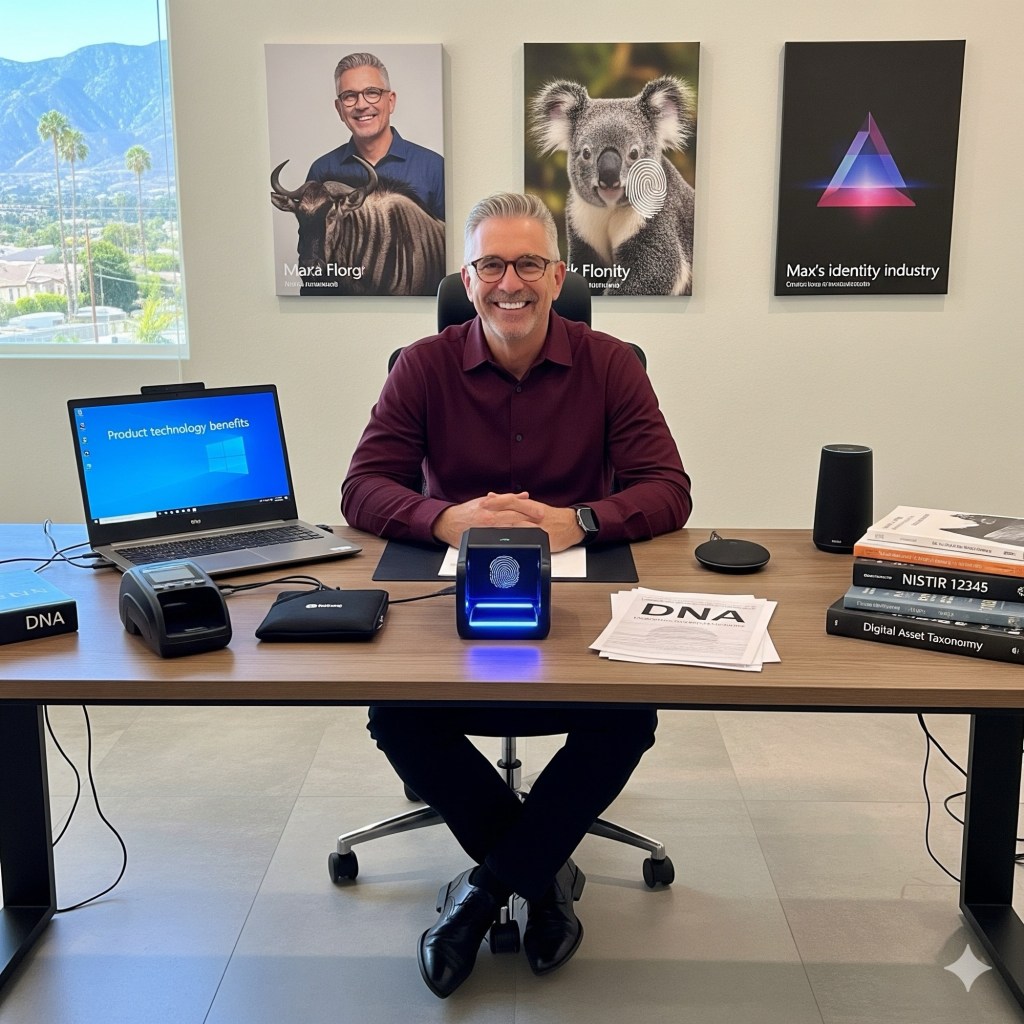
This post looks at content created by human SEO experts, and my generative AI colleague Bredebot. And how to differentiate your content from that of your competitors. (Inserting a wildebeest isn’t enough.)
Several years ago
Several years ago (I won’t get more specific) I was a writer for a company’s blog, but I didn’t own the blog. Frankly, I don’t think anyone did. There were multiple writers, and we just wrote stuff.
One writer had the (apparent) goal of creating informational content. The writer would publish multiple articles, sometimes with the same publication date.
The posts were well-researched, well-written, and covered topics of interest to the company’s prospects.
They were clearly written with a focus on SEO—several years ago, AEO didn’t exist—and were optimized for keywords that interested the prospects.
The goal was simple: draw the prospects to the company website with resonating content.
What could be wrong with that?
This week
Now it’s 2025, I’m writing for the Bredemarket blog, and I own the blog and control what is in it.
Bredebot. (In the middle.)
But I’m not the only writer. I brought a new writer on staff—Bredebot. And like a managing editor, I’ve been giving Bredebot assignments to write about.
As of Sunday August 31 (when I’m drafting this post), the next three Bredebot posts to be published are as follows (subject to change):
Move Over, Authentic AI: Why You Shouldn’t Overlook AI’s Role in Modern Marketing
Power Up Your Sales: A CMO’s Guide to Sales Enablement (with a Wink and a Nudge)
What Is Liveness Detection? Let’s Re-Examine a Sentence
Bredebot just finished writing the sales enablement and liveness detection posts Sunday afternoon, and they blew me away.
The posts were well-researched, well-written, and covered topics of interest to Bredemarket’s prospects.
And while I’m not as much of an SEO/AEO expert as my colleague from several years ago, the posts do feature critical keywords. For example, the references to Chief Marketing Officers are intentional.
The goal is simple: draw prospects to the Bredemarket website with resonating content.
What could be wrong with that?
Next week
I’ll tell you what’s wrong with that:
Any other company could publish identical content.
My colleague from several years ago could produce identical content for any firm in that particular industry. Or some other writer could produce identical content.
Moving to the present day, my esteemed competitor Laurel Jew of Tandem Technical Writing could (if she wanted to; she probably wouldn’t) log in to her favorite generative AI engine and churn out bot-written posts on sales enablement and liveness detection that read just like mine—I mean Bredebot’s. Especially if she reverse engineers my prompts and includes things like “Include no more than one reference to wildebeests as marketing consultants and wombats as customers of these marketing consultants.” Once Bredebot has been easily cloned, game over.
TTW Bot?
As I noted Sunday, a correlation in which two bots use the same source data ends up with the same results.
Perhaps I could mitigate the risk by using a private LLM with its own super secret data (see Writer) to generate Bredebot’s content, but as of now that ain’t happening.
Another way to mitigate the risk is by careful prompt tailoring. I experimented with this in the pre-Bredebot days, back when Google Gemini was still Google Bard, and I told it to assert that “Kokomo” is the best Beach Boys song ever.
But in the end, no matter what data you use and what prompt you use, a generative AI bot is not going to produce anything original.
A long list…but it could have been longer. Here are the products I removed from the list.
Series 2000.
Omnitrak.
MorphoWAVE.
The SIGMA Series.
Driver’s license and mobile driver’s license services.
Enrollment services.
Adobe consulting services.
Why did I remove them? As I said on Saturday:
“But my past isn’t as important as your present challenges.”
Speaking of your present challenges, if Bredemarket can help you as a consultant, book a free meeting to discuss your needs at https://bredemarket.com/mark/
I’ve written up a description of my technology product marketing expertise and repurposed it to four platforms: my consulting blog, LinkedIn, Substack, and Instagram. Actually more platforms than those four, but these are the biggies.
If you are on one of these platforms, and are so inclined, feel free to share this with any technology marketing leaders in your circles. I am open to both employment and consulting opportunities.











 Bredemarket