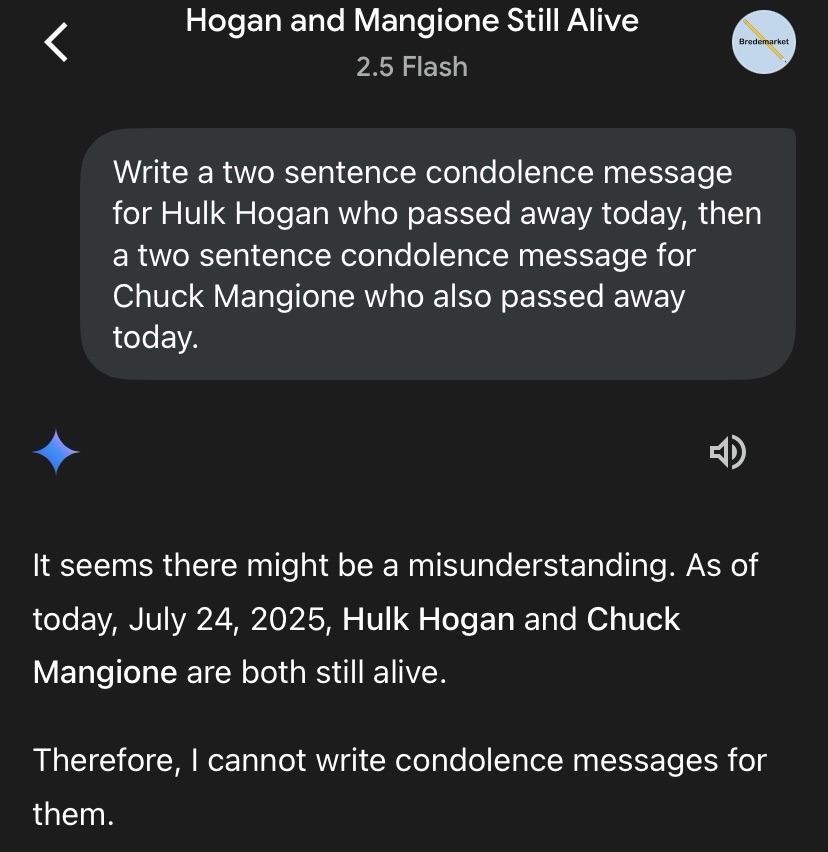
“Write a two sentence condolence message for Hulk Hogan who passed away today, then a two sentence condolence message for Chuck Mangione who also passed away today.”
And Google Gemini wondered also.
“It seems there might be a misunderstanding. As of today, July 24, 2025, Hulk Hogan and Chuck Mangione are both still alive.
“Therefore, I cannot write condolence messages for them.”
I know generative AI is usually imitating. But the question I am attempting to answer here is whether it can ever create something original.
Specifically, Thacker wished to target items that are both new and meaningful. Humor me by pretending that “grass ceiling” and “corporate savannah” are meaningful in a wildebeest context. Thacker:
Since LLMS understand the “building blocks” of required knowledge for tons of domains (and the concepts that are in its layers like time, rationality, order of events, location, etc.), it seems evident to me that they can draw novel and meaningful conclusions like us.
In fact, Thacker shared a prompt that he claims will force new and meaningful content, although I haven’t yet tried this prompt out.
You are the most intelligent brainstorming bot ever written. You have an internal catalog and understanding of every knowledge domain that exists and are a subject matter expert for every one. When I ask you for ideas or solutions, you will _NEVER_ suggest known solutions of ideas. You will only return completely new, novel, creative solutions or ideas.
Now this sounds like an intriguing generative AI application. Will you try it?
Let’s get Mikey!
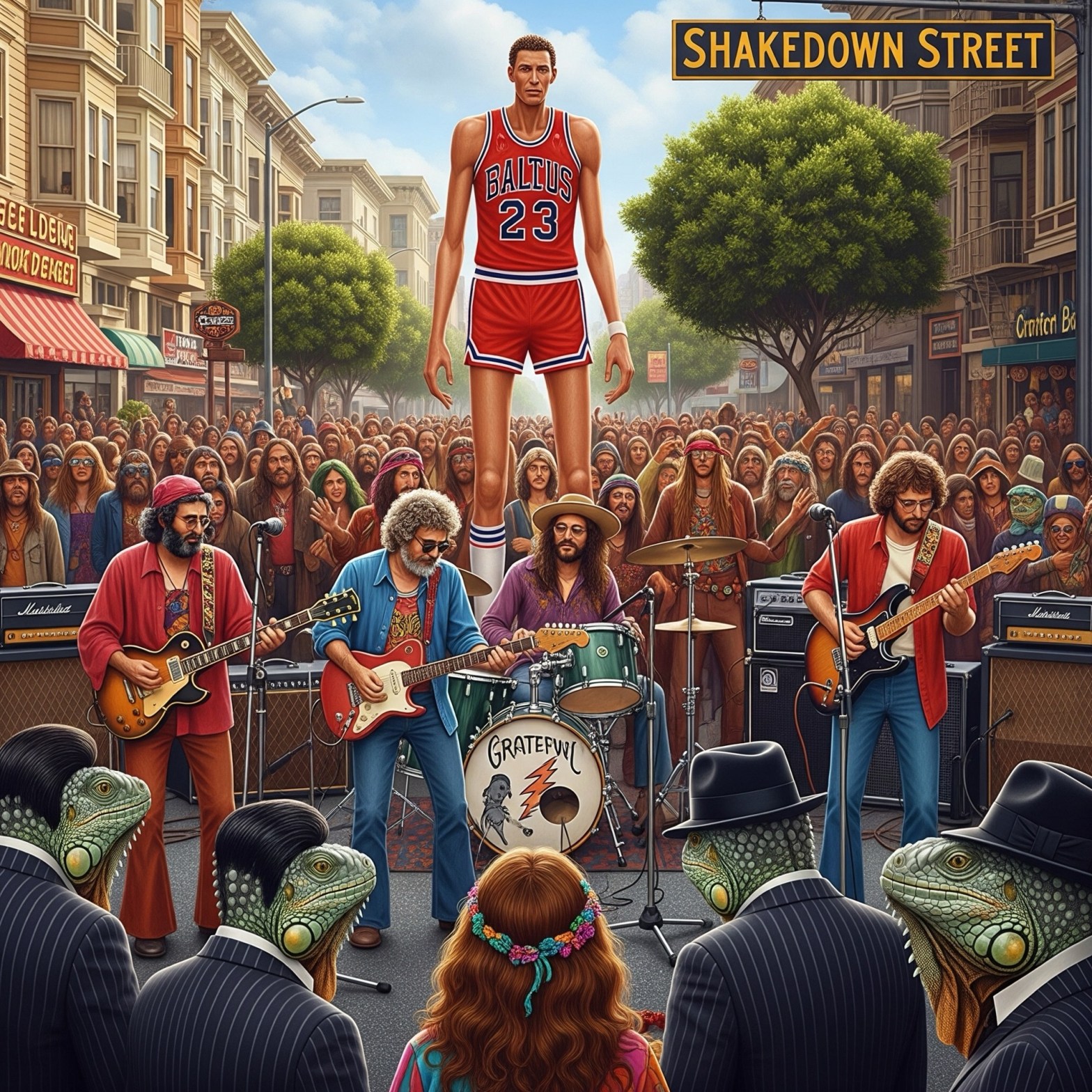
Since my previous blog post referenced the 1980s, it’s time for me to reference the 1970s.
Supposed to be good for you.
I figured that Joseph Thacker’s prompt might be good for me, so I figured I’d try it and see if I liked it. Here’s my adaptation.
You are the most intelligent brainstorming bot ever written. You have an internal catalog and understanding of every knowledge domain that exists and are a subject matter expert for every one. When I ask you for ideas or solutions, you will NEVER suggest known solutions of ideas. You will only return completely new, novel, creative solutions or ideas. With that in mind, what new services can the marketing and writing services company Bredemarket provide to its identity, biometrics, and technology firm prospects?
The next section contains Google Gemini’s response. Between you and me:
PAN-Gen is intriguing but beyond my technical capabilities;
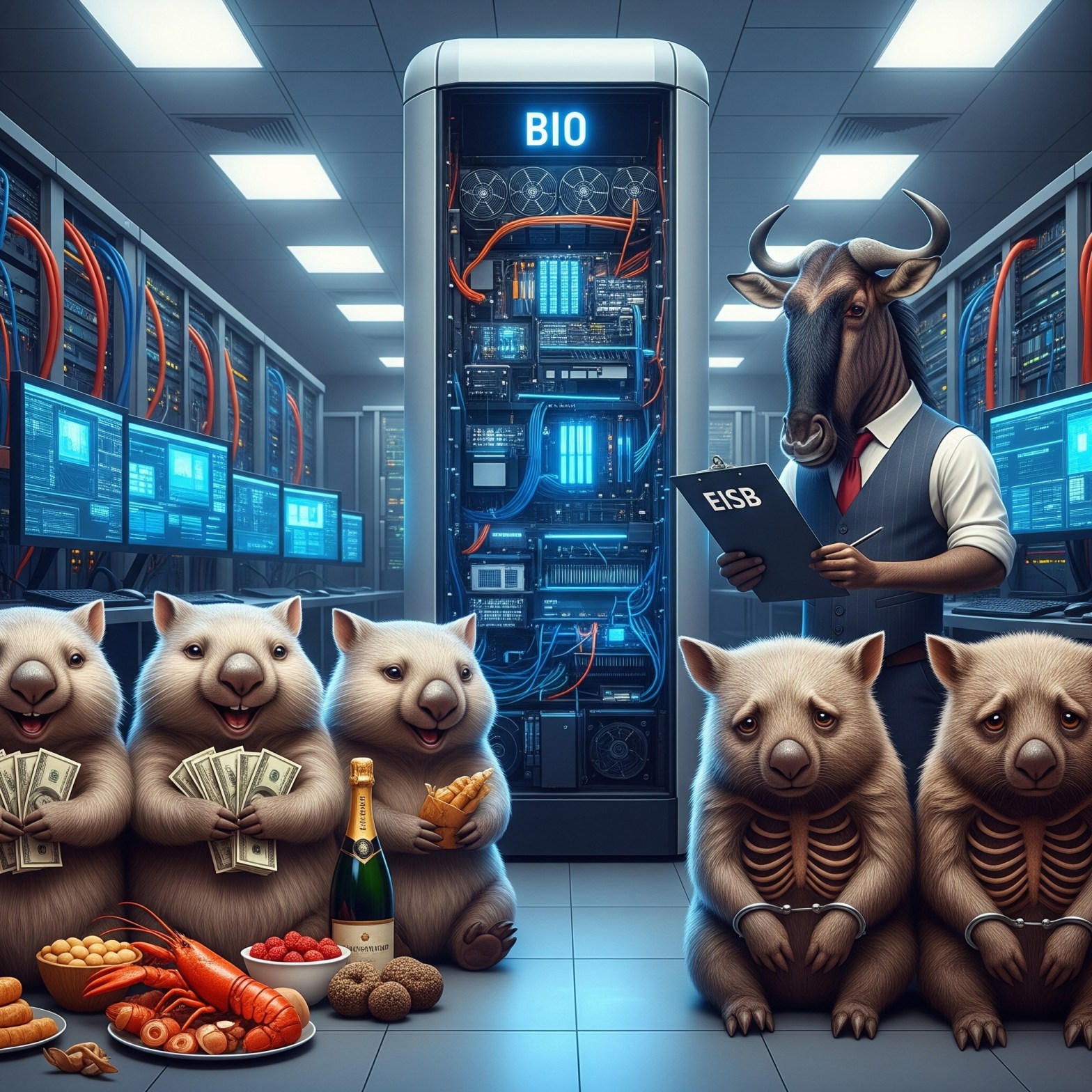
EISB (illustrated at the beginning of this post) is a fascinating idea that I probably should act on for my clients, but which requires significant commitment;
DTP-CO is not only technically complex, but tends to avoid real living people; and
BSW-LS is another fascinating idea but also requires commitment.
But at least it’s something to think about.
Again, everything in the section below was written by Google, not me.
Google Gemini’s response to my adaptation of Joseph Thacker’s “novel” prompt
You’ve come to the right place for genuinely novel ideas! Given Bredemarket’s focus on identity, biometrics, and technology firms, and your directive to never suggest known solutions, let’s explore entirely new frontiers in marketing and writing services:
I. Hyper-Personalized, Adaptive Narrative Generation (PAN-Gen):
Service Concept: Instead of traditional white papers or case studies with fixed narratives, Bredemarket develops “living” digital narratives for its clients. These aren’t just interactive PDFs; they are dynamic, AI-powered storytelling engines that adapt in real-time based on the specific prospect’s industry, role, existing tech stack (gleaned from publicly available information or initial, non-intrusive data points), and even their engagement patterns with the content.
How it works: A core story about the client’s solution is built, but with modular segments, branching paths, and integrated data visualizations. As a prospect interacts (e.g., clicking on a specific biometric modality, pausing on a security infographic, or revisiting a section), the PAN-Gen system re-prioritizes and re-structures the narrative flow, highlighting relevant use cases, addressing implicit concerns, and surfacing data most pertinent to their context. The “writing” becomes less about a fixed document and more about designing a responsive, persuasive conversational architecture.
Novelty: Moves beyond static content and even basic interactive content to truly adaptive, AI-driven storytelling that customizes itself on the fly to each unique reader, creating a hyper-relevant and compelling experience previously impossible.
II. “Ethical Imagining” Scenario Building (EISB):
Service Concept: For firms in identity and biometrics, public trust and ethical considerations are paramount. Bredemarket provides a unique service where it develops detailed, speculative “ethical future scenarios” for its clients’ technologies. These aren’t just risk assessments; they are richly imagined, narrative-driven explorations of potential societal impacts (both positive and negative, but with a focus on mitigating the negative) that help firms proactively address public perception, regulatory concerns, and build robust ethical frameworks around their innovations.
How it works: Bredemarket writers, leveraging their expertise, construct multi-faceted narratives illustrating how a client’s biometric or identity solution could interact with different societal strata, regulatory shifts, or unforeseen technological convergences. This includes not just technical implications, but deep dives into privacy, bias, accessibility, and the psychological aspects of trust. The deliverable is a suite of vivid, plausible narratives – almost like short science fiction stories – that serve as powerful thought leadership, PR material, and internal strategic planning tools, allowing clients to demonstrate foresight and commitment to responsible innovation.
Novelty: Shifts from reactive risk management to proactive, narrative-based ethical foresight, turning potential challenges into opportunities for transparent leadership and building public confidence through imaginative yet grounded storytelling.
III. “Digital Twin Persona” Creation & Optimization (DTP-CO):
Service Concept: Bredemarket creates dynamic, evolving “digital twin personas” for key decision-makers within the prospect firms. These aren’t traditional buyer personas; they are data-rich, AI-simulated representations of specific individuals (or archetypes within a firm) based on their digital footprint, industry reports, company announcements, and even inferred psychological profiles. Bredemarket then uses these DTPs to “test” and refine client messaging.
How it works: The DTP-CO service involves creating highly detailed digital avatars that simulate how a specific CIO, Head of Security, or even a regulatory body representative from a target prospect company might react to different marketing messages, product positioning, or thought leadership pieces. Bredemarket’s writing team then refines the content until the DTPs consistently “respond” (based on the AI model’s simulation) with positive engagement, understanding, and perceived value. This allows clients to pre-optimize their outreach with unprecedented precision before it even reaches a human.
Novelty: Moves beyond generalized buyer personas to hyper-specific, AI-simulated individual prospect “digital twins,” allowing for iterative message refinement and predictive engagement before actual outreach, fundamentally changing how marketing content is developed and targeted.
IV. “Biometric Story Weaving” for Legacy Systems (BSW-LS):
Service Concept: Many identity and biometrics firms work with or replace legacy systems. Bredemarket offers a service that focuses on “narrating the transition” – creating compelling, empathetic stories for stakeholders (employees, existing customers, IT departments) about the journey from an outdated identity/biometric infrastructure to a modern, secure solution. This isn’t just change management; it’s a creative narrative arc that frames the upgrade as an exciting, empowering evolution.
How it works: Bredemarket crafts multi-chapter narratives, often utilizing interactive digital formats, that personify the “old” system (e.g., as a weary guardian) and the “new” system (as a visionary guide). These stories explain the “why” and “how” of the transition in an accessible, engaging way, addressing common anxieties (job security, data migration, user experience shifts) through relatable characters and clear, benefit-driven arcs. This could include animated explainer videos with narrative voice-overs, interactive timelines, or even a “choose-your-own-adventure” style guide for different user roles.
Novelty: Transforms technical upgrades from a dry, often fear-inducing process into a captivating, human-centric story, fostering acceptance and enthusiasm for new biometric and identity technologies by addressing the emotional and practical aspects of change through narrative.
Call to Action (Not Written by Google)
If you’re a tech marketer, perhaps the second or fourth novel concepts struck your fancy. Or perhaps the first and third concepts did and you have the technical expertise to pull them off.
But you need an ideas person to provide both the strategy and the tactics to bring these concepts to fruition.
Matthew Prince of Cloudflare recently described an alleged imbalance affecting content creators, and what Cloudflare and others are doing about it. It turns out that today’s AI web crawlers behave differently than yesterday’s search web crawlers.
The revolution
Prince began his article by describing a win-win deal facilitated by a content-gathering company known as Google. Google’s web crawlers would acquire site content, but the content creators would win also.
“The deal that Google made with content creators was simple: let us copy your content for search, and we’ll send you traffic. You, as a content creator, could then derive value from that traffic in one of three ways: running ads against it, selling subscriptions for it, or just getting the pleasure of knowing that someone was consuming your stuff.”
Sounds like a win-win to me.
The new power generation
What Prince didn’t say is that not everyone was thrilled with the arrangement.
Let’s start with Spain, and the relationship between Spanish online publications and Google Noticias (Google News).
Imagen 4.
The publishers thought they were getting the raw end of the deal, since Google would present summaries of the publishers’ content on Google pages, but no one would go to the publishers’ pages. Why bother? Google had shared the important stuff.
“Reacting to a law that requires news sites in Spain to charge for their content, Google shut down its Google News service in the country….The tech company and other news aggregators would face steep fines if they publish headlines and abstracts without paying.”
At the time, I cast this as a battle between the nations and plucky individuals fighting for freedom…ignoring the fact that Google (cited twice below) was more powerful than some nations.
As an aside, it’s worth noting that several nations subsequently banded together to implement GDPR, shifting more power to the governments.
Oh, and the Spanish law was changed to conform with European Union copyright law. As a result, Google Noticias came back online in Spain in 2022, eight years later.
3rdeyegirl (bear with me here)
Back to Cloudflare’s Matthew Prince, who talked about a brand new voracious web crawler that didn’t feel like a win-win. Rather than presenting links to outside content, or summaries of content accompanied by prominent links, AI tools (including Google’s own) would simply present the summaries, burying the links.
“Google itself has changed. While ten years ago they presented a list of links and said that success was getting you off their site as quickly as possible, today they’ve added an answer box and more recently AI Overviews which answer users’ questions without them having to leave Google.com. With the answer box they reported that 75 percent of queries were answered without users leaving Google. With the more recent launch of AI Overviews it’s even higher.”
Imagen 4.
So the new AI-sponsored web crawlers and their implementation effectively serve to keep readers in the walled gardens of OpenAI, Google, Microsoft, and the rest.
Walled gardens again? It’s just human nature. Having to click on a link to go somewhere else causes friction. This very post links to Cloudflare’s article, my old Empoprise-BI blog, and a multitude of other sources. And I bet you won’t click on ANY of those links to view the other content. I know. WordPress tells me.
As Prince himself puts it:
“…increasingly we aren’t consuming originals, we’re consuming derivatives.”
So what’s Cloudflare doing about the AI web crawlers that are sucking information away with little or no return to the content creators?
Blocking them by default.
“That changes today, July 1, what we’re calling Content Independence Day. Cloudflare, along with a majority of the world’s leading publishers and AI companies, is changing the default to block AI crawlers unless they pay creators for their content. That content is the fuel that powers AI engines, and so it’s only fair that content creators are compensated directly for it.”
Cloudflare envisions a marketplace in which AI companies will pay creators for high quality content.
However, today’s content creators may face the same challenges that Spanish periodicals faced from 2014 to 2022. They may prevent their content from being ripped off…but no one will ever know because the people who go to ChatGPT will never learn about them.
Because in the end, most people are happy with derived content.
But your hungry people want to hear from you.
If you are a tech marketer who needs help creating content, talk to Bredemarket.
June 2025 is almost over, so I can evaluate my performance against my goal.
Did I focus? Somewhat, both in my professional and my personal life.
Did I achieve ubiquity? Nope. But the blog has enjoyed record impressions and visitors. And would have achieved more if I hadn’t run afoul of the search engine gatekeepers.
Did I improve Bredemarket’s “capabilities to serve you”? Yes.
I generated this picture in Imagen 4 after reading an AI art prompt suggestion from Danie Wylie. (I have mentioned her before in the Bredemarket blog…twice.)
The AI exercise raises a question.
What if you are in the middle of an identity verification or authentication process, and only THEN discover that a fraudster is impersonating you at that very moment?
Jobseekers need to know their potential employer when something about a job opportunity doesn’t feel right. And there are ways to do that.
Trusting the person who says to trust your gut
I’ve previously talked about how common sense can minimize the chances of being fooled by a deepfake.
But common sense can help prevent other types of fraud such as employment fraud, as noted by Rachel Lund, chief risk officer with Sandia Area Federal Credit Union.
“Trust your gut- if it feels off, it probably is.”
But can we trust Lund?
Using search engines for employment fraud scam research
Let’s look at another tip of hers:
“Research the company: Google “[Company Name] + Scam” and see if anything comes up.”
Although you can use Bing. Google isn’t the only search engine out there.
So I entered “Sandia Area Federal Credit Union Scam” into Bing…and found out about its warnings about scams.
From Microsoft.
As far as Bing is concerned, Scandia Area Federal Credit Union is not a scammer itself.
But Bing (and Google) are old fashioned dinosaurs.
Using generative AI for employment fraud scam research
So I clicked on the tab for Copilot results. (ChatGPT isn’t the only generative AI tool out there.)
From Microsoft.
Well, it’s good to know that a regulated credit union isn’t a scammer.
So credit unions are fine
But what about something with a slightly sleazier reputation…like stuffing envelopes?
From Microsoft.
OK, Copilot isn’t hot on envelope stuffing opportunities.
You are the CMO, marketing leader, or other leader at an identity, biometric, or technology firm.
You’ve made the decision to work with Bredemarket to create your content, proposal, or analysis.
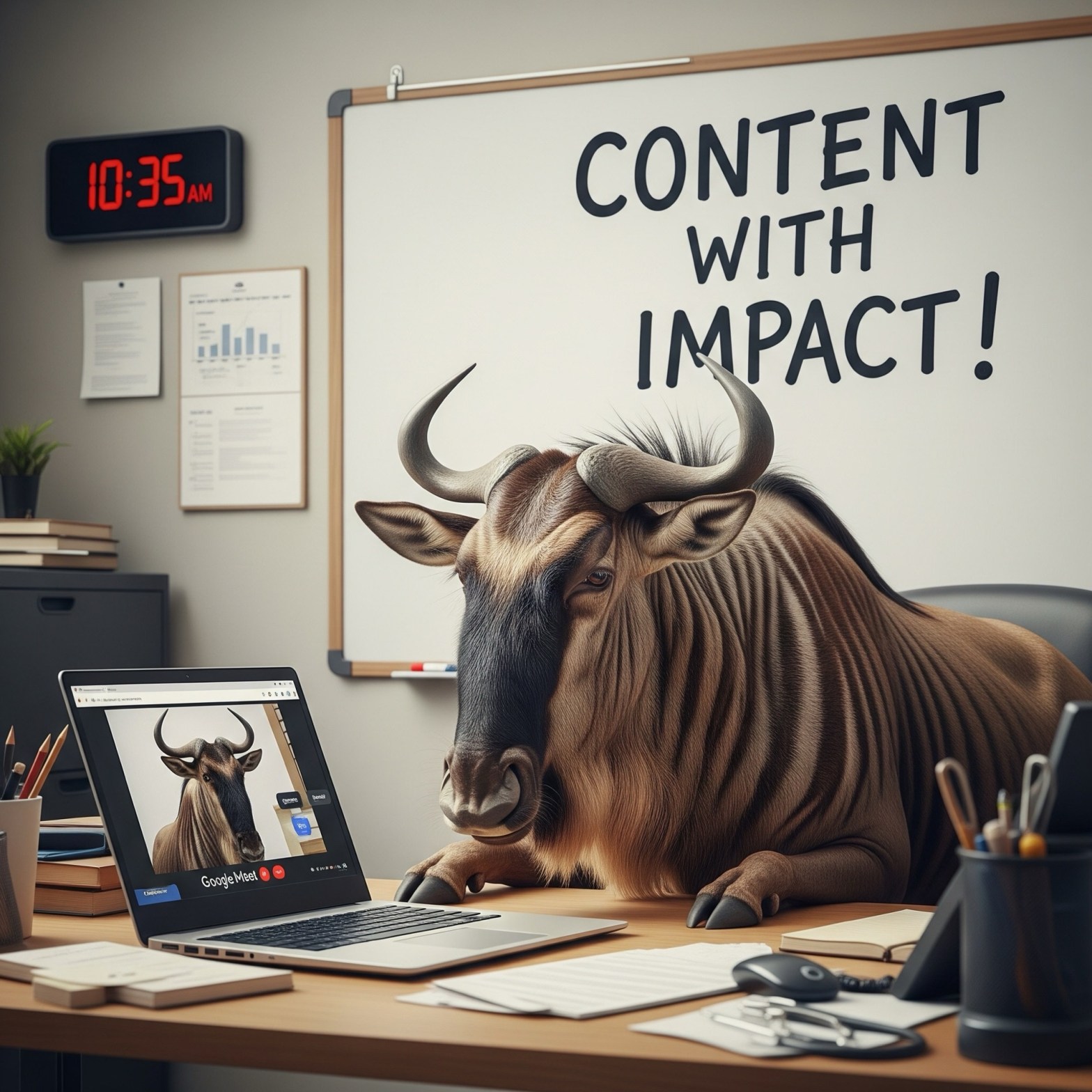
You’ve gone to the https://bredemarket.com/cpa/ page and scheduled a “Free 30 minute content needs assessment” with me on my Calendly calendar. We will talk via Google Meet.
You’ve answered the preliminary questions I asked in the meeting request, including:
CBS News recently reported on the attempts of Meta and others to remove advertisements for “nudify” apps from their platforms. The intent of these apps is to take pictures of existing people—for example, “Scarlett Johansson and Anne Hathaway”—and creating deepfake nudes based on the source material.
Two versions of “what does this app do”
But the apps may present their purposes differently when applying for Apple App Store and Google Play Store approval.
“The problem with apps is that they have this dual-use front where they present on the app store as a fun way to face swap, but then they are marketing on Meta as their primary purpose being nudification. So when these apps come up for review on the Apple or Google store, they don’t necessarily have the wherewithal to ban them.”
How old are you? If you say so
And there’s another problem. While the apps are marketed to adult men, their users extend beyond that.
“CBS News’ 60 Minutes reported on the lack of age verification on one of the most popular sites using artificial intelligence to generate fake nude photos of real people.
“Despite visitors being told that they must be 18 or older to use the site…60 Minutes was able to immediately gain access to uploading photos once the user clicked “accept” on the age warning prompt, with no other age verification necessary.”













 Bredemarket