Is Milwaukee Selling PII for Free Facial Recognition Software Access?

(Part of the biometric product marketing expert series)

Perhaps facial recognition product marketers have heard of stories like this. Or perhaps they haven’t.

Tight budgets. Demands that government agencies save money. Is this the solution?

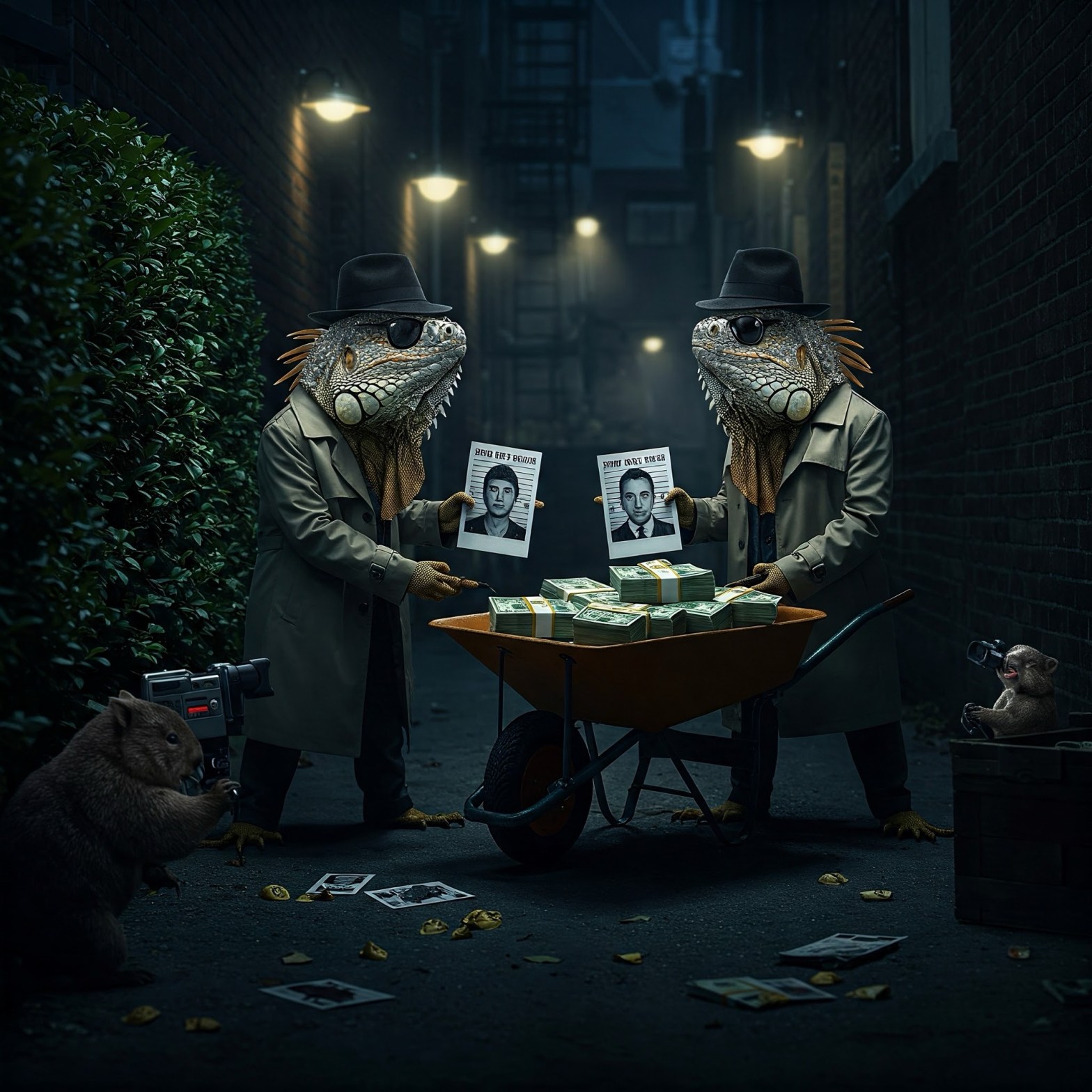
“Milwaukee police are mulling a trade: 2.5 million mugshots for free use of facial recognition technology.

“Officials from the Milwaukee Police Department say swapping the photos with the software firm Biometrica will lead to quicker arrests and solving of crimes.”

Read the article at https://www.jsonline.com/story/news/crime/2025/04/25/milwaukee-police-considering-trading-mugshots-for-facial-recognition-tech/83084223007/

As expected, activists raised all sorts of other concerns about facial recognition in general. But there’s an outstanding question:

What will Biometrica do with the 2.5 million images?

  • Use them for algorithmic training? 
  • Allow other agencies to search them?
  • Something else?
  • And what happens to the images if another company acquires Biometrica and/or its data? (See 23andMe.)

Biometrica didn’t respond to a request for comment.

And other facial recognition vendors operate differently.

How does your company treat customer data?

And how do you tell your story?

Do you have the resources to market your product, or are your resources already stretched thin?

If you need help with your facial recognition product marketing, Bredemarket has an opening for a facial recognition client. I can offer

  • compelling content creation
  • winning proposal development
  • actionable analysis

If Bredemarket can help your stretched staff, book a free meeting with me: https://bredemarket.com/cpa/

(Wheelbarrows from Imagen 3)

Why Invela TPRM?

During my three months working with a third-party risk management (TPRM) client, I never heard anyone mention Invela.

Perhaps with reason. Although LinkedIn says the company was founded in 2024, it didn’t post its first blog until April 20, 2025, or its first LinkedIn posts until April 21.

But the second blog post, dated April 21, is the one that matters.

“Invela has officially launched a transformative network to bolster consumer protection and foster innovation within the open banking ecosystem. The Invela Network, developed in collaboration with industry-leading specialist partners, promises to revolutionize how financial institutions manage third-party risk…”

The post goes on to cite the Consumer Financial Protection Bureau (CFPB), but…well…that’s nice.

Invela’s TPRM solution specifically targets the open banking segment of the financial services industry. Open banking, featuring companies such as Plaid, Kong, and Camunda (among others), facilitates the interchange of financial data, rather than keeping it within each bank’s walled garden.

Which of course increases risk.

Hence companies such as Invela.

I was unable to find a “why” story for Invela that compared to the why story I previously found for Ubiety Technologies. Obviously the Invela people never read my book.

However, the principals at Invela come from companies such as Mastercard (although I could find no information on Invela’s CEO Steve Smith). But the Invela leadership team presumably knows their market. We will see if they know their marketing.

Which reminds me…if you need help with your cybersecurity product marketing, Bredemarket has an opening for a cybersecurity client. I can offer

  • compelling content creation
  • winning proposal development
  • actionable analysis

If Bredemarket can help your stretched staff, book a free meeting with me: https://bredemarket.com/cpa/

Facial Recognition Marketing Leaders, Riding on the Metro

I just read a story about a young man who went to the Metro, was identified by a facial recognition system, and was snatched up by authorities.

Who wanted him to fight in Ukraine.

Now some of you are puzzled and wondering why Trump wants to send U.S. troops to fight in Ukraine. That…um…doesn’t sound like him.

I forgot to clarify something. This wasn’t the Washington DC Metro. This was the MOSCOW Metro.

“Timofey Vaskin, a lawyer with the nonprofit human rights project Shkola Prizyvnika, told independent Russian TV channel Dozhd that the illegal detention of those potentially liable for conscription had become a massive problem this year, with young males most at risk of being snatched while using the Moscow metro, which has an advanced facial recognition system in place and police officers on duty at every station.”

For the record, use of facial recognition for this purpose is legal in Russia. In the same way that use of facial recognition for national security purposes is legal in the U.S.A. Because when national security is at stake—or when government agencies say national security is at stake—most notions of INFORMED consent go out the window.

Know your use cases…or get someone who does

Facial recognition isn’t only used for national security, or for after-the-fact analysis of a crime such as the Boston Marathon bombings. It’s also used for less lethal purposes, such as familiar face detection on doorbell cameras…except in Illinois.

If you are marketing a facial recognition product, you need to understand all the different use cases for facial recognition, and understand which use cases your product marketing should address, and which it should not.

And if you need help with your facial recognition product marketing, Bredemarket has an opening for a facial recognition client. I can offer

  • compelling content creation
  • winning proposal development
  • actionable analysis

If Bredemarket can help your stretched staff, book a free meeting with me: https://bredemarket.com/cpa/

Imagen 3. Bredemarket has client openings.

How Can You Maximize Your Facial Recognition Or Cybersecurity Marketing Impact?

(This news was originally supposed to be embargoed until Monday April 21, but…well…things happen.)

Facial recognition and cybersecurity marketing leaders,

Stretched?

Is a stretched team holding you back from creating stellar marketing materials? Are competitors taking your prospects from you while you remain silent?

I’m John Bredehoft from Bredemarket, and I currently have TWO openings to act as your on-demand marketing muscle for facial recognition or cybersecurity:

  • compelling content creation
  • winning proposal development
  • actionable analysis
CPA?

Bias can be good when it’s a bias to action.

Bias?

Satisfy your immediate needs and book a call: https://bredemarket.com/cpa/

The Silent Type

“It’s OK. The competitor isn’t talking, so we can say anything we want.”

But what if “the competitor”…is YOU?

Get in the content conversation: https://bredemarket.com/cpa/

(Imagen 3)

RACI WOMBAT Talk

Earlier this month I posted a revelation:

I don’t want to reveal Bredemarket’s secret process, so I’m just going to call it WOMBAT. Not that WOMBAT is unique to Bredemarket; far from it. Many companies use WOMBAT.

And many companies don’t use WOMBAT. In fact, they abhor WOMBAT and call it stifling. (Emotion words. Geddit?)

But I’ve found over the years that if you don’t use WOMBAT, there’s a very good chance that you’ll break things.

And who catches hell? The consultant. “Why did you do what we asked you to do? Now look at the mess you made!”

So out of a sense of fear and self-preservation (geddit?), there are times that I’ve secretly used WOMBAT and not told my clients I’m doing it.

Well, I’m going to reveal one component of WOMBAT in this post because I’m surprised that I haven’t already discussed it.

But there’s a risk involved, because once I discuss this component, there are about five people in the world who will immediately know what my WOMBAT is. But luckily for me, none of them read the Bredemarket blog, so my secret is safe.

(Speaking of risk, the racy—not RACI—wombat image was created by Imagen 3.)

RACI

As some of you undoubtedly figured out, I’m going to discuss RACI: Responsible, Accountable, Consulted, and Informed.

Assume for the moment that Bredemarket grows beyond its sole proprietorship origins and becomes a multinational employing thousands of people. At some point I’ll be sitting in my luxurious executive suite, nibbling on caviar, and I’ll bark out an order:

“Write a blog post about a wildebeest amusement park!”

Now the blog post won’t just magically happen. And because the fictional Bredemarket is a huge enterprise, it will take more than one person to make it so. Perhaps four, perhaps more, perhaps fewer. Here’s how Bob Kantor at CIO defines Responsible, Accountable, Consulted, and Informed:

Responsible: People or stakeholders who do the work. They must complete the task or objective or make the decision. Several people can be jointly Responsible.

Accountable: Person or stakeholder who is the “owner” of the work. He or she must sign off or approve when the task, objective or decision is complete. This person must make sure that responsibilities are assigned in the matrix for all related activities. Success requires that there is only one person Accountable, which means that “the buck stops there.”

Consulted: People or stakeholders who need to give input before the work can be done and signed-off on. These people are “in the loop” and active participants.

Informed: People or stakeholders who need to be kept “in the picture.” They need updates on progress or decisions, but they do not need to be formally consulted, nor do they contribute directly to the task or decision.

Personally, there may be cases when you only want a single person to be responsible for the work. But I agree that only one should be accountable.

Applying RACI

Using my ludicrous example, one (or more) people will be responsible for writing the wildebeest amusement park blog post, a single person (presumably one of my junior vice presidents) will be accountable for approving it, and various entities will be consulted for feedback (and, in the ideal world, may actually provide feedback). Then there are a few people who will be informed about the project, merely to roll their eyes at the whole thing.

Regardless of the process you institute, whether it is my super-secret WOMBAT process or something else, RACI responsibilities will help tremendously. Here’s another quote from Bob Kantor at CIO:

Having managed and rescued dozens of projects, and helped others do so, I’ve noted that there is always one critical success factor (CSF) that has either been effectively addressed or missed/messed up: clarity around the roles and responsibilities for each project participant and key stakeholder. No matter how detailed and complete a project plan may be for any project, confusion or omission of participant roles and responsibilities will cause major problems.

And some Accountable person approved what Kantor said.

Reapplying RACI

And this also affects Bredemarket’s content, proposal, and analysis work. For example, let’s look at the proposal that I recently helped a Bredemarket client win.

  • Two of us were jointly responsible for completing and submitting the proposal: myself, and a person at the client company. Yes, I know what I just said about preferring that only one person be responsible, but the federal agency in question would not let me submit the proposal; someone from the client had to do it.
  • This second person was the one who was accountable for the submission of the proposal.
  • There were several people who were consulted regarding this proposal. I cannot reveal their roles, but let’s just say that all of them were…um…critically important.
  • Then there were a few people here and there who were informed of the proposal progress.

Perhaps Bredemarket can work on a project with you. Let me know. https://bredemarket.com/cpa/

How Do You Maximize Impact For the RIGHT Awareness?

It’s not enough for your company’s prospects to know who you are, but it helps. But you can do more than that…with Bredemarket’s help.

Who are you?

Who are you?

I just searched for the leading software providers in a particular category. This isn’t unusual. If someone wants to purchase software, they will often conduct their own research before letting themselves be pestered by salespeople.

My category search turned up several software packages.

It DIDN’T turn up numerous others in that category.

So a whole bunch of companies are already at a disadvantage, and there’s a good chance that their competitors are going to take their money because the software buyer won’t even think of purchasing from them.

The software buyer has no AWARENESS of these other software packages.

The Bredemarket website has an entire page on awareness, in which I make the following point:

“Two discussions of this three-step sales funnel are provided by Venn Marketing and Walker Sands (the latter of whom throws in things that happen AFTER the purchase, engagement and advocacy). 

“Both sources define awareness as the first step in the funnel, and its purpose is to (drumroll) simply make prospects, um, aware that you and your product/service exist.”

Obviously there are other things you need to do to end up with a happy customer, but you’ll never get a happy customer if it doesn’t even know about you during the prospect stage.

Awareness of what?

We’re a unicorn!

Now there are all sorts of ways to raise awareness, but some are better than others.

  • I previously linked to the story of Beatrice’s rise and fall, in which the fall was illustrated by the infamous “We’re Beatrice” campaign. The tagline? “We’re Beatrice.” What did the tagline mean to prospects? Absolutely nothing.
  • I knew of another company that was slightly more successful, but not much. Instead of saying “We’re (COMPANY NAME),” they loudly proclaimed “We’re a Unicorn.” This was back during one of the periods of heated market acquisitions. But what difference did the company’s unicorn status mean for its prospects? Not much. If you’ve raised a billion dollars, I only care if you promise to give me a couple of million of it.
  • Here in Southern California, Honda car dealers have banded together to produce ads about the “helpful Honda people.” Unfortunately, the ads have nothing to do with cars, the products these commercials are supposed to be selling. What difference does a Honda dealer’s helpfulness make? Unless your cat is stuck in a tree, not much.

It’s not enough for your company’s prospects to have awareness about you. They need to have awareness about how you can solve their problems.

Only then will you make an impact.

Raising awareness

Bredemarket works with you.

Perhaps your company needs to raise awareness of your solutions to your prospects’ problems.

Bredemarket can work with you on this, asking questions and even engaging in…um…WOMBAT to produce impactful content for your company and its products and services.

So that your prospects know about you.

Then we can work on the next steps, consideration and conversation.

Book a free appointment to talk to me: https://bredemarket.com/cpa/

(All pictures from Imagen 3)