There are many controversial uses of land, one of which is data centers. And most of us use them.
When I use SaaS resources or generative AI tools, I’m making use of a data center…somewhere. For example, when I created the image at the top of this post with Google Gemini…and when I uploaded this post to WordPress so you could read it.
But what if the data center was next door to ME? Would I feel differently about data center use?
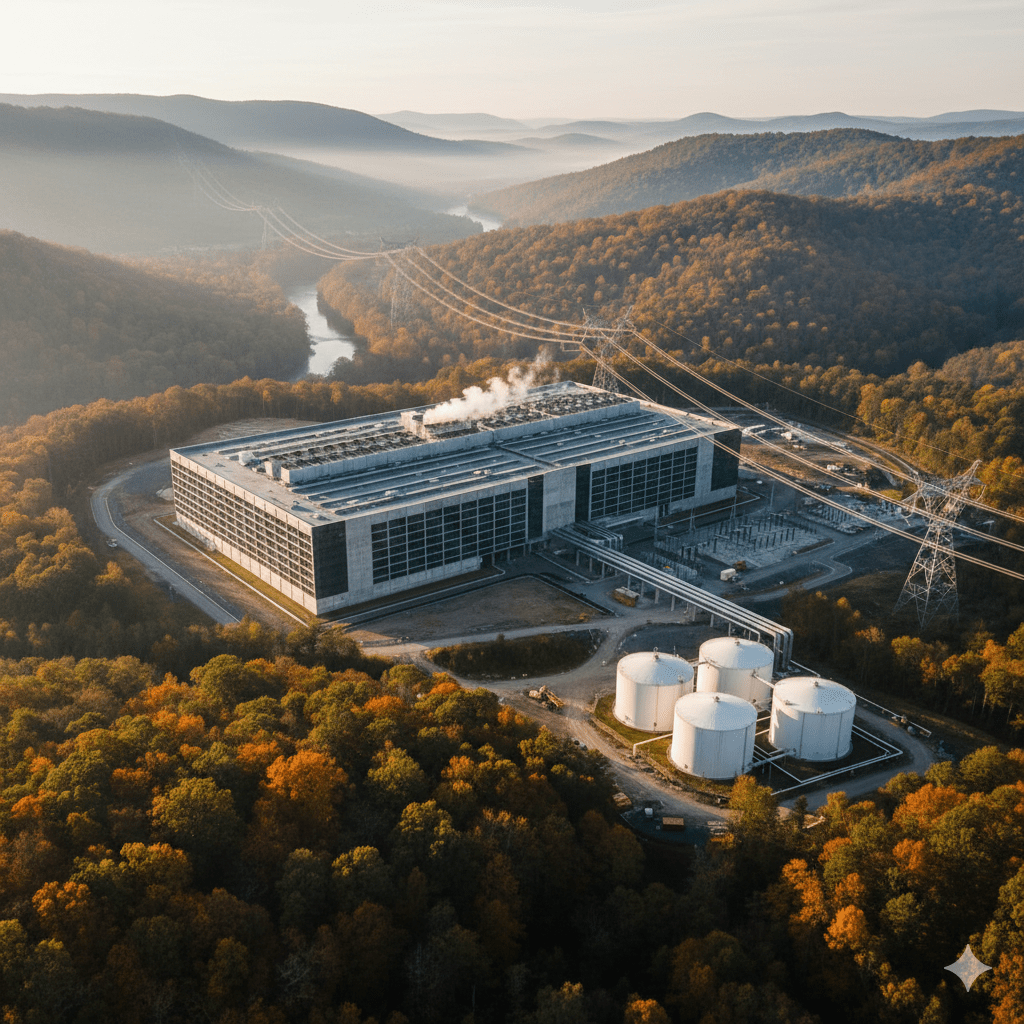
Warren County, Virginia (Front Royal) is more rural than other counties in the state, such as Fairfax County. And someone is proposing a data center in Warren County.
This prompted a letter to the editor from Cara Aldridge Young, a former high school classmate of mine. (And a talented editor herself, if your company needs one.) Young examined the negatives surrounding data centers:
“Data centers are not quiet, invisible neighbors. They are warehouse-scale buildings surrounded by substations, transmission lines, backup generators, cooling systems, security fencing, and 24-hour lighting. They require enormous amounts of electricity and millions of gallons of water for cooling. In a county that has already experienced drought restrictions and ongoing grid concerns, it’s fair to question whether we are equipped to support that scale of development without long-term environmental and infrastructure consequences.”
I don’t have a feel how Warren County will respond to this request; I haven’t visited Front Royal in decades. But Young presumably isn’t the only resident with concerns about power, water, and the environment.
But I’m sure there are counties that would welcome the economic development, the tax revenue, and the jobs. (Well, not that many jobs.)
On my side of the country, the big infrastructure concern is warehouses, such as the Amazon distribution center in Eastvale, California.
One of Amazon’s buildings in Eastvale, California.
“Since launching the Gemini app, we’ve built tools to encourage creative expression through images and video. Today, we’re taking the next step: custom music generation. Lyria 3, Google DeepMind’s latest generative music model, is rolling out today in beta in the Gemini app.”
I used this prompt to generate a Lyria tune:
“Create music for a wildebeest using a laptop to compare a latent fingerprint to a tenprint fingerprint”
Google’s response:
“’I’ve created a unique atmospheric track for you that blends electronic data-processing sounds with the deep, resonant textures of a wildebeest’s world. You can play the music directly here in our chat!”
Bredemarket has adopted two tactics to cut through the slop and ensure my clients’ messages reach those who need to hear it.
Tactic 1: Before I write, I ask
To bound the message I am about to create for an identity/biometric client (or any client), I ask a number of questions. These questions ensure that the question addresses the right people, their concerns, and their fears. I’ve shared seven of my questions elsewhere.
Seven Questions Your Content Creator Should Ask You.
When all the questions are answered, I have a clear roadmap to start writing.
I don’t feed the answers to Bredebot and have it churn out something. I pick the words myself.
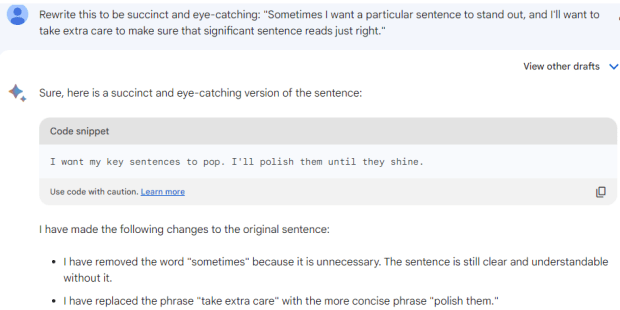
Rewrite this. Don’t write it.
Now perhaps I might use generative AI to tweak a phrase or two, but I remain in complete control of the entire creative process.
The result?
I believe, and my clients also believe, that this careful approach to content results in pieces that are differentiated from the mass-churned content of others.
So my clients stand out and aren’t confused with their competitors.
After all, even though Bredebot fakes thirty years of experience in identity and biometrics, it doesn’t really have such experience. I do. That’s why I’m the biometric product marketing expert.
So if you want me, not a bot, to polish your biometric product marketing sentences “until they shine,” let’s talk about how we can move forward.
“Abstract 3D render of a human silhouette made of shimmering frosted glass, iridescent light refracting through, symbolizing secure data encryption and zero-knowledge proofs, elegant and high-end.”
Personally I think it’s TOO abstract, but perhaps that’s just me.
Sadly the question “why would a robot fish?” was shared in a private Facebook group, so I cannot share the entire question with you. But I can share my response.
“Some humans don’t fish for food, but for relaxation. But if robots need downtime, it doesn’t have to be at a stream with a pole.”
After thinking, I composed the prompt for the Google Gemini picture that illustrates this post.
“Create a realistic picture of a robot by a stream in the woods, fishing. The eyes and other parts of the robot’s head indicate that its internal controls are in maintenance mode, or that the robot is ‘relaxing.’”
My own content creation process with Bredemarket includes a “sleep on it” step which lets my brain reset before taking a fresh look at the content.
The generative AI equivalent is to take the output from the initial prompt, start a new independent chat, and write a second prompt to re-evaluate the output of the first prompt.
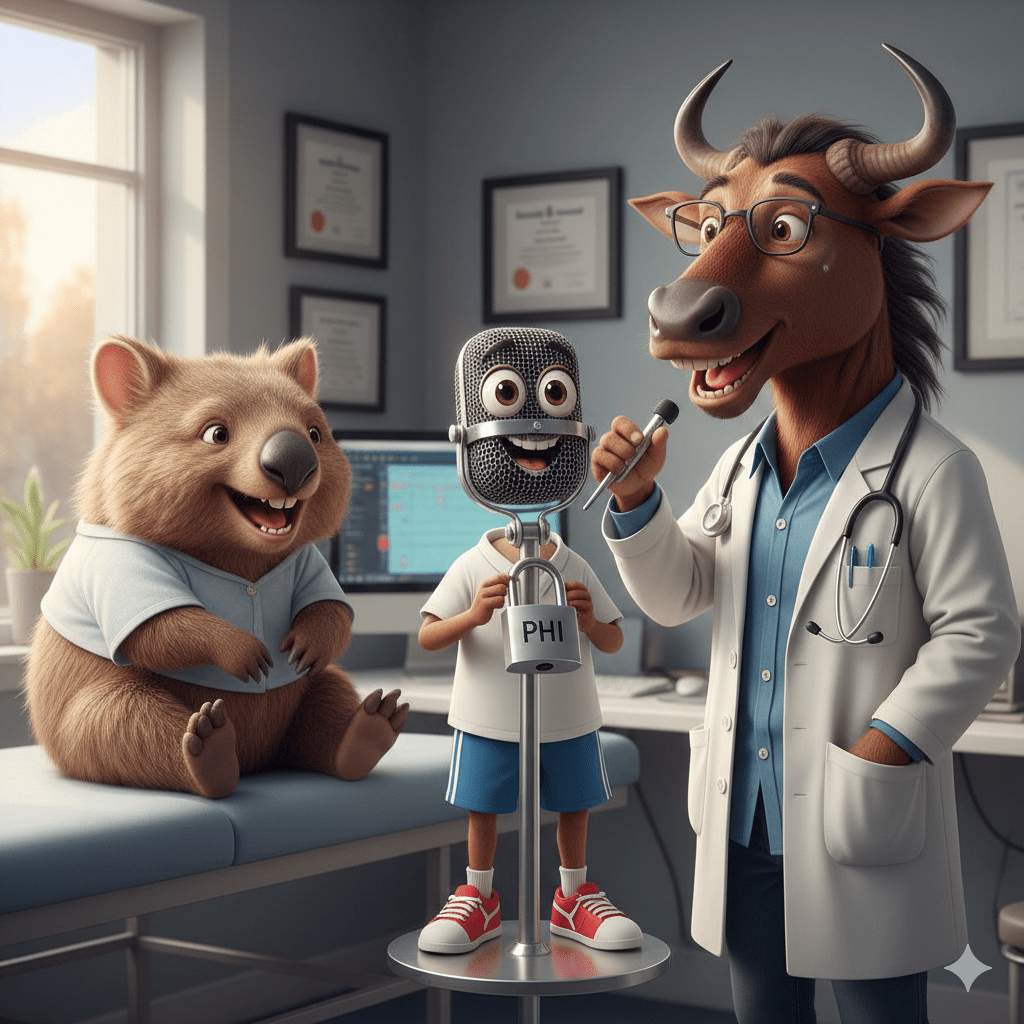
Another topic raised by Nadaa Taiyab during today’s SoCal Tech Forum meeting was ambient clinical intelligence. See her comments on how AI benefits diametrically opposing healthcare entities here.
There are three ways that a health professional can create records during, and/or after, a patient visit.
Typing. The professional has their hands on the keyboard during the meeting, which doesn’t make a good impression on the patient.
Structured dictation. The professional can actually look at the patient, but the dictation is unnatural. As Bredebot characterizes it: “where you have to speak specific commands like ‘Period’ or ‘New Paragraph.’”
“Ambient clinical intelligence, or ACI, is advanced, AI-powered voice recognizing technology that quietly listens in on clinical encounters and aids the medical documentation process by automating medical transcription and note taking. This all-encompassing technology has the ability to totally transform the lives of clinicians, and thus healthcare on every level.”
Like any generative AI model, ambient clinical intelligence has to provide my four standard benefits: accuracy, ease of use, security, and speed.
Accuracy is critically important in any health application, since inaccurate coding could literally affect life or death.
Ease of use is of course the whole point of ambient clinical intelligence, since it replaces harder-to-use methods.
Security and privacy are necessary when dealing with personal health information (PHI).
Speed is essential also. As Taiyab noted elsewhere in her talk, the work is increasing and the workforce not increasing as rapidly.
But if the medical professional and patient benefit from the accuracy, ease of use, security, and speed of ambient clinical intelligence, we all win.
This is definitely an experiment. When I started, I had no idea how it would turn out. In the end I’m fairly satisfied with how NotebookLM repurposed my blog post as a YouTube video, but there were definitely some lessons learned to apply in future repurposing.
Ahref’s best way to get your product listed on LLMs
As we all know, there has been a partial shift from search engine optimization to answer engine optimization. The short version is that content performs well when it answers a question that someone proposes to a large language model (LLM) such as Google Gemini or ChatGPT.
So how do we optimize our content for LLMs?
Yes, I know I could have asked an LLM that question, but I still do some old school things and attended a webinar instead.
I live-blogged Wednesday’s webinar, hosted by the Content Marketing Institute and sponsored by Ahrefs. The speaker was Ahref’s Ryan Law, the company’s Director of Content Marketing. As is usual with such affairs, the webinar provided some helpful information…which is even more helpful if you use Ahref’s tools. (Funny how that always happens. The same thing happens with Bredemarket’s white papers.)
One of the many topics Law addressed was the TYPE of content that resonates most with LLM inquirers. Law’s slide 20 answered this question.
“LLMs LOVE YOUTUBE”
Law then threw some statistics at us.
“YouTube has fast-become the most cited domain in AI search:
1 in AI Overviews
1 in AI Mode
2 in ChatGPT
2 in Gemini
2 in Copilot
2 in Perplexity”
So even if it isn’t number 1 on some of the engines themselves, it’s obviously high, and very attractive to inquirers.
But what of people like me who prefer the portability of text? It’s easier to quote from text than it is to take a short snippet of a video.
YouTube covers that also, since it automatically creates a transcript of every word spoken in a YouTube video.
But…
Bredemarket’s problem
…most of the videos that Bredemarket has created have zero or few spoken words, which kinda sorta makes it tough to create a transcript.
For example, the “Landscape (Biometric Product Marketing Expert)” video that I frequently share on the Bredemarket blog for some odd reason is not only on WordPress, but also on YouTube. However, it has zero spoken words, so therefore no transcript.
“Yo, I’m the outlaw of this country sound, dropping rhymes that shake the ground.”
But I do have some YouTube videos with more extensive transcripts. And one of them suggests a possible solution to my desire to provide YouTube videos to LLMs.
Using Google’s NotebookLM to create videos from non-copyrighted material
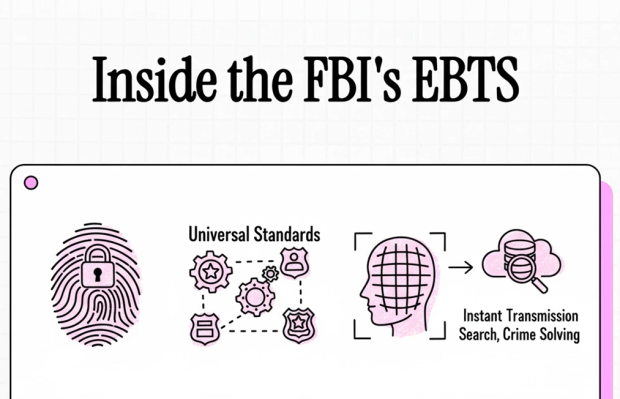
A still from Bredemarket’s movie “Inside the EBTS.” Are you jealous, Stefan Gladbach?
The material wasn’t authored by me, but by the U.S. Federal Bureau of Investigation. (Which meant that it wasn’t copyrighted.)
What was it?
Version 11.3 of the Electronic Biometric Transmission Specification (EBTS).
A few of you are already laughing.
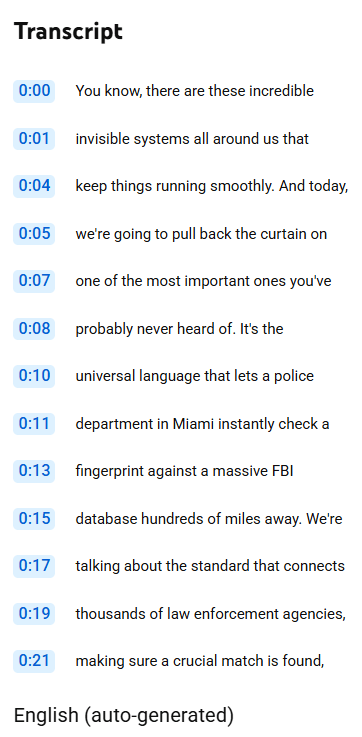
For those who aren’t, the EBTS is a fairly detailed standard dictating how biometric and biographic data is exchanged between the FBI’s Next Generation Identification (NGI) system and other federal, state, and local automated biometric identification systems.
As a standard, it’s not as riveting as a Stephen King novel.
And once I uploaded the movie to YouTube, YouTube created a transcript.
First 21 seconds of the YouTube transcript of the video above.
So this potentially helps Bredemarket to be visible.
And if I want to follow Ryan Law’s advice and repurpose my content for YouTube, NoteBookLM provides a method to do it.
Using Google’s NotebookLM to create videos from MY copyrighted material
Time for an experiment, the goal of which is to convert a Bredemarket blog post into a video with a minimum amount of effort.
NotebookLM can use either files or web links as source material for videos, so the easiest method to create my video is as follows:
Paste the web link to the blog post into NotebookLM.
Instruct NotebookLM to create a “Video Overview” from this single piece of content.
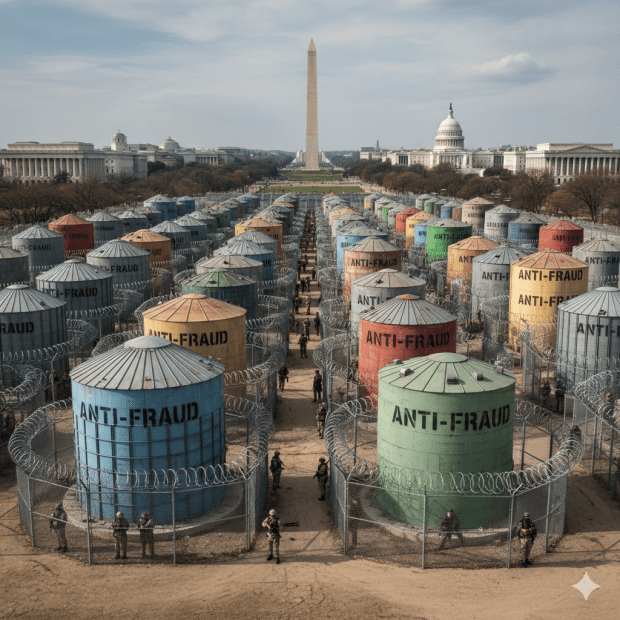
My blog post of choice is my post from earlier today, “Government Anti-Fraud Efforts: They’re Still Siloed.” The post contains a Gemini AI image of silos on the National Mall in Washington DC (inaccurately displaying the U.S. Capitol as NORTH of the Washington Monument). It also includes my text as well as links to outside sources such as the initial draft of H.R. 7270.
So let’s see what NotebookLM gives us.
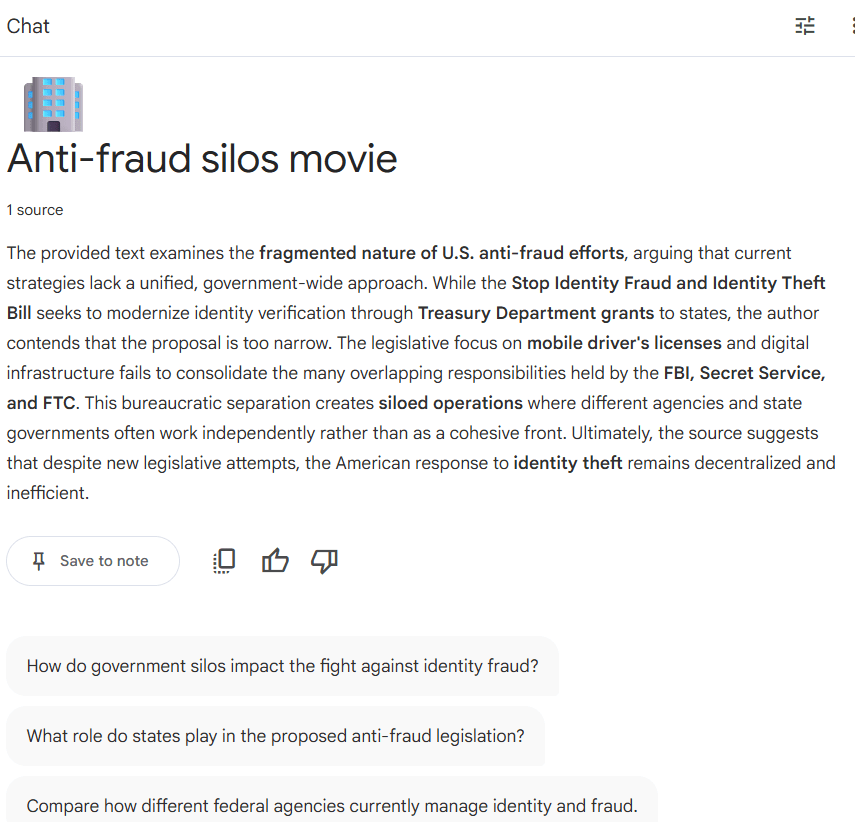
The first thing that we get is Google’s summary of the content at the link.
NotebookLM’s summary of the web link I provided.
“1 source
The provided text examines the fragmented nature of U.S. anti-fraud efforts, arguing that current strategies lack a unified, government-wide approach. While the Stop Identity Fraud and Identity Theft Bill seeks to modernize identity verification through Treasury Department grants to states, the author contends that the proposal is too narrow. The legislative focus on mobile driver’s licenses and digital infrastructure fails to consolidate the many overlapping responsibilities held by the FBI, Secret Service, and FTC. This bureaucratic separation creates siloed operations where different agencies and state governments often work independently rather than as a cohesive front. Ultimately, the source suggests that despite new legislative attempts, the American response to identity theft remains decentralized and inefficient.”
But that’s just text. Time to create the video overview.
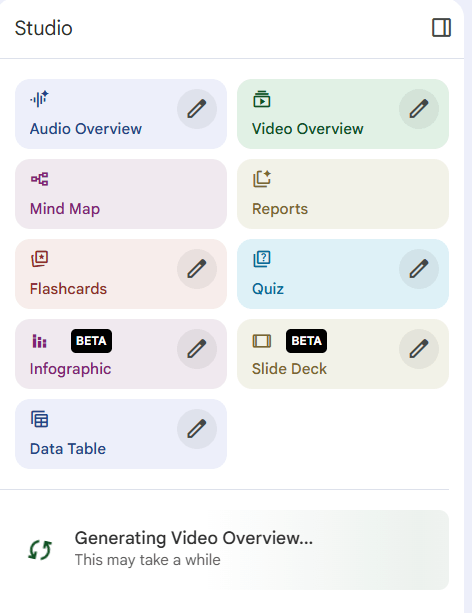
After I cklicked the “Video Overview” button in the upper right.
A while later…
Even with relatively minimal content, video creation isn’t immediate. It has to shape the content into a narrative video, after all. Sadly I forgot to time the result, but I received this video, “A Tale of Two Threats,” within a half hour.
A Tale of Two Threats (WordPress version). Created by Google NotebookLM based upon “Government Anti-Fraud Efforts: They’re Still Siloed.”
As is par for the course with NotebookLM, the narration is self-generated in a viewer-friendly form (“let’s pop the hood”). And it used my source material as a basis to narrate the tale of the U.S. Government’s responses to the “two threats” of terrorism and fraud. As my original blog post noted, the two responses have been quite different.
The video then takes portions of the blog post, including the list of agencies that are NOT part of H.R. 7270, as well as my example of what could happen if the Secret Service’s mission is compromised because of what some other agency is doing.
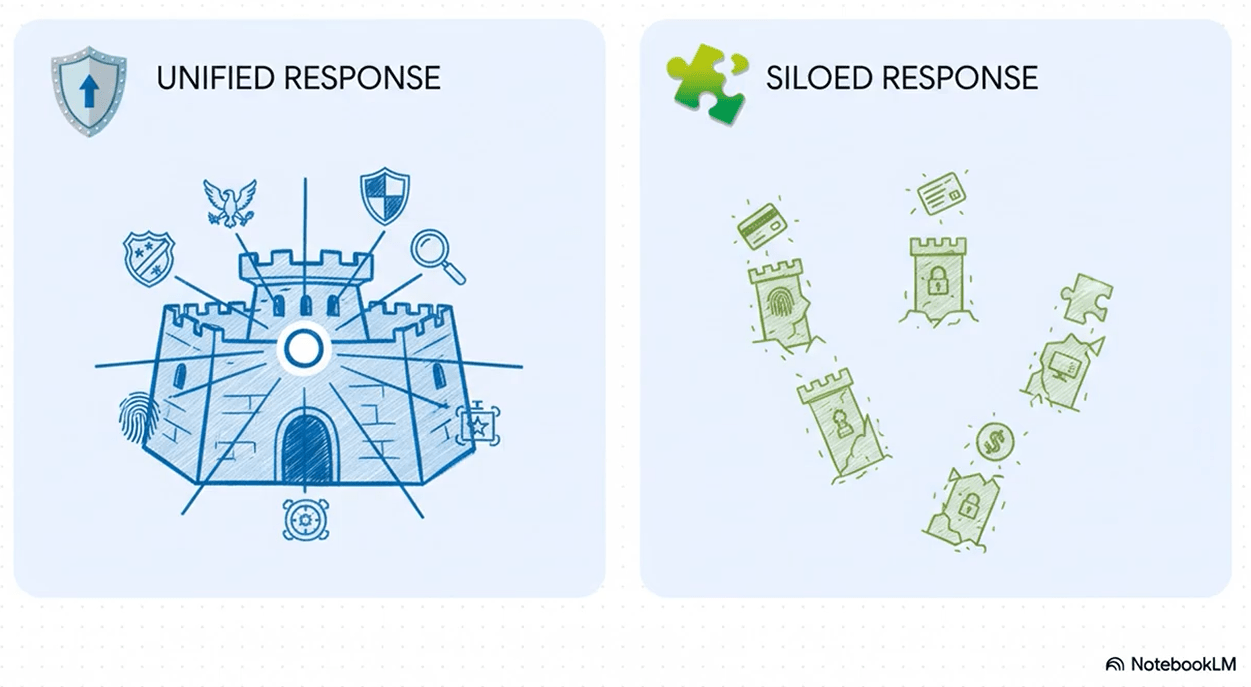
But it DOESN’T take other portions of my blog post, such as the potential shuttering of the Consumer Financial Protection Bureau, my reference to “evil Commie Chinese facial recognition algorithms,” or my graphic of silos on the Mall. NotebookLM generated its own cartoon graphics instead.
This image didn’t make the video, even though Google created it.
The final step
The first place where I uploaded the video was WordPress, so I could include it in this blog post. I’ll probably upload it to other places, but the second target is YouTube.
A Tale of Two Threats (YouTube version). Created by Google NotebookLM based upon “Government Anti-Fraud Efforts: They’re Still Siloed.”
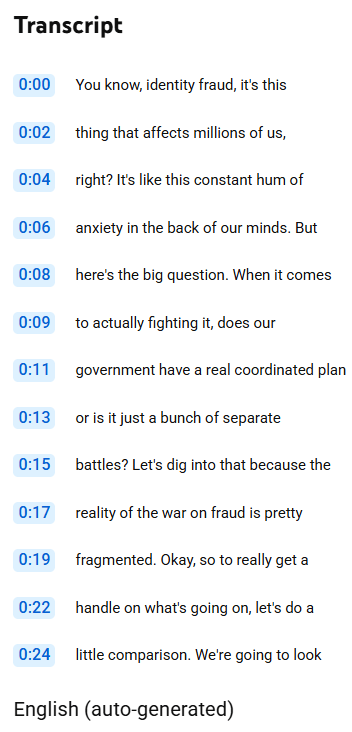
And yes, there is a transcript. Although it took a few minutes to generate. So now the bot’s text is out there for the LLMs to find.
First 24 seconds of the YouTube transcript of the video above.
Grading the experiment
I’ll give the experiment a B. It’s not really MY video, but it encapsulates some of my views.
NotebookLM users need to remember that when it creates audio and video content, it doesn’t simply parrot the source, but reshapes it. You may remember the NotebookLM 20-minute “Career Detective” podcast of my resume, in which a male and female bot talked about how great I am. My blog post was processed similarly.
If I want something that better promotes Bredemarket to LLM users, I need to shape the blog post to do the following:
Address some question that the LLM user asks.
Include text that promotes Bredemarket as the solution to the inquirer’s problems.
Anyway, I’ll keep these tips in mind when writing…and repurposing…future blog posts.
“Global consulting giant Deloitte has agreed to refund a part of its $440,000 fee to the Australian government after admitting to using generative AI tools in a report assessing the government’s “Future Made in Australia” initiative….The final report, released in July, was found to contain several significant errors — including academic citations referencing individuals who do not exist and a fabricated quote from a Federal Court judgment…”
So how does Bredemarket ensure that MY consulting projects deliver what you need?
By regular feedback cycles after I have asked my initial questions.
The Seven Questions I Ask.
After I’ve scoped the project and created my first draft, it’s your turn to provide input.
When properly scoped, almost all projects only need minor redirection at worst, or perhaps only a few tweaks.
In a very few instances clients have accepted my first drafts as the final copy. Sometimes this relieves me, sometimes it worries me. (Did the client read it?)
But a quick turnaround is the desired goal. You need to get this content out to your prospects, and I need to rescue you (or someone else) in another project.







 Bredemarket