Stuck at Second: Syneos Health Setback in India

I last discussed Syneos Health on August 15, in a popular post on early stage commercialization. When I checked for recent news I discovered that Syneos Health received a commercialization setback in India for the QL2107 Injection.

[T]he Subject Expert Committee (SEC) functional under the Central Drugs Standard Control Organization (CDSCO) has rejected its Phase III clinical trial proposal for QL2107 Injection….

After detailed deliberation, the committee opined that, “the proposed clinical trial is focused completely on Pharmacokinetic (pK) parameters. Moreover, primary objective and secondary objective of phase-III study protocol has not been demonstrated for confirmation of therapeutic benefit and efficacy end point. Hence, the committee didn’t recommend to conduct the clinical trial in India.”

So what is the QL2107 Injection? First off, it comes from a Chinese company.

Qilu Pharmaceutical is one of the leading vertically integrated pharmaceutical companies in China focusing on the development, manufacturing and marketing of active pharmaceutical ingredients (APIs) & finished formulations….Dedicated to offering more affordable medicines to the world and improving people’s well-being, Qilu has exported its products to over 100 countries.

The literature on QL2107 repeatedly refers to Qilu Pharmaceutical rather than Syneos Health. But presumably there’s a partnership somewhere.

According to this website, QL2107 is a “pembrolizumab biosimilar,” a fancy way to say that it is similar to pembrolizumab (brand name Keytruda®), a monoclonal antibody with possible anti-cancer applications. It’s already undergone clinical trials.

But a Phase III clinical trial is special. The Gilead Clinical Trials website defines the four phases of clinical trials, including the third:

Phase 3 trials continue to evaluate a treatment’s safety, effectiveness, and side effects by studying it among different populations with the condition and at different dosages. The potential treatment is also compared to existing treatments, or in combination with other treatments to demonstrate whether it offers a benefit to the trial participants. Once completed, the treatment may be approved by regulatory agencies.

Although there is a fourth phase, continuous monitoring, that is obviously important.

Imagen 4.

In summary, QL2107 is not a home run or even a triple. At least in India, it’s stuck at second.

Pharma Early Stage Commercialization With Syneos Health

While I’ve previously addressed pharma commercialization in terms of ensuring that patients use (and purchase) their medications, commercialization occurs long before that. After all, for a prescription drug to be available on the market, it has to get to the market in the first place.

Here’s how Syneos Health presents the issue.

“Early-stage biopharma companies have traditionally had limited options for getting their first asset to market. In most cases, they pursue deals with larger partners and lose or limit rights to their asset, or become a fully integrated company through heavy investment and a great deal of risk.”

Syneos Health has a solution for that. To learn the details of Syneos Health’s full-service pharma commercialization solution, visit this page.

Oh, and the company also has case studies.

“We helped build a European commercial capability via a comprehensive commercialization partnership, introducing a Commercial Leadership function to support the design and execution of the overall launch plan and integrate other services. We were able to scale quickly and establish commercial operations, designed a European launch plan and forecast and launched within three months in one EU country, with a subsequent sequenced launch through Europe, despite the ambiguities of COVID-19.

“In 12 weeks, we provided a full virtual infrastructure that included Field Teams, MSLs, Access Teams, Marketplace and Access/Pricing Consulting, Advertising, Public Relations and Medical Communications, increasing operational efficiencies through integrated Communications teams to reduce duplication in effort across promotional channels and recruiting, training and deploying sales reps, achieving an annual run rate of >$200 million.

“We partnered with the commercial team to provide all commercial launch services, offering crucial global leadership that enabled the team to dynamically scale up and down to respond to changing launch timelines and to balance short- and long-term financial objectives. With a heavy emphasis on market development, we empowered the customer to be fully engaged and aligned with all communities and show an in-depth understanding of market dynamics.”

What can Syneos Health do for you?

If you’re a pharma leader, of course.

Pharmacy Product Marketing to the Proper Hungry People

Health marketing leaders know that pharmacy product marketing can be complex because of the many stakeholders involved. Depending upon the product or service, your hungry people (target audience) may consist of multiple parties.

  • Pharmaceutical companies.
  • Pharmacists.
  • Medical professionals.
  • Insurance companies.
  • Partners who assist the companies above.
  • Consumers.

And the pharmacy product marketer has to create positioning and messaging for all these parties, for a myriad of use cases: fulfillment, approval, another approval, yet another approval. All the messaging can become a complex matrix. (I know. I’ve maintained a similar messaging matrix for an ABM marketing campaign for the financial services industry.)

To achieve your goals, health marketing leaders require a mix of strategy and tactics. And that’s where my extensive experience can help with your pharmacy product marketing program.

Talk to Bredemarket.

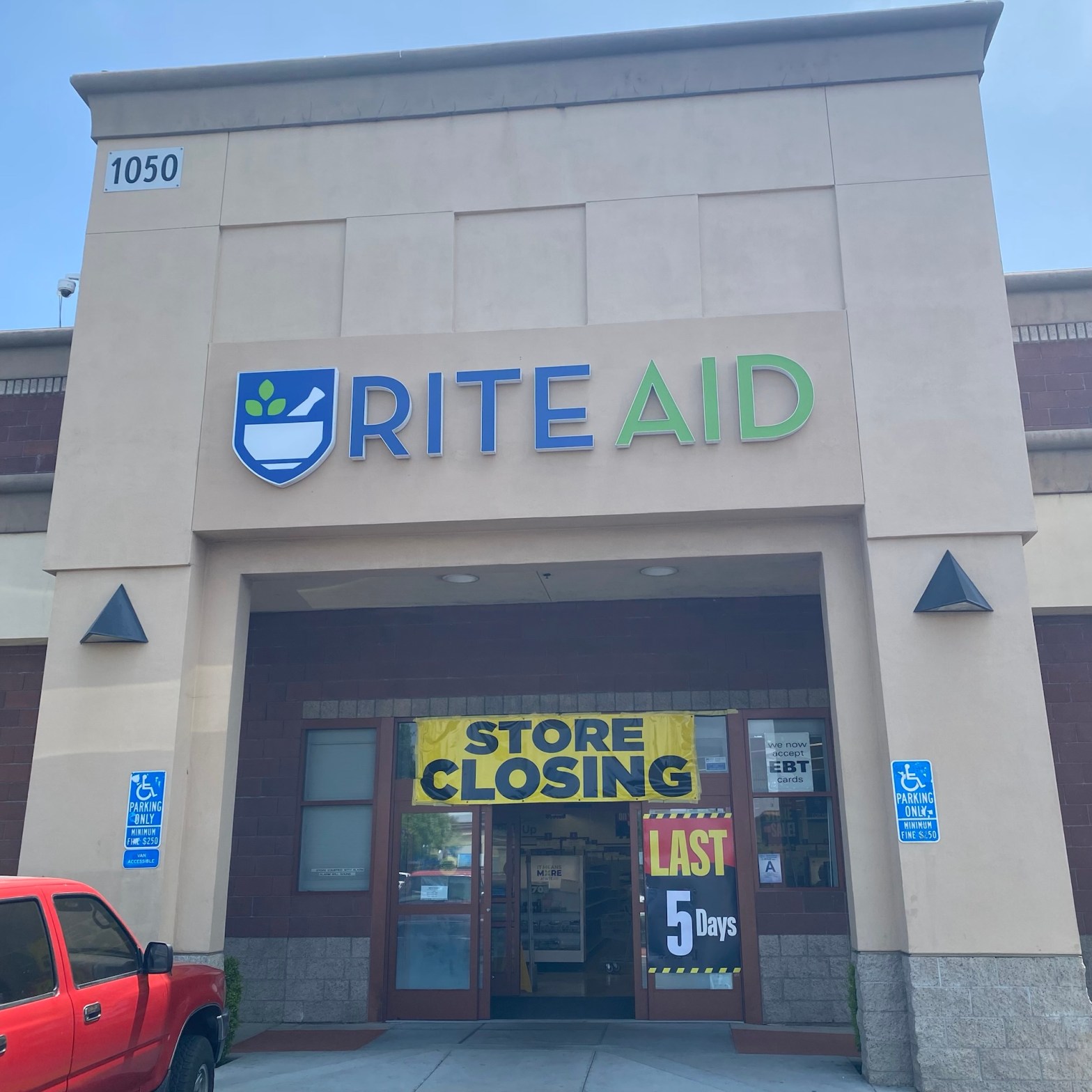
Mountain Avenue Rite Aid is Closing in Five Days

Update to my July 2 Bredemarket blog post.

As of July 21, the Rite Aid at 4th and Mountain in Ontario, California IS closing. In the next five days.

No Thrifty Ice Cream here.

And while the Thrifty Ice Cream counter at this store is empty, at least the Thrifty company survives.

No pharmacy pick up either.

More pictures below. Avoid if store closings depress you.

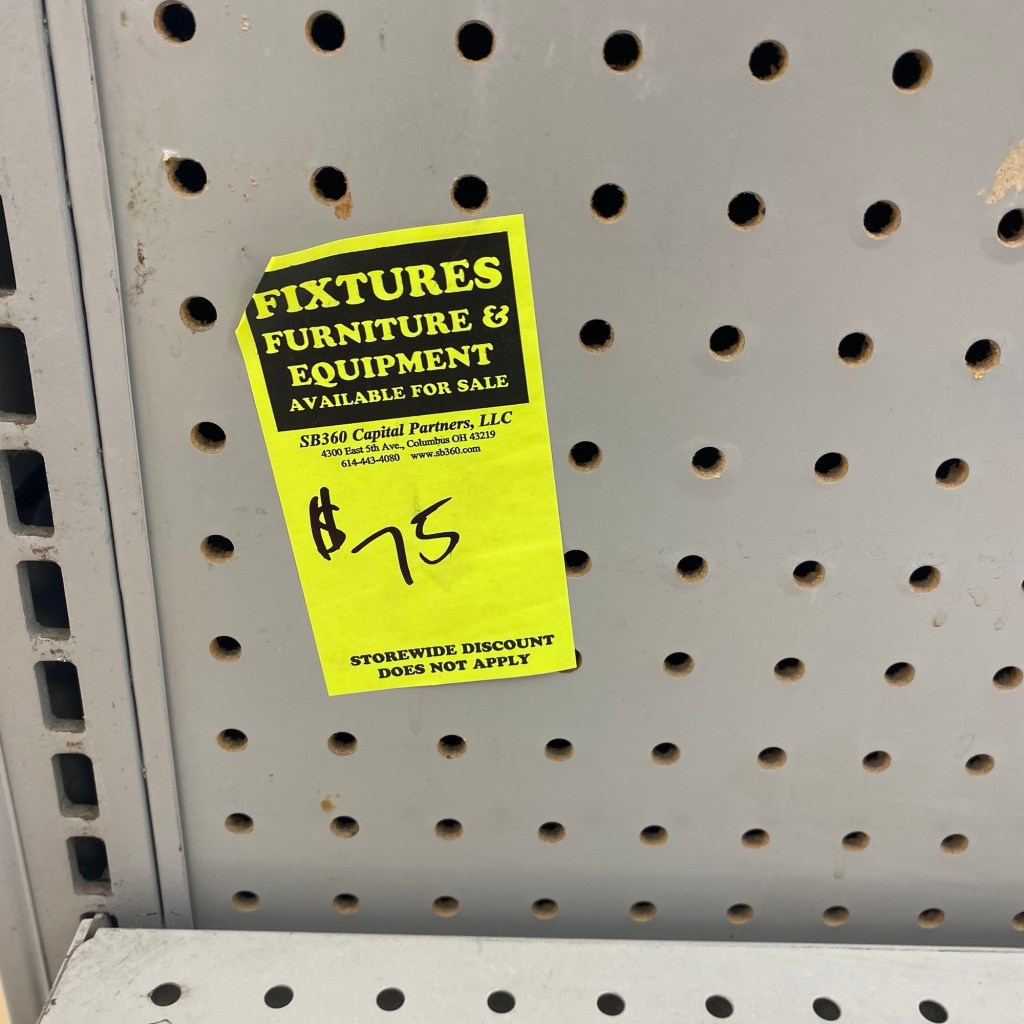
Aisles mostly bare, some store fixtures disassembled.
And they’re for sale.

NPRM

Back in January I wrote a post entitled “TPRM,” and I want to expand upon that post.

But first I want to talk about [REDACTED].

Because people who have been around for a while have heard the phrase that if you’ve ever had [REDACTED] with someone, you’ve had [REDACTED] with everyone they’ve ever had [REDACTED] with. At least in terms of [REDACTED] transmitted diseases. Lloyds Pharmacy Online even developed a “[REDACTED] degrees of separation” calculator to quantify that exposure.

Beyond third-party risk

But enough about [REDACTED]. Your company’s data and information are subject to similar threats.

I mean, it’s all well and great for you to adopt a third-party risk management system to make sure that your vendors and suppliers aren’t letting bad things happen to your data and information.

But guess what? All those third parties have third parties of their own.

Risk and Compliance Magazine explains:

A fourth party is an independent entity that provides services to you on behalf of your third-party service provider – also known as your third party’s third party. A fourth party is also known as a subcontractor or sub-outsourcer. Fourth parties have not signed an agreement with your organisation, so they do not have a legally binding obligation to your business. Your third party itself may subcontract all or some obligations of their agreement to you to another service provider.

An example

Let me delve into an example that I touched upon in my January post.

  • Let’s say that you did business with Bank of America.
  • You checked out Bank of America’s systems as part of your due diligence.
  • Perhaps you determined that everything was right and fine with the bank.
  • But it was NOT right and fine with one of Bank of America’s software providers, which is a FOURTH party to you.
  • So there’s this other system that you never contracted with.
  • But perhaps you’re one of the unlucky 414-plus Bank of America customers whose data was exposed because of this fourth party.

And the fourth parties have fifth parties, the fifth parties have sixth parties, and so fourth. I mean forth.

Making an impact

Luckily there are companies that provide aids not only to address third-party risk, but also nth-party risk when data is transmitted all over the place.

Hence my acronym NPRM, Nth-party risk management.

Which really stands for “notice of proposed rulemaking,” but what the hey.

Anyway, these companies and many other technology companies are making an impact.

But does anyone know what these companies are doing?

Perhaps Bredemarket can help your company make an impact with my content, proposal, and analysis services. If so, let me know.

(The image was created by Imagen 3.)

Apple Watch is a Passive Verb

(Imagen 3)

When Woz was building computers 50 years ago, he didn’t realize his successors would build medical devices that would receive FDA approval.

I touched on this earlier in my Thursday post about H.R. 238 and its proposal to use AI tools to write prescriptions.

But just in passing. Here’s a deeper, um, dive from May 2024.

“The FDA created the Medical Device Development Tools (MDDT) program to reduce uncertainty in device development.…Through MDDT, the FDA has created a portfolio of qualified tools that sponsors know the agency will accept without needing to reconfirm their suitability for use in a study.”

And now the Apple Watch is one of those qualified tools.

“Apple applied to get its AFib history feature qualified as a MDDT in December (2023). It is the first digital health technology qualified under the program.”

The advantage of using an Apple Watch to gather this data?

“Officials said the wearable can help address the challenges ‘by allowing for passive, opportunistic AFib burden estimation in a wearable form that is already familiar to Apple Watch users.’”

Medical measurements are often skewed by stress from the health experience itself. But if you’re already wearing an Apple Watch, and you always wear an Apple Watch, the passive nature of AFib data collection means you don’t even know you’re being measured.

Your LMM Pharmacy

On Threads, Dr. Jen Gunter called our attention to the newly-introduced H.R. 238, “To amend the Federal Food, Drug, and Cosmetic Act to clarify that artificial intelligence and machine learning technologies can qualify as a practitioner eligible to prescribe drugs if authorized by the State involved and approved, cleared, or authorized by the Food and Drug Administration, and for other purposes.”

Ultra-modern healthcare?

Presumably these non-person entities would not be your run-of-the-mill consumer generative AI packages, by rather specially trained Large Medical Models (LMMs).

Kinda like my “Dr. Jones, NPE.

Even so, don’t count on this becoming law in the next two years. For one, Rep. David Schweikert introduced a similar bill in 2023 which never made it out of committee.

Why is Rep. Schweikert so interested in this and related topics? Because medical bills are too damn high:

““How do I make sure we’re embracing technology and using it to bring disruptive cures to market, or other opportunities to market?” Schweikert asked. “And does that also now help lower drug pricing?””

Before you reject this idea entirely, Rep. Schweikert cited one example of technology decision-making:

“Schweikert noted that the FDA last month approved Apple Watch’s atrial fibrillation feature for use in clinical trials — the first such digital health tool approved for inclusion in the agency’s Medical Device Development Tools program.”

But before anything like this will ever happen with prescriptions, the FDA will insist on extremely rigorous testing, including double-blind tests in which some prescriptions are written by currently-authorized medical professionals, while other prescriptions are written by LMMs.

And even when the ethical questions surrounding this are overcome, this won’t happen overnight.

Adherence Does NOT Require 100% Compliance

(Green and red medicine bottle image from Google Gemini)

As many of you know, I spend the majority of my time in identity/biometrics, where in some cases a 99% accuracy rate is considered woefully inadequate. Imagine if your bank had a million customers and 10,000 of them couldn’t login…or 10,000 fraudsters COULD log in. The bank would throw a fit with its biometric vendor.

So perhaps my experience resulted in…um, bias when I wrote the following in my recent post on adherence and identity:

“Let’s say you are told to take 4 pills a day for 7 days, and the pharmacy gives you a prescription for 28 pills. A week later all the pills are gone.

“Does this demonstrate patient adherence to health instructions?”

Perhaps you spotted the implicit assumption that taking 28 of 28 pills (100%} constitutes adherence, while taking 27 of 28 pills (96.4%} constitutes NON-adherence.

Tain’t so, Sherlock, as Philip Morisky pointed out in a comment on my LinkedIn post on adherence and identity. He said, in part:

“…the threshold at 80% means that even if you do not have access to the medication for 6 out of 30 days, you are still considered adherent.”

Morisky presumably knows what he’s talking about, since he works for a company called…adherence. And Philip’s father, Dr. Donald Morisky, developed the Morisky Medication Adherence Scale (MMAS) for medication self-reporting.

But what of this 80% threshold? 

It’s commonly cited…like the statement that 30% of crime scene latent prints come from palms

But the 80% adherence threshold is not universally accepted, as this National Library of Medicine study notes.

“Based on Haynes’s early empirical definition of sufficient adherence to antihypertensive medications as taking ≥80% of medication, many researchers used this threshold to distinguish adherent from non-adherent patients. However, we propose that different diseases, medications and patient’s characteristics influence the cut-off point of the adherence rate above which the clinical outcome is satisfactory (thereafter medication adherence threshold).”

This particular study concluded that…more research is needed.

“…we cannot reject or confirm the validity of the historical 80% threshold. Nevertheless, the 80% threshold was clearly questioned as a general standard.”

Despite the questions about the 80% threshold, Philip Morisky’s basic point remains: you don’t have to take 100% of your medications to be considered adherent from a health perspective.

But I still maintain that for critically important medications, the IDENTITY of the person taking them needs to be known at a level very close to 100%.

Adherence and Identity

(Wildebeest patient image from Google Gemini)

Adherence

In healthcare, “adherence” refers to a patient who complies with the recommendations of a medical professional. For example, if a doctor tells a diabetic to lay off the Double Big Gulp soft drinks, the patient should comply. A National Library of Medicine study explains why this is important:

“Patient adherence is vital for the quality of health care outcomes and treatment efficacy, and reduces the economic burden on the healthcare system.”

So if you don’t practice adherence, you could experience adverse health care outcomes…like death.

You would think that would be persuasive enough, but we have to mention “the economic burden.” But it’s sadly true. If a patient is treated multiple times for the same preventable condition, that’s money down the drain. Or bedpan.

(Bedpan image from Google Gemini)

But there’s a big hole in adherence measurement.

Adherence measurement

Let’s say you are told to take 4 pills a day for 7 days, and the pharmacy gives you a prescription for 28 pills. A week later all the pills are gone.

Does this demonstrate patient adherence to health instructions?

Absolutely not.

Maybe you flushed all 28 pills down the toilet and didn’t ingest a single one.

Or maybe you have been giving some pills to your wildebeest.

(Medicated wildebeest image from Google Gemini)

In the ideal world, you would want to ensure that the medication was taken by the correct patient, not by a toilet or a wildebeest.

When adherence identity is important

I will grant that this is ridiculous for a vitamin.

But what about a chemotherapy drug? How will you know that the right patient is taking it and adhering to the medical plan?

Will you ask the patient for their name and date of birth, and consider your adherence monitoring job done?

Give me a…fracture.

Medical Fraudsters: Birthday Party People

I’ve talked about Protected Health Information (PHI) before. Sadly, the health information is not not protected that well, since fraudsters can acquire PHI very easily in some cases.

Sometimes REALLY easily.

For example, I could call a medical provider or go to a pharmacy and say that my name is Donald John Trump.

Do you know how many medical practitioners verify identities?

By asking for the person’s birthdate.

So there is the possibility that a medical practitioner, after I say that I am Donald John Trump, will simply ask for my birthday without a second thought.

I would reply “June 14, 1946.”

And some of these medical practitioners would immediately grant access!

Of course, the number of successful fraudulent accesses goes up substantially when the real person is NOT well known.

Yet birthdates are considered an acceptable form of security in some parts of the medical world.

Scary.