Bredemarket’s Name for the Sixth Factor of Authentication

Depending upon whom you ask, there are either three or five factors of authentication.

Unless you ask me.

I say that there are six.

Let me explain.

First I’ll discuss what factors of authentication are, then I’ll talk about the three factor and five factor school, then I’ll briefly review my thoughts on the sixth factor—now that I know what I’ll call it.

What are factors of authentication?

Before proceeding to factors of authentication, let’s review TechTarget’s definition of authentication.

Authentication is the process of determining whether someone or something is, in fact, who or what it says it is.

From https://www.techtarget.com/searchsecurity/definition/authentication

For purposes of this post I’m going to stay away from the “something” part and concentrate on the “someone” part.

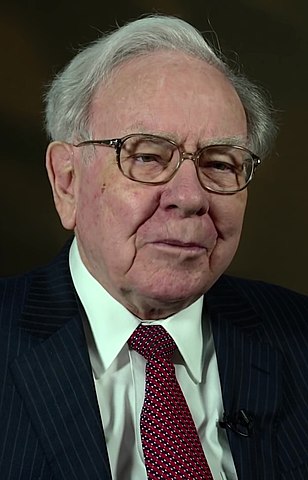
For example, if Warren Buffett has a bank account, and I claim that I am Warren Buffett and am entitled to take money from that bank account, I must complete an authentication process to determine whether I am entitled to Warren Buffett’s money. (Spoiler alert: I’m not.)

So how do I authenticate? There are many different ways to authenticate, which can be grouped into several authentication factors. Here’s how Sumo Logic defines “authentication factor.”

An authentication factor is a special category of security credential that is used to verify the identity and authorization of a user attempting to gain access, send communications, or request data from a secured network, system or application….Each authentication factor represents a category of security controls of the same type. 

From https://www.sumologic.com/glossary/authentication-factor/

When considering authentication factors, the whole group/category/type definition is important. For example, while a certain system may require both a 12-character password and a 4-digit personal identification number (PIN), these are pretty much the same type of authentication. It’s just that the password is longer than the PIN. From a security perspective, you don’t gain a lot by requiring both a password and a PIN. You would gain more by choosing a type of authentication that is substantially different from passwords and PIN.

How many factors of authentication are there?

So how do we define the factors of authentication? Different people have different definitions.

Three factors of authentication

For the most part, I believe that everyone agrees on at least three factors of authentication. As I noted in a prior post on factors of authentication, NIST defines the following three factors:

Factors include: (i) something you know (e.g. password/personal identification number (PIN)); (ii) something you have (e.g., cryptographic identification device, token); or (iii) something you are (e.g., biometric).

From https://csrc.nist.gov/glossary/term/Multi_Factor_Authentication, cited in https://bredemarket.com/2022/03/19/remember-the-newer-factors-of-authentication/

Note that NIST’s three factors are very different from one another. Knowing something (such as a password or a PIN) differs from having something (such as a driver’s license) or being something (a fingerprint or a face).

But some people believe that there are more than three factors of authentication.

Five factors of authentication

Let’s add two factors to the definition trumpeted by NIST. People such as The Cybersecurity Man have included all five in their definition.

  • Something you know.
  • Something you have.
  • Something you are.
  • Something you do.
  • Somewhere you are.

For more information, see my March 2021 post on the five factors of authentication.

But are there only five?

Six factors of authentication

In April 2022, I began wondering if there is a sixth authentication factor. While I struggled to put it into the “some xxx you xxx” format, I was able to encapsulate what this sixth factor was.

What about the authentication factor “why”?

This proposed factor, separate from the other factors, applies a test of intent or reasonableness to any identification request.

From https://bredemarket.com/2022/04/12/the-sixth-factor-of-multi-factor-authentication-you-heard-it-here-first/
Why is this man smoking a cigarette outdoors? By Marek Slusarczyk, CC BY 3.0, https://commons.wikimedia.org/w/index.php?curid=108924712

Over the months, I struggled through some examples of the “why” factor.

  • Why is a person using a credit card at a McDonald’s in Atlantic City? (Link) Or, was the credit card stolen, or was it being used legitimately?
  • Why is a person boarding a bus? (Link) Or, was the bus pass stolen, or was it being used legitimately?
  • Why is a person standing outside a corporate office with a laptop and monitor? (Link) Or, is there a legitimate reason for an ex-employee to gain access to the corporate office?

As I refined my thinking, I came to the conclusion that “why” is a reasonable factor of authentication, and that this was separate from the other authentication factors (such as “something you do”).

And the sixth factor of authentication is called…

You’ll recall that I wanted to cast this sixth authentication factor into the “some xxx you xxx” format.

So, as of today, here is the official Bredemarket list of the six factors of authentication:

  • Something you know.
  • Something you have.
  • Something you are.
  • Something you do.
  • Somewhere you are.

(Drumroll…)

  • Somewhat you why.

Yes, the name of this factor stands out from the others like a sore thumb (probably a loop).

However, the performance of this factor stands out from the others. If we can develop algorithms that accurately measure the “why” reasonableness of something as a way to authenticate identity, then our authentication capabilities will become much more powerful.

Testing My Sixth Authentication Factor on One Real and Two Imagined Corporate Office Visits

This is the third post in a series on my proposed sixth factor of authentication.

Perhaps you’ve heard people say there are three factors of authentication, or four factors of authentication, or five factors of authentication.

But what if there are six?

I know what you’re thinking, punk. You’re thinking: did he define 6 factors of authentication, or only 5? (Repurposing Dirty Harry, whose sixth bullet must have 404’ed.)

By unknown – Screenshot from the DVD version of the 1971 film Dirty Harry, extracted from Harry’s infamous “do ya feel lucky” monologue, Fair use, https://en.wikipedia.org/w/index.php?curid=6867681

Introduction: what are factors of authentication, anyway?

Authentication is the process of determining whether a person is truly THE person who is associated with a particular account, such as a computer login or a bank account.

Five authentication factors

There are many ways in which you can authenticate yourself, but (as I previously noted before starting the “6fa” series) all of these methods fall into up to five general categories, or “factors.”

  1. Something you know.
  2. Something you have.
  3. Something you are.
  4. Something you do.
  5. Somewhere you are.

By the way, if you provide a password, a PIN, your mother’s maiden name, and the name of your favorite pet, that is not four authentication factors, but four instances of the same authentication factor (something you know). And this is not a recipe for robust security.

For another example of multiple uses of the same factor, see kao’s post in Life in Hex.

What if there is a sixth authentication factor?

In April 2022, while I was consulting for the identity industry but not employed by it, I proposed a sixth authentication factor.

I’d like to propose a sixth authentication factor.

What about the authentication factor “why”?

This proposed factor, separate from the other factors, applies a test of intent or reasonableness to any identification request.

From https://bredemarket.com/2022/04/12/the-sixth-factor-of-multi-factor-authentication-you-heard-it-here-first/

Testing my theory

Two months later, I was employed in the identity industry, and therefore Bredemarket was pivoting away from identity consulting. But I was still musing about identity topics that had nothing to do with my employment, and decided to test my sixth authentication factor theory on a case in which a person, or possibly multiple persons, were boarding buses.

After I laid out the whole story, which involved capturing the times at which a person (or persons) boarded a bus, I wondered if there were really just five authentication factors after all.

Now I’ll grant that “why?” might not be a sixth factor of authentication at all, but may fall under the existing “something you do” category. This factor is normally reserved for gestures or touches. For example, some facial liveness detection methods require you to move your head up, down, right, or left on command to prove that you are a real person. But you could probably classify boarding a bus as “something you do.”

From https://bredemarket.com/2022/07/24/testing-my-sixth-authentication-factor-on-omnitrans-bus-passes/

So I tried to think of a “why” action that couldn’t be classified as “something you do.” But I didn’t think that hard, because I was busy in my day job, and I didn’t really need 6fa in my non-identity consulting work.

Well, that changed. So I’m revisiting the 6fa issue again, and this time I’ve devised a new test in which I visit two buildings over the course of three months. Can the sixth authentication factor truly confirm or deny my identity?

Why am I visiting a corporate office?

For this test, I will examine three instances—one real, two imagined—in which I visited a corporate office associated with a well-known identity verification firm.

No, not THAT firm. By Arne Müseler / http://www.arne-mueseler.com, CC BY-SA 3.0 de, https://commons.wikimedia.org/w/index.php?curid=78985341

As I consider whether I should be authenticated to enter the facility in question, I will use my proposed “why?” factor to measure whether there is a reasonable intent for me to be present, which could determine whether I pass or fail authentication.

Visit number one, April 2023

This visit really happened. One day I presented myself at a corporate office to be authenticated for entry.

If we use my six factors of authentication, should I be allowed in?

Let’s start with the first five factors:

  • Something you know, have, and are. Without disclosing confidential information about the corporate office’s security procedures, I can simply say that I satisfied all three of these factors.
  • Something you do. It is a matter of public record that the corporation that controls this corporate office does not employ active liveness, but instead employs passive liveness. Therefore I can disclose that when visiting this corporate office, I didn’t have to shake my head in one hundred different directions to prove that I was a live person.
  • Somewhere you are. It sounds silly, but let’s ask the question anyway. If I want to physically enter a corporate office, am I at that corporate office? It is possible to detect that my phone is there (something you have), but does that necessarily mean that I am there (something you are)? To simplify things, let’s assert that I passed the “somewhere you are” test, and that I was truly outside of the corporate office, waiting to get in.

Now let’s apply the sixth factor, why/intent/reasonableness. Was there a reason why I was standing outside the office door?

In this case, there was a reason why I was there. I was a member of the Marketing Department, and the entire Marketing Department was gathering for a week-long meeting at the corporate office. So my presence there was legitimate.

Authentication: PASSED.

Visit number two, June 2023

This visit never happened except in my imagination. But would would have occurred if I had presented myself at the corporate office this month?

Let’s start by going through the five authentication factors again.

  • Something you know, have, and are. Without disclosing confidential information, I can simply say that in this instance I would have failed at least one of the three authentication factors. Obviously not the “something you are” factor, since I was still the same person that I was two months previously, but I would have failed at least one of the other two.
  • Something you do. Again, no liveness testing, so “something you do” would not apply.
  • Somewhere you are. Let’s assert that I would have again passed the “somewhere you are” test, and that I was truly outside of the corporate office, waiting to get in.

So I’ve already failed one or two of the five authetication factors, but would I fail the sixth?

Yes, because there was no valid reason for me to enter the corporate office.

Why not?

Because by June 2023 I was no longer an employee, and therefore had no intent or reason to visit the corporate office. I didn’t work there, after all.

(And incidentally, this is why I would have failed one or two of the other authentication factors. Because I was no longer an employee, I no longer knew something and/or had something I needed to enter the office.)

Authentication: FAILED.

Visit number three, June 2023

This visit never happened either, except in my imagionation. Let’s assume all of the facts from visit number two, with one critical exception: I arrived at the corporate office carrying computer equipment.

So how does the authentication process unfold now?

  • Something you know, have, and are. The presence of computer equipment would not have changed these three authentication factors. I still would have passed the “something you are” factor and failed one or both of the other two. (In this instance, computer equipment does not count as “something you have.”)
  • Something you do. Again, no liveness testing, so “something you do” would not apply.
  • Somewhere you are. Let’s assert that I would have again passed the “somewhere you are” test, and that I was truly outside of the corporate office, waiting to get in.

Now let’s turn to the sixth authentication factor. No, I am not a current employee who is usually entitled to visit the corporate office, but my possession of computing equipment introduces a new variable into the why/intent/reasonableness factor.

Why? Because the computer equipment belonged to the company, and in this instance I would have been visiting the corporate office to return the computer equipment to the company.

Authentication: PASSED.

So I guess there IS a sixth authentication factor

And there you have it.

In visits number two and three, all of the standard five authentication factors provided identical results. In both instances:

  • I passed the something you are test.
  • I failed the something you know and/or the something you have test.
  • Something you do was never tested.
  • I passed the somewhere you are test.

But for visit number two authentication failed, while for visit number three authentication passed, solely on the basis of the sixth authentication factor. I had no valid reason to be at the corporate office…except to return the company’s equipment.

So the sixth authentication factor exists in theory, but it will take some work to make it a reality.

By en:User:Cburnett – This W3C-unspecified vector image was created with Inkscape ., CC BY-SA 3.0, https://commons.wikimedia.org/w/index.php?curid=1496812

So now how do I make a ton of money by bringing this sixth authentication factor to market?

As I said over a year ago…

Maybe I should speak to a patent attorney.

From https://bredemarket.com/2022/04/12/the-sixth-factor-of-multi-factor-authentication-you-heard-it-here-first/

The sixth factor of multi factor authentication (you heard it here first!)

As many of my readers know, there are a variety of ways for people to individually identify themselves.

The National Institute of Standards and Technology recognizes three of these authentication factors:

  • The most commonly known authentication factor is “something you know.” This includes such items as passwords, personal identification numbers (PINs), and the name of your childhood pet. This authentication factor is very common and very controversial, to the point where some want to eliminate it altogether. (I don’t.)
  • Another authentication factor that I know very well is “something you are.” Biometrics such as fingerprint identification and facial recognition falls into this category, as well as gait recognition, “behavioral biometrics,” and other biometric identifiers.
  • The third authentication factor that NIST recognizes is “something you have.” This could be a driver’s license, a passport, a key fob, a smartphone, or perhaps a digital identity application.

But those aren’t the only authentication factors. Two others have been identified, as I have previously noted.

  • “Something you do” differs from both gait recognition and behavioral biometrics, because this is not an inherent property of your being, but is a deliberate set of actions on your part. For example, you could gain access to a nuclear facility by putting your left foot in, putting your left foot out, putting your left foot, in and shaking it all about. Note, however, that this particular “something you do” is as common as the password “12345” and should be avoided.
  • And the fifth factor is “somewhere you are.” For example, if I am buying something at a a store in Virginia, but I am physically in California, something appears to be wrong.
GPS network illustration
By Éric Chassaing – Own work, CC BY-SA 3.0, https://commons.wikimedia.org/w/index.php?curid=8876959

OK, that’s it. End of post. Those are the five authentication factors. There aren’t any more, and there never will be any more. Oh sure, you could come up with a sixth authentication factor, but chances are that it would map into one of the five existing authentication factors.

Or maybe not.

Why?

I’d like to propose a sixth authentication factor.

What about the authentication factor “why”?

This proposed factor, separate from the other factors, applies a test of intent or reasonableness to any identification request.

Man smoking a cigarette and stacking hats on a fire hydrant
Why is this man smoking a cigarette outdoors? By Marek Slusarczyk, CC BY 3.0, https://commons.wikimedia.org/w/index.php?curid=108924712

Let me give you an example. Assume for the moment that I am at a McDonald’s in Atlantic City and want to use my brand new credit card to buy some healthy Irish cuisine.

McDonald's food
Not in Atlantic City. By TeaLaiumens – Own work, CC BY-SA 4.0, https://commons.wikimedia.org/w/index.php?curid=37026979

You could, of course, apply the existing authentication factors to this transaction:

  • I physically have the credit card.
  • I know the PIN that is associated with the credit card.
  • My face matches the face of the person who owns the credit card.
  • I am physically at the McDonald’s where the food is for sale, and I physically have a hotel key associated with a nearby hotel, and I physically have a badge associated with a trade show in the city. (The latter two facts are actually a combination of “something you have” and “somewhere you are,” but I threw them here for the fun of it.)
  • If my credit card company has implemented it, I can perform the super secret finger pattern (or hokey pokey dance) associated with this account.

But even if all of these factors are authenticated, or even if some of them are not, does it make sense that I would be purchasing a meal at a McDonald’s in Atlantic City?

  • Did I recently book a flight and fly from my California home to Atlantic City? This could explain “why” I was there.
  • Is it lunchtime? This could explain “why” I was making this transaction.
  • Is my stomach growling? This could indicate that I am hungry, and could explain “why” I was at such a fine food establishment.

Admittedly, employing data warehousing and artificial intelligence to use the “why” factor to authenticate a small fast food purchase is overkill, just like it’s overkill to require three biometric identifiers and a passport to open a physical mailbox.

But perhaps use of such an authentication factor would be appropriate at a critical infrastructure facility such as a nuclear power plant.

nuclear power plant
By Avda – Own work, CC BY-SA 3.0, https://commons.wikimedia.org/w/index.php?curid=26894741

Assume for the moment that I am a double agent, employed the the U.S. Department of Energy but secretly a spy for an enemy country. All of the five authentication factors check out, and I am the person who is authorized to visit a particular nuclear power plant.

But why am I there?

Am I there for some regular U.S. Department of Energy business that is totally above board?

Or am I there for some other unknown reason, such as theft of secrets or even sabotage?

How to implement the “why?” authentication factor

I believe that a “why?” authentication factor could be very powerful, but it would take some effort to implement it.

First, the authentication system would have to access all the relevant data. In the McDonald’s example above, that includes (a) my flight data, (b) the time of day, and (c) my health data (“biometrics” in the broader sense). In the nuclear power plant example, the authentication system would have to know things such as nuclear power plant inspection schedules, trip authorizations from my supervisor, and other data that would indicate a reason for me to be at the plant. That’s a lot of data.

Neural network
By en:User:Cburnett – This W3C-unspecified vector image was created with Inkscape ., CC BY-SA 3.0, https://commons.wikimedia.org/w/index.php?curid=1496812

Second, the authentication system would have to process all the relevant data to glean knowledge from it. By itself, the data points “United Flight 123 from Ontario to Atlantic City yesterday,” “1:30 pm,” and “haven’t eaten in six hours” do not allow the system to make an authentication decision.

Third, the authentication system would have to collect and protect that mass of data in a way that protects my privacy and the privacy of others. In the United States at present, this is where the whole system would probably fall apart. While a whole bunch of data is collected about us and placed in silos (the TSA-airline silo, for example), putting it all together could be pretty scary to some. Although certain lawyers in Illinois would love the moneymaking opportunities that such a system could provide via Illinois Biometric Information Privacy Act lawsuits.

So a complete implementation of the “why” authentication factor is probably impossible for now, due to both technical and societal constraints.

But is it possible to implement a subset of the “why” authentication factor? For example, since a company presumably has access to employee corporate travel schedules, could the company use the knowledge of an employee’s flight from Chicago to Los Angeles on Sunday to provide the employee with physical access to the firm’s Southern California office on Monday?

Something to think about.

Maybe I should speak to a patent attorney.

The Pandora’s Box of the “passwords are dead” movement

I’ve previously commented on the “passwords are dead” movement, and why I don’t agree that passwords are dead. But I recently realized that the “logic” behind the “passwords are dead” movement could endanger ALL forms of multi-factor authentication.

If I may summarize the argument, the “passwords are dead” movement is based upon the realization that passwords are an imperfect authentication method. People use obvious passwords, people re-use passwords, individuals don’t guard their passwords, and even companies don’t guard the passwords that they store. Because of these flaws, many passwords have been compromised over the years.

From this indisputable fact, the “passwords are dead” advocates have concluded that the best thing to do is to refrain from using passwords entirely, and to use some other authentication method instead (choosing from the five authentication factors).

In my spiral of people connections, the most frequently suggested replacement for passwords is biometrics. As a biometric content marketing expert and a biometric proposal writing expert, I’m certainly familiar with the arguments about the wonderfulness of biometric authentication.

But wait a minute. Isn’t it possible to spoof biometrics? And when a biometric is compromised, you can’t change your finger or your face like you can with a compromised password. And the Internet tells me that biometrics is racist anyway.

So I guess “biometrics are dead” too, using the “passwords are dead” rationale.

And we obviously can’t use secure documents or other “something you have” modalities either, because “something you have” is “something that can be stolen.” And you can’t vet the secure document with biometrics because we already know that biometrics are spoofable and racist and all that.

So I guess “secure documents are dead” too.

Somewhere you are? Yeah, right. There are entire legitimate industries based upon allowing someone to represent that they are in one place when in fact they are in another place.

So I guess “geolocation is dead” too.

You see where this leads.

NO authentication method is perfect.

But just because an authentication method has imperfections doesn’t mean that it should be banned entirely. If you open the Pandora’s Box of declaring imperfect authentication methods “dead,” there will be NO authentication methods left.

Epimetheus opening Pandora’s Box. By Giulio Bonasone – This file was donated to Wikimedia Commons as part of a project by the Metropolitan Museum of Art. See the Image and Data Resources Open Access Policy, CC0, https://commons.wikimedia.org/w/index.php?curid=60859836

And before talking about multi-factor authentication, remember that it isn’t perfect either. With enough effort, a criminal could spoof multiple factors to make it look like someone with a spoofed face and a spoofed driver’s license is physically present at a spoofed location. Of course it takes more effort to spoof multiple factors of authentication…

…which is exactly the point. As security professionals already know, something that is harder to hack is less likely to be hacked.

“I don’t want to say multi-factor is terrible. All things considered, it is generally better than single-factor and we should strive to use it wherever it makes sense and is possible. However, if someone tells you something is unhackable, they’re either lying to you or dumb.”

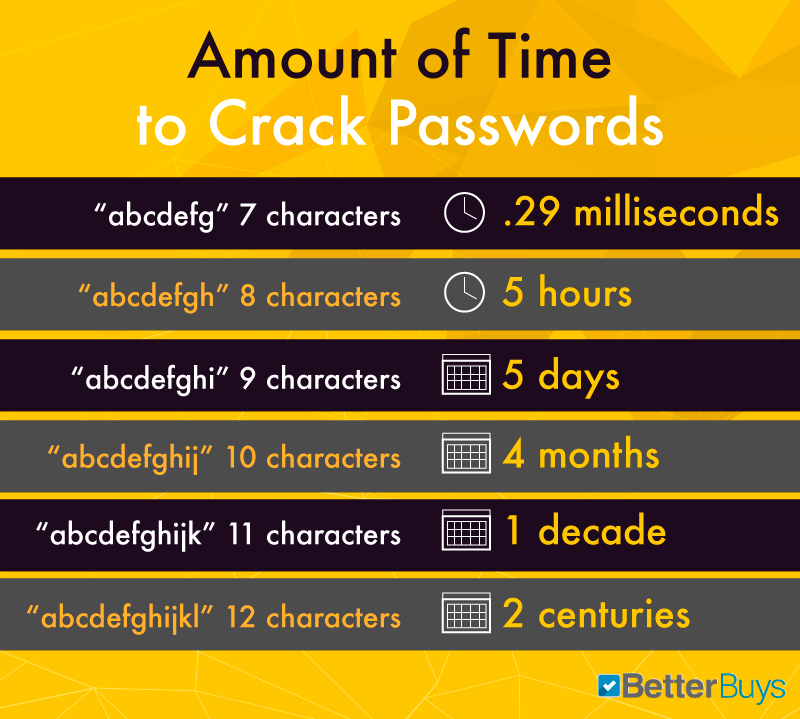
And heck, be wild and throw a strong password in as ONE of the factors. Even weak passwords of sufficient length can take a long time to crack, provided they haven’t been compromised elsewhere.

Feel free to share the images and interactive found on this page freely. When doing so, please attribute the authors by providing a link back to this page and Better Buys, so your readers can learn more about this project and the related research.

Luckily, my experience extends beyond biometrics to other authentication methods, most notably secure documents and digital identity. And I’m familiar with multi-factor authentication methods that employ…well, multiple factors of authentication in various ways. Including semi-random presentation of authentication factors; if you don’t know which authentication factors will be requested, it’s that much harder to hack the authentication process.

Do you want to know more? Do you need help in communicating the benefits of YOUR authentication mechanism? Contact me.