Possible FinCEN Changes

H/T ComplyAdvantage. From FinCEN.

“[On June 18] the U.S. Department of the Treasury’s Financial Crimes Enforcement Network (FinCEN) held the 62nd semi-annual plenary meeting of the Bank Secrecy Act Advisory Group (BSAAG). Deputy Secretary of the Treasury Michael Faulkender delivered remarks at the event laying out guiding principles for BSA modernization.”

https://www.fincen.gov/news/news-releases/fincen-holds-62nd-bank-secrecy-act-advisory-group-bsaag-plenary

ComplyAdvantage itself states:

“The most eye-catching update is that the Treasury will attempt to “change the AML/CFT [Anti Money Laundering/Combating the Financing of Terrorism] status quo” so the BSA “explicitly permits financial institutions to de-prioritize risks” and direct resources towards higher-risk areas. The Treasury also intends to streamline reporting processes to minimize the SAR [Suspicious Activity Report] and CTR [Currency Transaction Report] burden on organizations.”

https://www.linkedin.com/pulse/us-plans-bsa-modernization-singapore-implements-corporate-iuzxe

What is “Know Your Business” (KYB)?

I run in circles that use the acronym KYB, or “Know Your Business.” But I realize that many of you don’t use this acronym every day, so I thought I would explain it.

Let’s say that you encounter a business such as ByteDance or HiveLLM or Lorem Ipsum and you want to know more about it.

There are good reasons to understand a business before engaging with it.

As financial institutions and other businesses have known for years, there are services such as “Know Your Customer” and “Know Your Business” that organizations can use. 

“KYC and KYB let companies make sure they’re dealing with real people, and that the business is legitimate and not a front for another company—or for a drug cartel or terrorist organization.”

Even if you’re not dealing with extremist terrorists, you may want to have a better understanding of where the business is and/or who runs the business. Remembering that the legal owner of the business may not be the one who is actually operating it. For example, the Mob Museum documents the original ownership of the late Tropicana Hotel in Las Vegas:

“Miami hotelier Ben Jaffe (part owner of the Fontainebleau in Miami Beach) owned the land on which the casino would sit, but Conquistador Inc. would build and operate the resort.

“It just so happened that Conquistador’s owner, “Dandy” Phil Kastel, had a long and fruitful partnership with Frank Costello, perhaps the nation’s most infamous gangster in the spring of 1957…. And it almost goes without saying that most ‘Miami hotel men’ who came to Las Vegas in this era were more than familiar with Meyer Lansky, another famous gangland name.”

Unfortunately for Costello, people soon knew HIS business:

“On May 2, 1957, while entering a New York apartment building, Costello was shot and wounded by Vincent “the Chin” Gigante on orders from rival Mafia boss Vito Genovese. Written on a piece of paper found by police inside Costello’s coat pocket was the exact gross win from the Tropicana as of April 27, 1957 — $651,284, less $153,745 in markers (loans to players), with the proceeds from slot machines at $62,844. The note mentioned $30,000 for “L” and $9,000 for “H,” likely money to be skimmed on behalf of Costello’s underworld partner Meyer Lansky and perhaps for Mob-connected Teamsters union boss James Hoffa. It was a big national news story.”

It’s best to know your business BEFORE it’s splashed all over the media.

Evading State Taxes: Non-Person Automotive Entities and Geolocation

When a person is born in the United States, they obtain identifiers such as a name and a Social Security Number.

When a non-person entity is “born,” it gets identifiers also. For automobiles, the two most common ones are a Vehicle Identification Number (VIN) and a license plate number. (There is also title, which I’ve discussed before, but that’s not really an identifier.)

In my country license plates and the associated vehicle registrations, like driver’s licenses, are issued at the state level. Montana, for example, has 2.3 million registered vehicles…which is odd, because the state only has 879,000 licensed drivers.

How can this be? Jalopnik explains:

“All that wealthy car owners have to do is spend around $1,000 to open an LLC in Montana, then use the LLC to purchase a car with no sales tax — and said car is not subject to vehicle inspections or emissions testing.”

That explains things. The Montana LLCs need multiple cars for all their LLC-related travel between Billings, Bozeman, and Butte. That’s a ton of miles on the Montana highways.

Um…no.

“According to Bloomberg, former Montana revenue director Dan Bucks said there are likely more than 600,000 vehicles registered in Montana but operated in other states.”

Like California. Where people don’t want to pay the fees associated with vehicle registration here, so they say their vehicles are Montana vehicles. Only problem is, license plate readers on California freeways can identify the movements of a car with Montana plates. And if that “Montana” car is moving in California, expect a visit from the tax authority.

But it’s not just the money hungry loony liberal Commies in California. Jalopnik reports that the money hungry loony liberal Commies in…um…Utah are mad also.

“This is really an abuse of our tax system,” said Utah tax commissioner John Valentine. “They pay nothing to support our state, just a small fee to Montana for the opportunity to evade taxes in Utah.”

Because in the end it doesn’t matter if you’re blue or red. What matters is the green. And the geolocation.

(2002 Ford Excursion image public domain)

Why Invela TPRM?

During my three months working with a third-party risk management (TPRM) client, I never heard anyone mention Invela.

Perhaps with reason. Although LinkedIn says the company was founded in 2024, it didn’t post its first blog until April 20, 2025, or its first LinkedIn posts until April 21.

But the second blog post, dated April 21, is the one that matters.

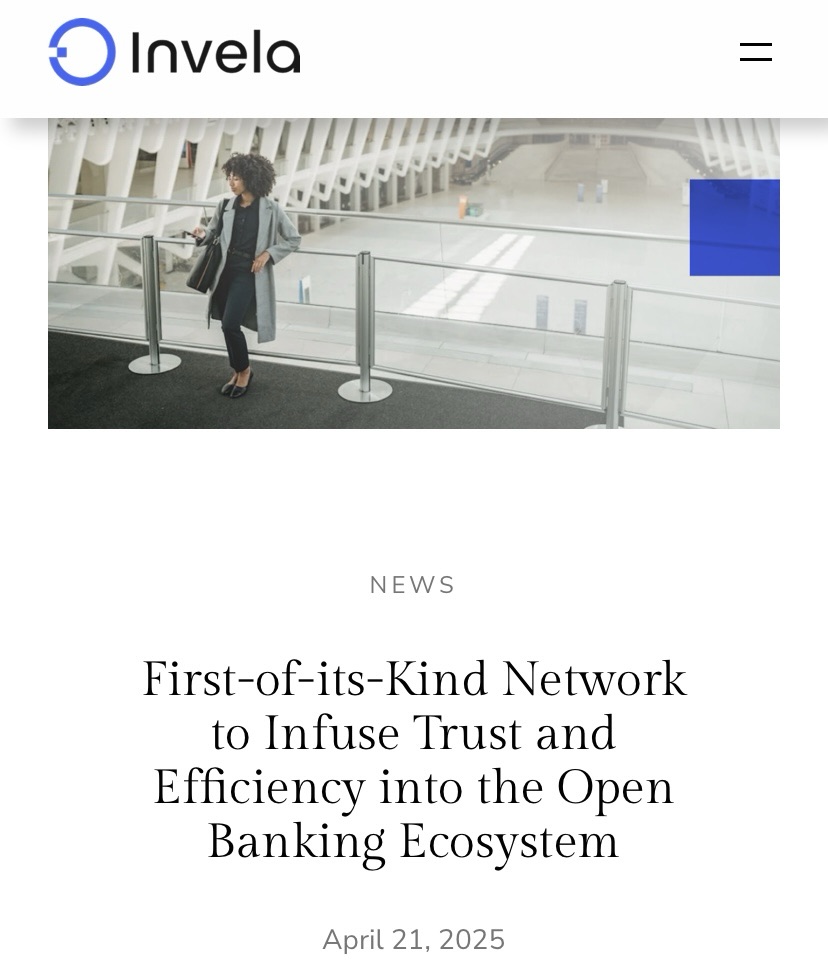
“Invela has officially launched a transformative network to bolster consumer protection and foster innovation within the open banking ecosystem. The Invela Network, developed in collaboration with industry-leading specialist partners, promises to revolutionize how financial institutions manage third-party risk…”

The post goes on to cite the Consumer Financial Protection Bureau (CFPB), but…well…that’s nice.

Invela’s TPRM solution specifically targets the open banking segment of the financial services industry. Open banking, featuring companies such as Plaid, Kong, and Camunda (among others), facilitates the interchange of financial data, rather than keeping it within each bank’s walled garden.

Which of course increases risk.

Hence companies such as Invela.

I was unable to find a “why” story for Invela that compared to the why story I previously found for Ubiety Technologies. Obviously the Invela people never read my book.

However, the principals at Invela come from companies such as Mastercard (although I could find no information on Invela’s CEO Steve Smith). But the Invela leadership team presumably knows their market. We will see if they know their marketing.

Which reminds me…if you need help with your cybersecurity product marketing, Bredemarket has an opening for a cybersecurity client. I can offer

  • compelling content creation
  • winning proposal development
  • actionable analysis

If Bredemarket can help your stretched staff, book a free meeting with me: https://bredemarket.com/cpa/

Don’t Try to Scam a Police Captain

Scammers tried to extract information from Ann Stephens, but she refused to give them the stuff they wanted: Social Security digits, her home address, or her bank account information.

Ann Stephens taking a scammer call at work.

The only information she provided was her work address.

At the time (2019), she was a police captain in Apex, North Carolina. 

Oops.

She retired in 2022. And presumably continues to handle fraudsters, to their detriment.

And one more thing…

The formal announcement is embargoed until tomorrow, but Bredemarket has TWO openings to act as your on-demand marketing muscle for facial recognition or cybersecurity:

  • compelling content creation
  • winning proposal development
  • actionable analysis

Book a call: https://bredemarket.com/cpa/

When Beneficial Ownership Diverges From Legal Ownership

I recently discussed some proposed changes to the way in which beneficial ownership information (BOI) is collected. However, even after the changes are made, FinCEN will still collect BOI for foreign firms.

Hungary, facial recognition, and geolocation

Biometric Update recently published a story about facial recognition in Hungary, and its use to identify people who display rainbows and dress in ways “that diverge from the gender they were assigned at birth.” I’m going to zero in on one portion of the story: the facial recognition provider involved.

The company FaceKom has been around under different names since 2010 but has seen significant growth during the past few years thanks to investments from the Central European Opportunity Private Equity Fund (CEOM). The fund has no direct links with [Prime Minister Orbán’s son-in-law, István] Tiborcz. However, it is registered on the same address in Budapest where several companies owned by Orbán ‘s son-in-law operate.

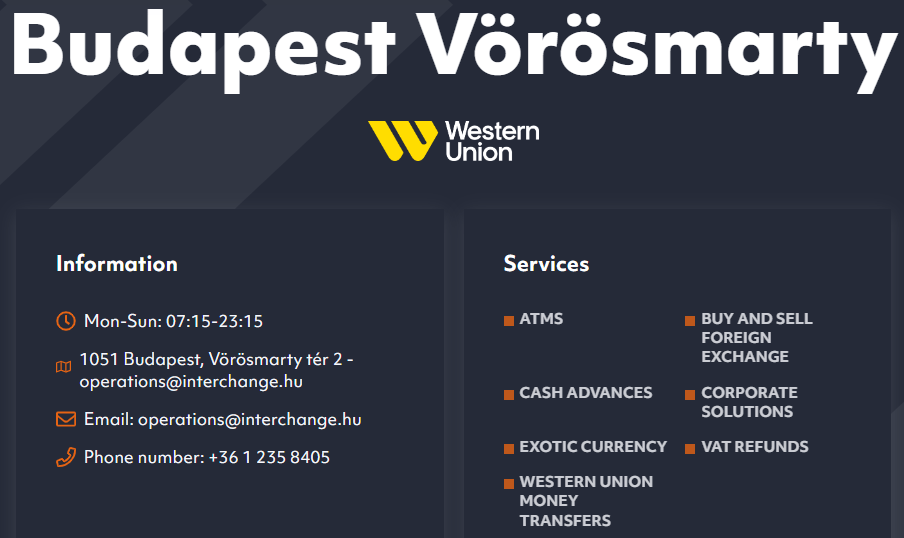
Ah, geolocation! The Chi Fu Investment Fund Management Zrt.’s address of record is 1051 Budapest, Vörösmarty tér 2.

And do you know what else is at that address?

A Western Union Currency Exchange.

Well, that’s enough to drive some conspiracy theorists crazy.

Beneficial ownership and legal ownership

So I didn’t find the smoking gun, but I do want to take this opportunity to point out what BENEFICIAL ownership is. Investopedia:

A beneficial owner is a person who enjoys the benefits of ownership even though the title to some form of property is in another name.

Using the Hungarian example (without the Western Union part), it’s not enough to say that CEOM and/or Chi Fu Investment Fund Management Zrt. (I don’t know enough Hungarian to confirm they are one and the same) does not list István Tiborcz (or Victor Orbán) as an official owner or co-owner.

As Unit21 points out, you don’t have to literally own (either on your own or through a trust) 25% of an entity to be a beneficial owner. Here’s another criterion of a beneficial owner:

Any individual that holds a significant ability to control, manage, or direct the legal entity

De facto control without de jure control could very well be wielded by a powerful politician, or his son-in-law.

(Imagen 3)

FinCEN Domestic BOI Changes: Terrorists Have Not Already Won

A Bredemarket message about financial identity and anti-money laundering (AML) enforcement.

A huge loophole?

Tell your firm’s fraud-fighting story: https://bredemarket.com/cpa/

(Money laundering picture from Imagen 3)

Don’t Know Your Business and Corporate Transparency Act Limited Enforcement (Oh BOI Again)

AuthenticID shared the following:

“In March, the U.S. Treasury Department announced it would no longer enforce the Corporate Transparency Act, the anti-money-laundering law that requires millions of businesses to disclose the identity of their real beneficial owners.”

Not entirely accurate as we will see, but the details are gated. But not at JD Supra:

“On March 26, 2025, FinCEN issued an interim final rule and request for comments, removing the requirement under the Corporate Transparency Act (CTA) for both U.S. companies and U.S. persons to report beneficial ownership information to FinCEN. The rule is effective March 26, 2025. Thus, subject to additional rule changes, U.S. companies and U.S. individuals no longer have to file an initial Beneficial Ownership Information Report (BOIR) or otherwise update or correct a previously filed BOIR.”

As the interim rule itself clarifies, foreign companies still have to report.

“On March 2, 2025, Treasury announced the suspension of enforcement of the CTA against U.S. citizens, domestic reporting companies, and their beneficial owners, and Treasury further announced its intent to engage in a rulemaking to narrow the Reporting Rule to foreign reporting companies only.”

The interim rule itself addresses the convoluted history (one, two, three) of FinCEN’s attempts to enforce anti-money laundering (AML) laws as court challenges persist.

I will let you judge whether this is welcome relief from bureaucracy for American companies, or a huge FinCEN loophole that facilitates AML financial identity evasion by simply letting companies represent themselves as domestic, allowing them to launder as much money as they please for terrorists, drug dealers, and others.

Not that I have an opinion on that.

(Business terrorist image Imagen 3/Google Gemini)

Anyone Interested in Tax Fraud?

Anyone interested in tax fraud—a true financial identity challenge that is timely right about now?

authID recently shared a link to an Identity Week article on the topic, “Americans express concern about their personal data in tax fraud.” The article addressed findings from Allstate Identity Protection.

“40% of cases where Allstate restored identity protection were reported during the tax season.”

Granted that this is a skewed number, because tax season is 2 1/2 months long, and not all identity fraud during the period has to do with tax filings. But there does appear to be an uptick.

And Allstate isn’t the only organization providing an anti-fraud solution. The aforementioned authID has a solution of its own:

“Our multi-layered biometric authentication technology provides the security needed to protect sensitive financial transactions with one-in-one-billion false-match accuracy and lightning-fast processing speeds. Our innovative PrivacyKey™ technology eliminates biometric data storage risks, helping financial institutions implement robust identity safeguards during high-risk periods like tax season.”

(Hands holding 1040 form AI picture from Imagen 3)

Jobseekers and Know Your (Fill in the Blank)

I’ve noticed that my LinkedIn posts on jobseeking perform much better than my LinkedIn posts on the technical intricacies of multifactor identity verification.

But maybe I can achieve both mass appeal and niche engagement.

Private Equity Talent Hunt and Emma Emily

A year ago I reposted something on LinkedIn about a firm called Private Equity Talent Hunt (among other names). As Shelly Jones originally explained, their business model is to approach a jobseeker about an opportunity, ask for a copy of the jobseeker’s resume, and then spring the bad news that the resume is not “ATS friendly” but can be fixed…for a fee.

The repost has garnered over 20,000 impressions and over 200 comments—high numbers for me. 

It looks like a lot of people are encountering Jennifer Cona, Elizabeth Vardaman, Sarah Williams, Jessica Raymond, Emily Newman, Emma Emily (really), and who knows how many other recruiters…

…who say they work at Private Equity Talent Hunt, Private Equity Recruiting Firm, Private Equity Talent Seek, and who knows how many other firms.

If only there were a way to know if you’re communicating with a real person, at a real business.

Actually, there is.

Know Your Customer and Business

As financial institutions and other businesses have known for years, there are services such as “Know Your Customer” and “Know Your Business” that organizations can use. 

KYC and KYB let companies make sure they’re dealing with real people, and that the business is legitimate and not a front for another company—or for a drug cartel or terrorist organization.

So if a company is approached by Emma Emily at Private Equity Talent Hunt, what do they need to do?

The first step is to determine whether Emma Emily is a real person and not a synthetic identity. You can use a captured facial image, analyzed by liveness detection, coupled with a valid government ID, and possibly supported by home ownership information, utility bills, and other documentation.

If there is no Emma Emily, you can stop there.

But if Emma Emily is a real person, you can check her credentials. Where is she employed today? Where was she employed before? What are her post secondary degrees? What does her LinkedIn profile say? If her previous job was as a jewelry designer and her Oxford degree was in nuclear engineering, Emma Emily sounds risky.

And you can also check the business itself, such as Private Equity Talent Hunt. Check their website, business license, LinkedIn profile, and everything else about the firm.

But I’m not a business!

OK, I admit there’s an issue here.

There are over 100 businesses that provide identity verification services, and many of them provide KYC and KYB.

To other businesses.

Very few people purchase KYC and KYB per se for personal use.

So you have to improvise.

Ask Emma Emily some tough questions.

Ask her about the track record of her employer.

And if Emma Emily claims to be a recruiter for a well-known company like Amazon, ask for her corporate email address.

(Image from Microsoft Copilot)