2025 has been a year of declutterring and focusing.
The declutterring is the hardest. I may still love that long sleeve shirt with holes in the right elbow. (Why always the right elbow? I’m left handed.) But it’s no longer good for me, and I should have gotten rid of it years ago.
Whether it’s a former friend—a great person who went silent and indifferent—or a newsletter from a company that rejected my 2023 job application and only contacted me afterwards because GDPR required it—the time has come to simplify and focus.
Now just a few hundred LinkedIn newsletters and email subscriptions to go.
Have you friends frequently and warmly connected with you…until they didn’t? Becoming former friends, ignoring and abandoning you, becoming silent and indifferent?
Sales prospecting can be similar. Someone eagerly wants your product or service immediately. But they delay in getting back to you, plead that other critically important issues have arisen, then go silent entirely, their former desire evaporated.
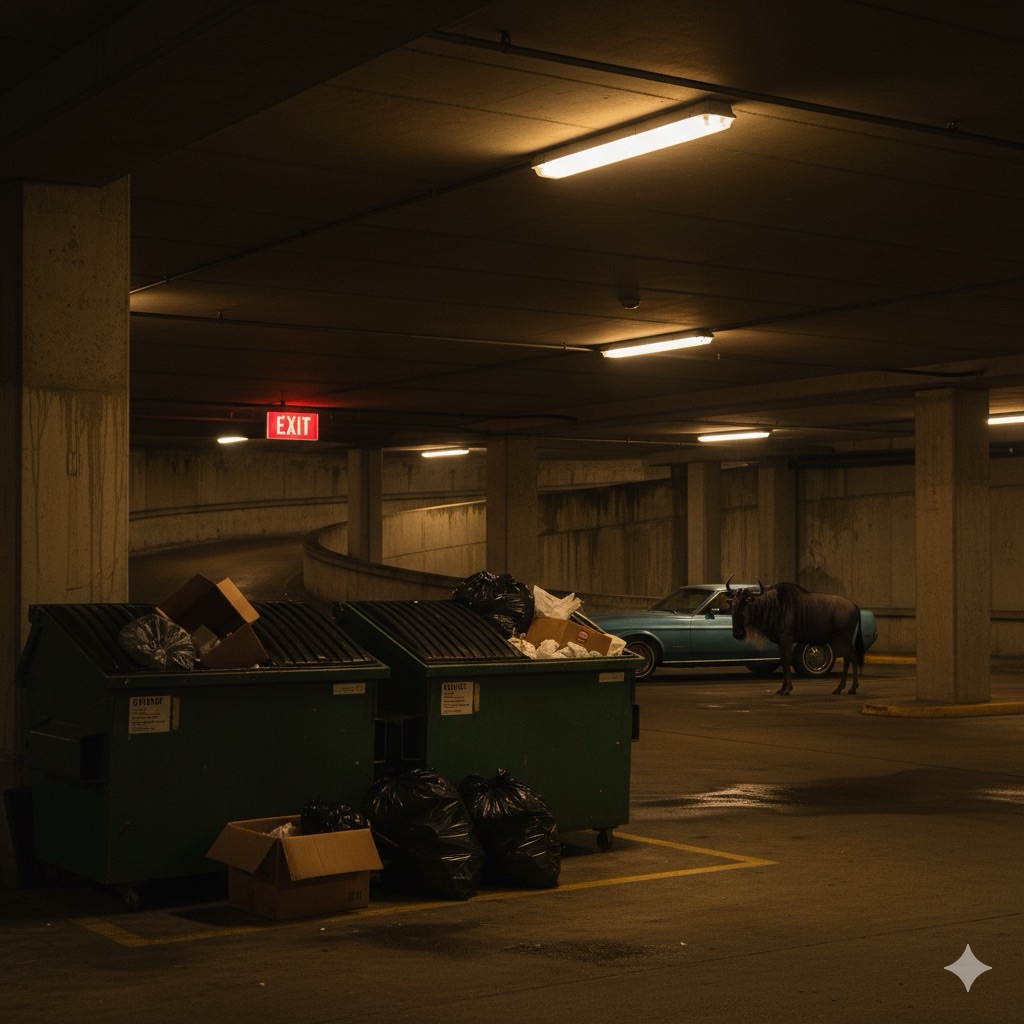
Evaporated. Imagen 4.
I’m sure some hard-boiled salespeople believe EVERY prospect can convert, but it ain’t so. And my earlier advice applies to business prospects as well as to personal relationships:
“If my former friends’ focus is elsewhere, my focus won’t impede on theirs.”

Have you ever had a friendship end and felt a shift in your online life? A former friend’s actions completely focused the direction of the Bredemarket Instagram account. This experience reshaped the content I shared, and refocused the audience who received it.
Nap Time.
Those who were reading the Bredemarket Instagram account over a month ago may have caught my disappointment at something I discovered among my followers.
Or more accurately, someONE whom I DIDN’T discover among my followers.
“Someone I respect unsubscribed from the Bredemarket Instagram page. Not sure why or how I turned them away.”
So I “took a nap,” pausing most Bredemarket Instagram activities for a week.
But over time I remembered what Alfred, Lord Tennyson never said: ‘Tis better to have subscribed and unsubscribed than never to have subscribed at all. (I’ll get to the latter group later.)
Reshaping the content
Admittedly some aspects of my Instagram account could alienate some people. As I took my Instagram “nap,” I pondered whether to put the wildebeests out to pasture, and whether to consign the 1980s music to a garbage can filled with cassettes and 8-tracks. After all, the so-called “experts” say that TRENDING AUDIO increases engagement.
Maybe for the “experts”…but not necessarily for Bredemarket.
After all, any perceptive person who is interested in me and my 30 years of identity/biometric experience will realize that I would enjoy songs that are 30 years old…or older.
After I reshaped my content, I took a long hard look at who was and wasn’t reading it.
And discovered that I was subscribed to hundreds of people on Instagram who, unlike my former friend, NEVER subscribed to me in the first place. And thus never saw a word I wrote. Or the accompanying audio: David Guetta, Thomas Dolby, or “Royalty Free Music Background.”
Did you notice my use of the word “was”?
Like my former friend, I did a lot of unsubscribing myself, reducing the list of people I read by hundreds.
Case studies are powerful marketing collateral for companies.
Why?
Because if you select your subjects carefully, your prospects will say, “That subject is just like me. And the company’s solution solved the subject’s problem. Perhaps the solution will solve my problem also.”
Imagen 4
Ideally a company would want to publish dozens of case studies, so their prospects could find one case study—or perhaps two or three—that describe the exact same problem the prospect is encountering.
It’s hard to create case studies
But case studies are by definition more difficult for a company to create.
For other types of content, the approval process resides completely within the company itself.
But case studies by definition require approval by two companies…even if the end customers in the case studies remain anonymous.
Perhaps that’s why there are so few published, recent case studies.
On Tuesday I had the occasion to visit four technology websites.
One had 5 case studies, all written in 2024.
One had 4 case studies, all written in 2023 and all anonymous.
One had 8 case studies, all written in 2021.
One had no case studies at all, even though the company had clients who could be referenced.
And the approvals don’t just involve the end customer.
Imagen 4
A former friend interviewed many customers but was only able to complete one case study; the approvals from company legal, other company executives, and the end customers were overwhelming, delaying the other case studies.
So how do you expedite case study creation and approval?
Three tips for creating case studies
Here are three tips to expedite the creation of case studies.
Creation tip 1: Get the facts first
If the sales rep, program manager, or the subject itself can provide the basic facts beforehand, then the interview can simply consist of confirming facts and filling gaps.
Creation tip 2: Outline the case study and tell your story
Imagen 4
Whether you use the STAR method (situation, task, action, result) or some other method (I prefer the simpler problem, solution, result), take the facts you gathered above. Then fit them into the outline and into the story you want to tell. Then see what pieces of the story are missing.
Creation tip 3: Obtain a meeting transcript
Since the subject has already consented to the case study, they should consent to the meeting being recorded.
The most efficient way to do this is with one of the popular AI note takers, which lets the case study writer review the actual words from the interview without going back and forth through a video recording.
Here are three tips to expedite the approval of case studies.
Approval tip 1: Read the contract
The language of the contract with the subject may have clauses regarding publicity.
If the subject wrote the contract, then it may prohibit any promotional publicity whatsoever, or it may dictate that any publicity must be approved by a high-level governing board in a foreign country.
If the provisions are onerous or impossible, don’t use that subject and find another.
Approval tip 2: Get pre-approvals, or at least grease the wheels
Let your approvers know what’s coming, and when you think it will come.
Once I submitted a case study for pre-approval even before the results were available. This subject had a lengthy approval process, so I wanted the approvers to see the first part of the case study as soon as possible.
Approval tip 3: Use every ethical method to get those approvals
Imagen 4
While the case study may be critically important to you, it may be merely important (or even inconsequential) to the lawyer with 50 other tasks.
From the lawyer’s perspective, it may be better if the company does NOT publish the case study. Fewer potential lawsuits that way.
Do everything you can to expedite the approval. If the CEO is demanding a published case study in three days, say so.
If not…well, that’s why you’re a salesperson. Oh, you’re NOT a salesperson? You are now.
One final tip
You don’t have to go it alone. If your staff is stretched, or if your staff has never written a case study before, Bredemarket can help. Visit my content for tech marketers page.
I embedded a reel in that post with the following text:
If their focus is elsewhere
My focus won’t impede
Since I had created the reel anyway, I repurposed it by sharing it on Bredemarket’s social media channels.
Including YouTube. You can see the YouTube short here:
Now when I shared it on YouTube, I did so with no context whatsoever. The caption simply read “In the Distance.” Without the words I wrote in the original blog post (I’ll get to two particular words later).
Yet by Monday morning the short had over 1,000 views. For Bredemarket’s YouTube channel, that’s a lot. Only three shorts have attained higher views: two about Tropical Storm Hilary, and one about squirrels.
But why?
Why?
The relative popularity of this short on YouTube is a mystery. Other than its brevity, it includes none of the elements of a successful video:
It does not use trending audio.
It does not use trending key words or hashtags.
Its message is obscure, if not downright cryptic.
Its visuals do not appeal to a mass audience.
Perhaps…
I have a theory that probably isn’t correct, but I’m going to entertain it anyway.
If this didn’t immediately occur to you, the reel subconsciously incorporates emotion. Emotion at the loss of my “former friends” as mentioned in the blog (but not on YouTube). Yes, some of the same former friends who forgot my birthday long ago.
So my wild theory is that the sense of loss, resignation, and renewed determination (I won’t impede on them) permeated the reel and subconsciously increased interest.
Or maybe I’m wrong. Perhaps there are just more wombat fans than I realized.
In the Distance.
Regardless of the unexpected popularity of this YouTube short, it illustrates why emotions are now the seventh of the seven questions that a content creator should ask you.
I (always) need to improve my INTENTIONAL injection of emotions into my content.
Etymologically, the opposite of impostor syndrome would be expositor syndrome. I asked my buddy Google Gemini to hallucinate a definition, and this is what I got:
“Expositor Syndrome is a hypothetical, non-clinical psychological pattern characterized by an overwhelming and often compulsive urge to explain, clarify, or elaborate upon concepts, ideas, or events, even when such detailed exposition is unsolicited, unnecessary, or redundant. Individuals exhibiting Expositor Syndrome experience a profound discomfort or anxiety if they perceive a potential for misunderstanding or an unstated implication, feeling an internal pressure to “lay bare” all facets of a topic.
“Note: This is a fictional construct, not a recognized medical or psychological condition.”
Gemini actually said a lot more, but I chose not to elaborate.
This, rather than a delusion of grandeur, is considered the opposite of impostor syndrome because an impostor HIDES their true talented self, whereas an expositor ELABORATES and goes on and on about their knowledge. Until their friends become former friends and stop speaking to them.
But can someone exhibit both expositor syndrome and a delusion of grandeur?
Perhaps such a person—if they exist—can still make positive contributions to society.
Such as the Bredemarket 2800 Medium Writing Service, approximately 2800 to 3200 words that (a) answers the WHY/HOW/WHAT questions about you, (b) advances your GOAL, (c) communicates your BENEFITS, and (d) speaks to your TARGET AUDIENCE.