I finally found a legitimate use for my California mobile driver’s license (mDL) this afternoon.
Ontario International Airport (ONT) allows people without tickets to reserve a day pass to see departing passengers off. The day pass functions as the equivalent of a real passenger’s boarding pass…with appropriate identification.
Both the day pass and my mDL were in my smartphone wallet, so all went smoothly. I wasn’t paying enough attention to know if the Transportation Security Administration (TSA) compared my live face to my mDL, but they probably did.
And I can confirm that Richard Reid rule is gone: no shoe removal required. Belts are another matter.
Hey, tech marketers. Long-time listener, first-time writer. I’ve been in the game for a few decades and I’ve noticed something. We spend a ton of time on the front-end, making sure our marketing is on point, but sometimes we forget about what happens on the back-end.
Take my friends at Bredemarket, for example. In their August 11 post, “Identity Assurance Level 3 (IAL3): When Identity Assurance Level 2 (IAL2) Isn’t Good Enough,” they dropped a term—”Federation Assurance Level”—and then just… moved on. They never explained what it was. It’s like a wildebeest marketing consultant presenting a grand strategy to a wombat customer, then forgetting to explain how the wild ride actually works. So, let’s fix that.
The Federation Assurance Level (FAL) is a term from the NIST 800-63C standard. Think of it as a way to measure the security and trustworthiness of federated identity transactions. In plain English, it’s about how securely one system talks to another when a user logs in. When a wildebeest (marketing consultant) helps a wombat (customer) set up a federated login, the FAL is the trust stamp on the transaction. Here’s a quick look at the levels:
FAL1: Basic Federation Assurance. At this level, the identity provider digitally signs the assertion. This proves the assertion hasn’t been messed with, but it doesn’t encrypt the data inside. It’s a good starting point for low-risk scenarios, like a wombat logging into a public forum or a news subscription site.
FAL2: Intermediate Federation Assurance. This is where things get serious. In addition to the digital signature, the assertion is also encrypted. This protects sensitive information from being snooped on as it travels across the internet. This is a must-have for a wombat logging into something like a patient portal or a financial app.
FAL3: High Federation Assurance. The top tier. At FAL3, a “holder-of-key” assertion is used, which cryptographically binds the assertion to a key that the user controls. This provides a very high level of confidence that the person logging in is who they say they are and prevents sophisticated attacks. This is for the most sensitive transactions, like a wombat accessing critical government systems or national security databases.
So, while we’re out there, building great customer experiences, let’s make sure our wildebeest-consultants and their wombat-customers are using the right FAL for the job. It’s not just about marketing; it’s about protecting the trust we’ve built.
Are you a technology marketing leader, struggling to market your products to your prospects for maximum awareness, consideration, and conversion?
I’m John E. Bredehoft. For over 30 years, I’ve created strategy and tactics to market technical products for over 20 B2B/B2G companies and consulting clients.
For the past few months I have been posting some of Bredemarket’s reels on Flip, but my (mostly) business-related reels didn’t resonate with Flip’s consumer-oriented audience.
(Which makes my posting life easier, to be honest, but I will keep the app on my phone for a bit just in case someone with money buys the company’s assets.)
Is Instagram next?
No, seriously.
What if you based your entire business model on a single social media channel…and it suddenly disappeared?
I last discussed Syneos Health on August 15, in a popular post on early stage commercialization. When I checked for recent news I discovered that Syneos Health received a commercialization setback in India for the QL2107 Injection.
[T]he Subject Expert Committee (SEC) functional under the Central Drugs Standard Control Organization (CDSCO) has rejected its Phase III clinical trial proposal for QL2107 Injection….
After detailed deliberation, the committee opined that, “the proposed clinical trial is focused completely on Pharmacokinetic (pK) parameters. Moreover, primary objective and secondary objective of phase-III study protocol has not been demonstrated for confirmation of therapeutic benefit and efficacy end point. Hence, the committee didn’t recommend to conduct the clinical trial in India.”
So what is the QL2107 Injection? First off, it comes from a Chinese company.
Qilu Pharmaceutical is one of the leading vertically integrated pharmaceutical companies in China focusing on the development, manufacturing and marketing of active pharmaceutical ingredients (APIs) & finished formulations….Dedicated to offering more affordable medicines to the world and improving people’s well-being, Qilu has exported its products to over 100 countries.
The literature on QL2107 repeatedly refers to Qilu Pharmaceutical rather than Syneos Health. But presumably there’s a partnership somewhere.
According to this website, QL2107 is a “pembrolizumab biosimilar,” a fancy way to say that it is similar to pembrolizumab (brand name Keytruda®), a monoclonal antibody with possible anti-cancer applications. It’s already undergone clinical trials.
But a Phase III clinical trial is special. The Gilead Clinical Trials website defines the four phases of clinical trials, including the third:
Phase 3 trials continue to evaluate a treatment’s safety, effectiveness, and side effects by studying it among different populations with the condition and at different dosages. The potential treatment is also compared to existing treatments, or in combination with other treatments to demonstrate whether it offers a benefit to the trial participants. Once completed, the treatment may be approved by regulatory agencies.
Although there is a fourth phase, continuous monitoring, that is obviously important.
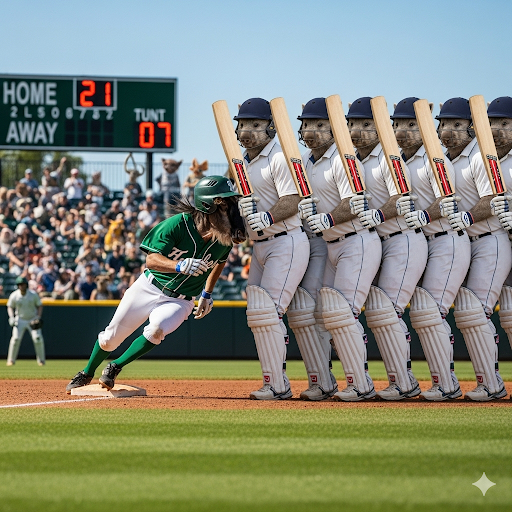
Imagen 4.
In summary, QL2107 is not a home run or even a triple. At least in India, it’s stuck at second.
Biometrics. The word alone can send shivers down the spine of some people, conjuring images from sci-fi movies where every move is tracked. As technology CMOs, we know the immense value of biometrics for security and convenience, but we can’t ignore the very real privacy concerns of our customers—the wombats. We, the wildebeests of the marketing world, need to address these fears head-on to build trust and drive adoption. So, what are they worried about, and what’s our role in fixing it?
Valid vs. Overstated Concerns: A Biometric Reality Check 🧐
First, let’s separate the facts from the fiction. The valid concerns are rooted in the immutability and uniqueness of biometric data. Unlike a password, you can’t “change” your fingerprint or face if it’s compromised. If a company’s database of biometric templates is breached, the data is gone forever, making identity theft a long-term risk. There’s also the valid fear of “function creep”, where data collected for one purpose (e.g., unlocking a phone) is later used for something else without consent (e.g., surveillance). This lack of transparency and potential for misuse is a significant hurdle to trust. Lastly, algorithmic bias is a real issue, where some biometric systems have higher error rates for certain demographics, leading to inaccurate authentication or even discrimination.
Now, for the overstated concerns. The idea that biometric systems store a literal, high-resolution image of your fingerprint or face is often wrong. Most modern systems convert the scan into a unique, encrypted mathematical code or template. It’s this code, not the raw biometric data, that’s stored and used for verification. This makes it extremely difficult for a hacker to recreate the original biometric from the stolen template. The risk of someone “stealing your face” from a social media photo to unlock your device is also largely overblown, as liveness detection and other security measures are built into many of today’s systems.
Building a Wombat-Friendly Biometric Future: Our Role
So, how can we, the tech marketing wildebeests, calm the wombats and earn their trust? It all comes down to transparency and empowerment.
Communicate Clearly: We need to explain, in plain English, exactly what data is being collected, how it’s being used, and where it’s stored. Use clear consent forms and accessible privacy policies. Explain that you’re using a secure template, not a raw scan.
Emphasize Security & Minimization: Highlight your robust security measures, such as encryption and decentralized storage. Make it clear that you are only collecting the minimum amount of data necessary for the specific purpose. The less data you have, the less of a target you are.
Give Users Control: Empower the wombats! Give them the option to opt-in or out, and a clear path to delete their data if they choose. This isn’t just a legal requirement in many places; it’s a powerful trust-building gesture.
Address Bias and Inclusivity: Acknowledge the potential for algorithmic bias and explain the steps your company is taking to ensure your biometric technology is inclusive and accurate for all users. This shows a commitment to ethical use and social responsibility.
By addressing these concerns with honesty and proactive solutions, we can position our companies not just as providers of cool tech, but as trusted partners. Because at the end of the day, a wary wombat won’t convert, no matter how clever our marketing.
Whether you’re a marketer, a biometric expert, a technologist, or just someone scrolling the webs, you can feel a variety of emotions after reading a Bredemarket blog post.
Maybe amused.
Maybe informed,
Maybe empowered.
But some will experience more powerful emotions.
For a targeted few who find themselves paralyzed, maybe afraid. Afraid that your competitors will steal your prospects unless you act.
Or for those targeted few who despise powerlessness and want to act, maybe hungry. Hungry to get your product’s benefits to your prospects so they convert.
I have to be honest. Some of the people who are inspired to act are perfectly capable of acting on their own. Because they’re not complete unknowns.
But others can use the help of an outside consultant such as Bredemarket.
Content, proposals, analysis. I can help with all of them.
I love how Biometric Update bundles a bunch of stories into a single post. Chris Burt outdid himself on Wednesday, covering a slew of stories regarding use and possible misuse of facial recognition by Texas bounty hunters, the NYPD, and cities ranging from Chicago, Illinois to Houlton, Maine.
But those stories aren’t the ones that I’m focusing on. Before I get to my focus, I want to go off on a tangent and address something else.
What I didn’t expect was that competition would arise between me and my bot. I’m writing these words on August 27, two days before the first Bredebot post appears, and I’m already feeling the heat.
What if Bredebot’s posts receive more traffic than the ones I write myself? What does that mean for my own posts…and for the whole premise of hiring Bredemarket to write for others?
I’m treating this as a challenge, vowing to outdo my fast bot counterpart.
And in that spirit, let’s revisit Milwaukee.
Give us any chance, we’ll take it
Access.
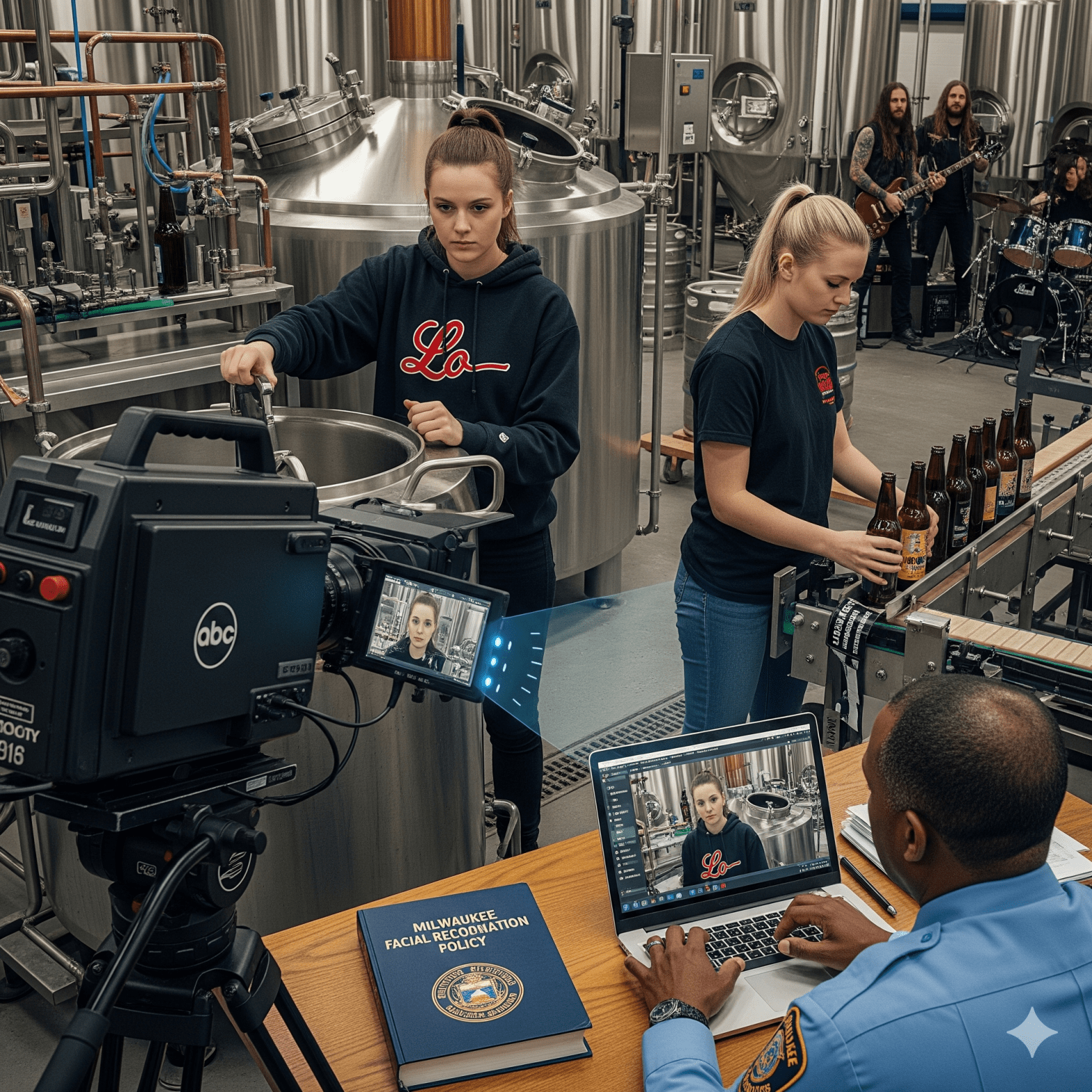
When Biometric Update initially visited Milwaukee in its April 28 post, the main concern was the possible agreement for the Milwaukee Police Department to provide “access” to facial data to the company Biometrica in exchange for facial recognition licenses. I subsequently explored the data issue in my own May 6 guest post for Biometric Update.
Vendors must disclose responsible uses of biometric data.
But today the questions addressed to Milwaukee don’t focus on the data, but on the use of facial recognition itself. The Biometric Update article links to a Wisconsin Watch article with more detail. The arguments are familiar to all of you: facial recognition is racist, facial recognition is sometimes relied upon as the sole piece of evidence, facial recognition data can be sent to ICE, and facial recognition can be misused.
However, before Milwaukee’s Common Council can approve facial recognition use, one requirement has to be met.
“Since the passage of Wisconsin Act 12, the only official way to amend or reject MPD policy is by a vote of at least two-thirds of the Common Council, or 10 members.
“However, council members cannot make any decision about it until MPD actually drafts its policy, often referred to as a “standard operating procedure.”
“Ald. Peter Burgelis – one of four council members who did not sign onto the Common Council letter to Norman – said he is waiting to make a decision until he sees potential policy from MPD or an official piece of legislation considered by the city’s Public Safety and Health Committee.”
The Milwaukee Police Department agrees that such a policy is necessary.
“MPD has consistently stated that a carefully developed policy could help reduce risks associated with facial recognition.
“’Should MPD move forward with acquiring FRT, a policy will be drafted based upon best practices and public input,’ a department spokesperson said.”
An aside from my days at MorphoTrak, when I would load user conference documents into the CrowdCompass mobile app: one year the topic of law enforcement agency facial recognition policies was part of our conference agenda. One agency had such a policy, but the agency would not allow me to upload the policy into the CrowdCompass app. You see, the agency had a policy…but it wasn’t public.
Needless to say, the Milwaukee Police Department’s draft policy WILL be public…and a lot of people will be looking at it.





 Bredemarket