

When your company attends events, you’ll want to maximize your event return on investment (ROI) by creating marketing content that you publish before, during, and after the event.
This is how you do it.
Including:
- The three keys to creating event content.
- How Bredemarket’s service can help you create all the event content you need.
- The two things (first, second) you need to do NOW, well before your event.
And I’ll spill a couple of secrets along the way.
The first secret (about events)
I’m going to share two secrets in this post. OK, maybe they’re not that secret, but you’d think they ARE secrets because no one acknowledges them.
The first one has to do with event attendance. You personally might be awed and amazed when you’re in the middle of an event and surrounded by hundreds, or thousands, or tens of thousands of people. All of whom are admiring your exhibit booth or listening to your CEO speak.

But guess what?
Many, many more people are NOT at the event.
They can’t see your exhibit booth, and can’t hear your speaker. They’re on the outside, TRYING to look in.
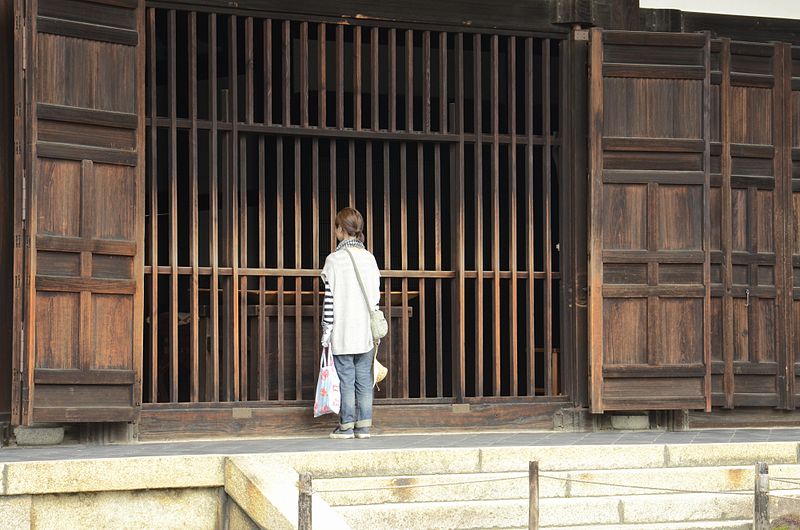
And all the money you spent on booth space and travel and light-up pens does NOTHING for the people who aren’t there…
Unless you bring the event to them. Your online content can bring the event to people who were never there.
But you need to plan, create, and approve your content before, during, and after the event. Here’s how you do that.
Three keys to creating event-related content
Yes, you can just show up at an event, take some pictures, and call it a day. But if you want to maximize your event return on investment, you’ll be a bit more deliberate in executive your event content. Ideally you should be:
Planning your event content
Before the event begins, you need to plan your content. While you can certainly create some content on a whim as opportunity strikes, you need to have a basic idea of what content you plan to create.
- Before the event. Why should your prospects and customers care about the event? How will you get prospects and customers to attend the event? What will attendees and non-attendees learn from the event?
- During the event. What event activities require content generation? Who will cover them? How will you share the content?
- After the event. What lessons were learned? How will your prospects and customers benefit from the topics covered at the event? Why should your prospects buy the product you showcased at the event?
Creating your event content
Once you have planned what you want to do, you need to do it. Before, during, and after the event, you may want to create the following types of content:
- Blog posts. These can announce your attendance at the event before it happens, significant goings-on at the event (such as your CEO’s keynote speech or the evening party launching your new product), or lessons learned from the event (what your CEO’s speech or your new product means for your prospects and clients). Blog posts can be created relatively quickly (though not as quick as some social media posts), and definitely benefit your bottom line.
- Social media. Social media such as Facebook, Instagram, and LinkedIn can also be used before, during, and after the event. Social media excels at capturing the atmosphere of the event, as well as significant activities. When done right, it lets people experience the event who were never there.
- E-mails. Don’t forget about e-mails before, during, and after the event. I forgot about e-mails once and paid the price. I attended an event but neglected to tell my e-mail subscribers that I was going to be there. When I got to the event, I realized that hardly any of the attendees understood the product I was offering, and were not the people who were hungry for my product. If I had stocked the event with people from my e-mail list, the event would have been more productive for me.
- Data sheets. Are you announcing a new product at an event? Have the data sheet ready.
- Demonstration scripts. Are you demonstrating a new or existing product at the event? Script out your demonstration so that your demonstrators start with the same content and make the points YOU want them to make.
- Case studies and white papers. While these usually come into play after the event, you may want to release an appropriate case study or white paper before or during the event, tied to the event topic. Are you introducing a new product at an industry conference? Time your product-related white paper for release during the conference. And promote the white paper with blog posts, social media, and e-mails.
- Other types of content. There are many other types of content that you can release before, during, or after an event. Here’s a list of them.
Approving your event content
Make sure that your content approval process is geared for the fast-paced nature of events. I can’t share details, but:
- If your content approval process requires 24 hours, then you can kiss on-site event coverage goodbye. What’s the point in covering your CEO’s Monday 10:00 keynote speech if the content doesn’t appear until 11:00…on Tuesday?
- If your content approval process doesn’t have a timeline, then you can kiss ALL event coverage goodbye. There have been several times when I’ve written blog posts announcing my company’s attendance at an event…and the blog posts weren’t approved until AFTER the event was already over. I salvaged the blog posts via massive rewrites.
So how are you going to generate all this content? This brings us to my proposed solution…and the second secret.
The second secret (about Bredemarket’s service)

The rest of this post talks about one of Bredemarket’s services, the Bredemarket 2800 Medium Writing Service. For those who haven’t heard about it, it’s a service where I provide between 2,800 and 3,200 words of written text.
“But John,” you’re asking. “How is a single block of 3,200 words of text going to help me with my event marketing?”
Time to reveal the second secret…
You can break up those 3,200 words any way you like.
For example, let’s say that you’re planning on attending an event. You could break the text up as follows:
- One 500-word blog post annnouncing your attendance at the event.
- Three 100-word social media posts before the event.
- One 500-word blog post as the event begins.
- One 300-word product data sheet prepared before the event and released on the second day of the event.
- One 500-word blog post announcing the new product.
- Three 100-word social media posts tied to the new product announcement.
- One 500-word post-event blog post with lessons learned.
- Three 100-word social media posts after the event.
For $2,000 (as of June 2024), you can benefit from written text for complete event coverage, arranged in any way you need.
So how can you and your company receive these benefits?
Read about the Bredemarket 2800 Medium Writing Service
First, read the data sheet for the Bredemarket 2800 Medium Writing Service so you understand the offer and process.
Contact Bredemarket…now
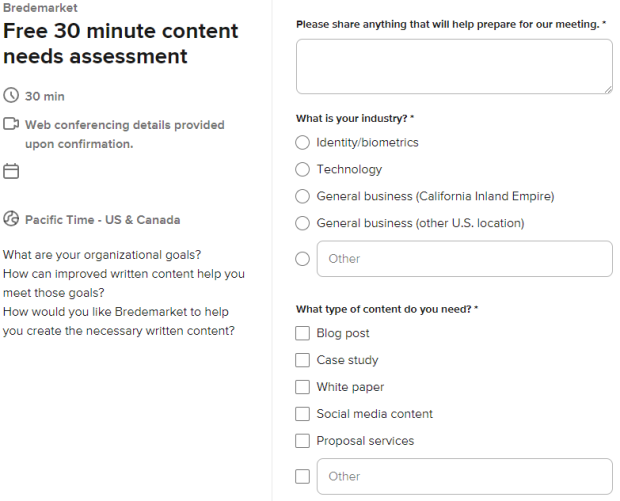
Second, contact Bredemarket to get the content process started well BEFORE your event. Book a meeting with me at calendly.com/bredemarket. Be sure to fill out the information form so I can best help you.
Alternatively, you can
- Email me at john.bredehoft@bredemarket.com.
- Contact me at bredemarket.com/contact/.
But don’t wait. If your event is in September…don’t contact me in October.

 Bredemarket