Product marketing strategy (not tactics), including why, how, what, and process.
Product marketing environment, including the market and competitive intelligence, the customer feedback loop, and the company culture.
Product marketing content, both internal and external, including positioning, personas, go-to-market, sales enablement, launches, pricing, packaging, and proposals.
Product marketing performance, including metrics, objectives, and key results.
Does your firm have all four puzzle pieces? Or are one or more of the pieces lacking?
Proven expertise from Printrak BIS, MorphoWay, and a recent launch for a Bredemarket client?
Recent Go-to-market.
If you are ready to move your firm’s product marketing forward with Bredemarket’s content-proposal-analysis services for technology firms, let’s discuss your needs and how Bredemarket can help you solve them. Book a free meeting at https://bredemarket.com/mark/.
I’ve said that strategy is one of four essential elements of product marketing. But you have to know what strategy is…and what it is not.
To illustrate the difference between strategy and tactics, it helps to differentiate between abstract, long term goals and concrete, short term goals.
If your goal is to better the world, that’s a strategy.
If your goal is to excel in a particular industry, that’s a strategy.
Although strategies can change. Those who know of Nokia as a telecommunications company, and those who remember Nokia as a phone supplier, are not old enough to remember Nokia’s beginnings as a pulp mill in 1865.
If your goal is to secure business from a specific prospect, that’s a tactic. Or it should be.
It’s just that one tactical blunder upended that strategy.
Whether Bredemarket pivots from biometric content to resume writing (not likely), I am presently equipped to address both your strategic and tactical product marketing needs. If I can help you, talk to me at https://bredemarket.com/mark/.
“Well, I don’t know what will happen now. We’ve got some difficult days ahead. But it doesn’t matter with me now. Because I’ve been to the mountaintop. And I don’t mind. Like anybody, I would like to live a long life. Longevity has its place. But I’m not concerned about that now. I just want to do God’s will. And He’s allowed me to go up to the mountain. And I’ve looked over. And I’ve seen the promised land. I may not get there with you. But I want you to know tonight, that we, as a people, will get to the promised land. And I’m happy, tonight. I’m not worried about anything. I’m not fearing any man. Mine eyes have seen the glory of the coming of the Lord.”
I have positioned Bredemarket so I can fill the gaps in a Chief Marketing Officer’s existing content plan, or a Chief Revenue Officer’s proposal plan, or a Chief Strategy Officer’s existing analysis plan.
But what if you don’t have a plan?
Bredemarket can help you too.
This post describes how I can plug into your existing plan, or how I can help you create a plan if you don’t have one.
But first let’s dispense with the theory of how to properly do things, because it’s silly.
What theory says
If you read LinkedIn for any length of time, you will run across content marketers and copywriters and other Professional Content Experts.
These 17x certified PCEs are all too willing to tell you The Correct Way For Companies To Engage With Writing Contractors.
Because the way your company engages with contractors I s completely wrong.
Here is The Correct Way:
“When engaging with a contractor, you must provide the contractor with a detailed content brief that answers all 42 questions your contractor will ask or may ask. Failure to do this brands you as a failed substandard company.”
Bredemarket rarely receives any kind of brief from my clients. Sometimes we get a paragraph. Or sometimes we just get a couple of sentences:
“A local Utah paper ran an article about how our end customer used our solution to solve world hunger. Here’s the article; get additional information from the guy quoted in the article and write a blog post about it.”
These two sentences would drive a Professional Content Expert up a wall, because they don’t answer all 42 questions.
So what?
It’s a starting point. If I were given that, I could start.
So forget the theory of The Correct Way For Companies To Engage With Writing Contractors, and just start writing (but thinking first).
If you have a plan (or at least an idea)
Many of my clients have a content, proposal, or analysis plan—or at least an idea of what they need. There are many times when I simply plug in to a client’s existing plan. Here are some examples:
One client’s CMO needed a twice-a-month series of blog posts to promote one of their company’s services. The service featured multiple facets, so I had plenty to write about. So I plugged into the existing system and wrote.
Another client needed a series of case studies to grab the attention of their prospects. Again, the client’s product addressed multiple markets, and the variety of customer case studies gave me plenty to write about. So I plugged into the existing system and wrote.
Multiple clients have asked me to manage and/or write proposals for them. Two of the clients (one being SMA) had very well-defined capture management and proposal processes. The others didn’t—I was the de facto expert in the (virtual) room—but they knew which Request for Proposal (RFP) or Request for Information (RFI) required a response. So I plugged into the existing system and wrote.
Multiple clients (mainly in the identity/biometric realm) have asked me to perform analyses. Whether they had an established analysis process or not, they knew what they wanted. So I plugged into the existing system and wrote.
So I easily completed these one-off (or twelve-off) tasks, responding to my clients’ well-defined requests.
But others face the challenge of not knowing what they want.
The beautiful thing about the seven questions is that you can not only apply them to a particular piece of content such as a blog post, but to an entire content-proposal-analysis strategy.
And here I DO mean strategy, not tactics.
There are other methods to derive a strategy, but this is as good as any.
So if you book a free meeting with me to figure out a strategy, we can work through these questions to jointly understand your company, your products, and the material you need. I haven’t the slightest idea how our conversation will progress, but perhaps I may end up asking you questions like this:
WHY do your competitors suck?
HOW do your prospects make purchasing decisions?
WHAT do your salespeople need to close deals (conversion)?
What are your GOALS to move prospects through your funnel?
You get the idea. As we talk through things, perhaps you and I will get ideas about how Bredemarket can help you.
Or maybe not. Maybe it turns out you need a web designer, or a videographer, or a demand generation expert, or an accountant.
But if we determine that Bredemarket can help you, then we can create the plan and figure out how I can best execute on the plan. A competitor analysis? A series of blog posts? We will figure it out.
Then I’ll plug into the new existing system and write.
A call to action
Your content, proposals, and analyses will presumably incorporate a call to action.
It’s no surprise that this post also has one.
Visit my “content for tech marketers” page, read about what we can do together, and book a free 30 minute content needs assessment. You can book it at the top of the page or the bottom, whatever turns you on.
But let’s move. Your competitors are already moving.
Although my first of my three meetings started at 7:30 am, my day actually started three hours earlier with light Things To Accomplish. Suffice it to say that the Bredemarket blog will have daily content until Monday, August 4.
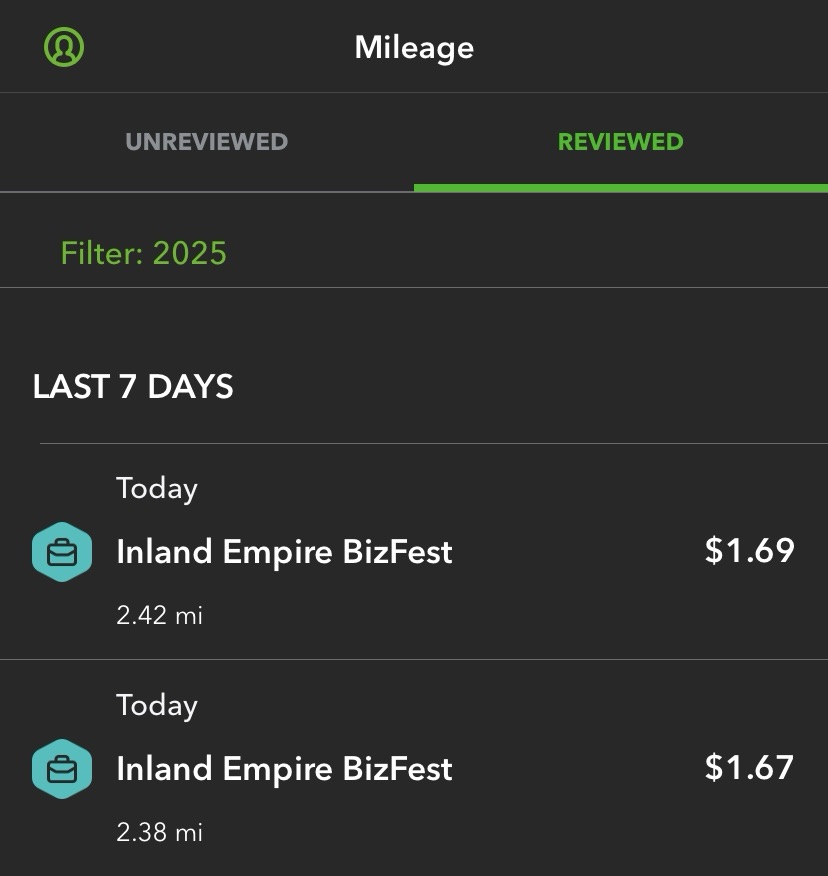
I took a mid-afternoon break before my third meeting, the Inland Empire BizFest in Montclair. I wrote about that here and here, plus on the Bredemarket socials.
Log those business miles.
In fact I knew I would be so busy today that I declined a personal invite at 10 this morning. Good thing I declined, because I was neck deep in a requirements workbook (yeah, Microsoft Excel again) for a Bredemarket client’s end customer. (Can you say TOT? I knew you could.)
Anyway, I left Montclair Place before 7:30 pm and called it a night after a long day.
Thankfully the first day of August only includes a single meeting.
“Problem-solving is what you do when you don’t know how to solve a problem.”
She contrasts this with solving problems, where you apply known techniques to a problem that has already been solved.
Marchetti approaches this from an education perspective, where students ideally learn solving problems AND problem-solving.
Shah SP and P-S
This distinction is not unique to Marchetti’s anonymous speaker. Sam J. Shah, also dealing with students, notes the need for problem-solving in certain scientific disciplines:
“[M]ost of the work done in fields as sterile as combinatorics or as messy as molecular biology involves navigating corridors of inquiry, trying (and often failing) to draw connections, and coming up with new lenses with which to look at problems. Frustration and dead ends are part and parcel of working in these fields.”
Bredemarket SP and P-S
We encounter these issues outside of school when we go to work.
For businesses, Bredemarket usually solves problems: your prospects don’t know about you, your prospects don’t know why they should care about you, your prospects lack information. There are known solutions.
Occasionally, Bredemarket engages in problem-solving, where there are questions without clear answers, and you and I work together to determine how to move forward.
Your company probably needs to both solve tactical problems and perform strategic problem-solving.