When Businesses Rise From the Dead

Bredemarket provides marketing and writing services all year. So do grocery stores. Restaurants. Most other firms.

Other businesses are seasonal, but necessitate year-round facilities. Most baseball stadiums don’t host games in December, but host (or struggle to host) non-baseball events when the team isn’t playing. Graber Olive House would hire seasonal staff when the olives were harvested.

And then there is Spirit Halloween, where Joe Marver accidentally discovered how to take advantage of a fundamental truth at his Castro Valley, California women’s clothing store named Spirit.

“He’d put out a small Halloween section—just costumes and decorations to capture some seasonal traffic. That tiny corner of his store consistently outperformed the rest of his inventory combined.”

But he couldn’t just create a Halloween version of Spirit…or could he?

“Shopping malls and strip centers always had vacant spaces—stores that had closed, leaving landlords desperate for any revenue. He could negotiate dirt-cheap short-term leases, operate for 8-10 weeks, and disappear before the first rent increase.”
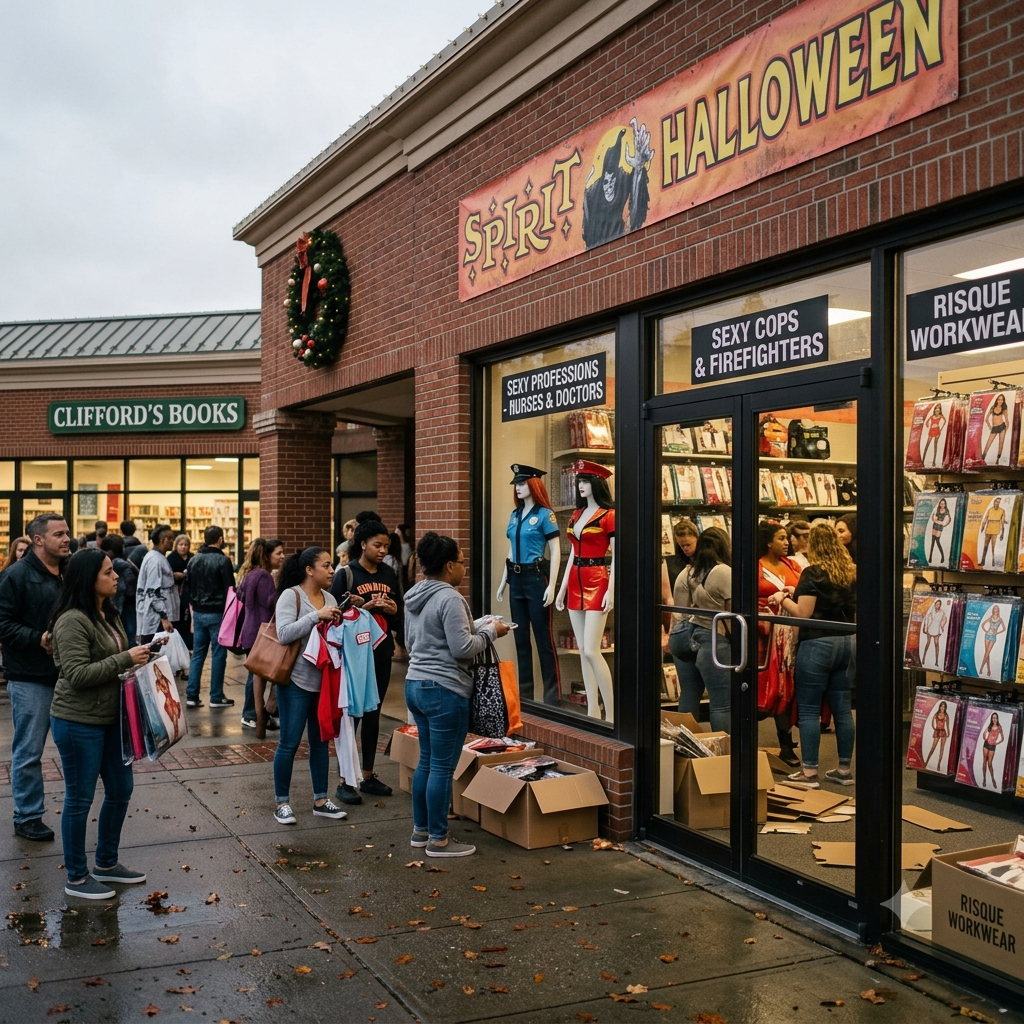
Google Gemini.

That first landlord was happy to accept a few bucks for a few weeks, which was better than nothing. Marver, of course, saw many, many, more dollars from people who only bought sexy product marketer costumes in October.

Google Gemini.

Then the store closed for the winter, spring, and summer.
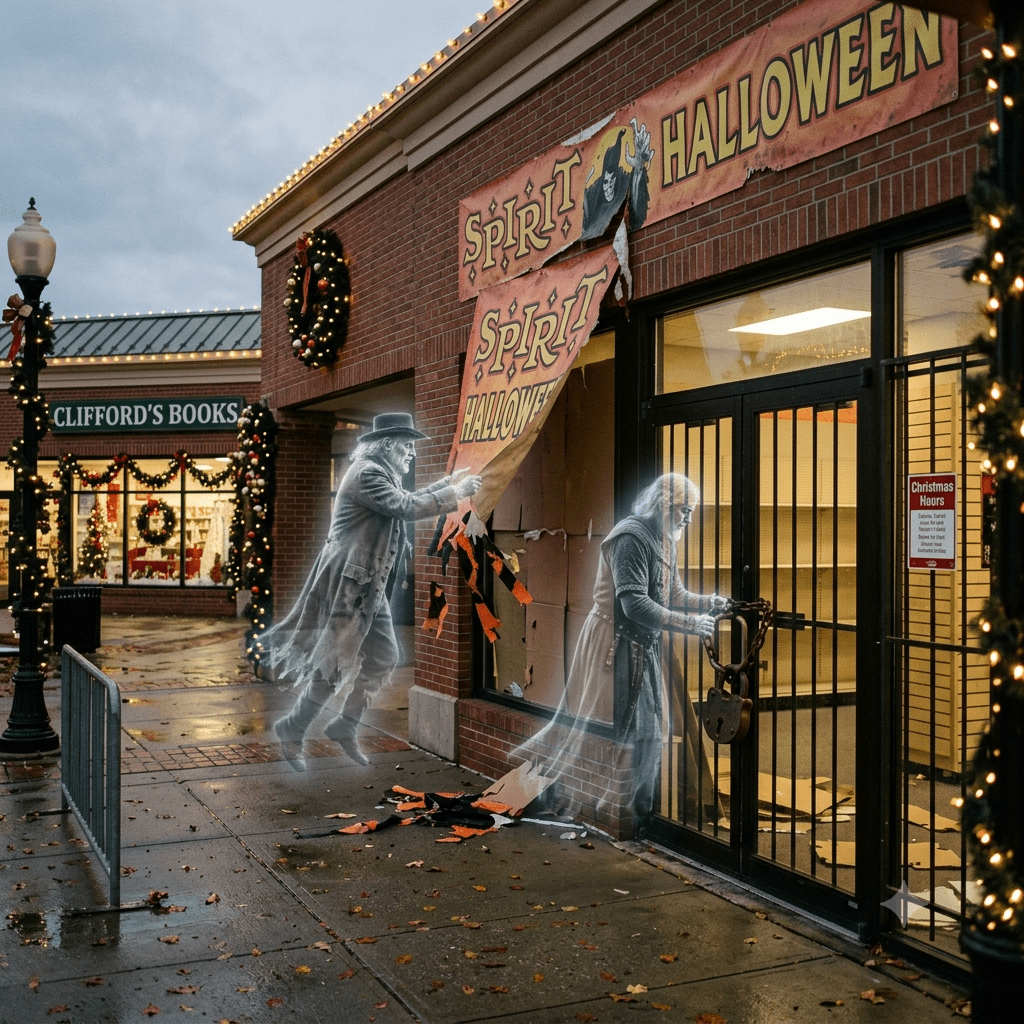
Google Gemini.

And the word “pop-up,” albeit used for videos at one point, remained in the domain of retail.
Grocery Outlet Wants to Prevent Shoplifting. Can They?

I missed this story when Biometric Update originally published it:

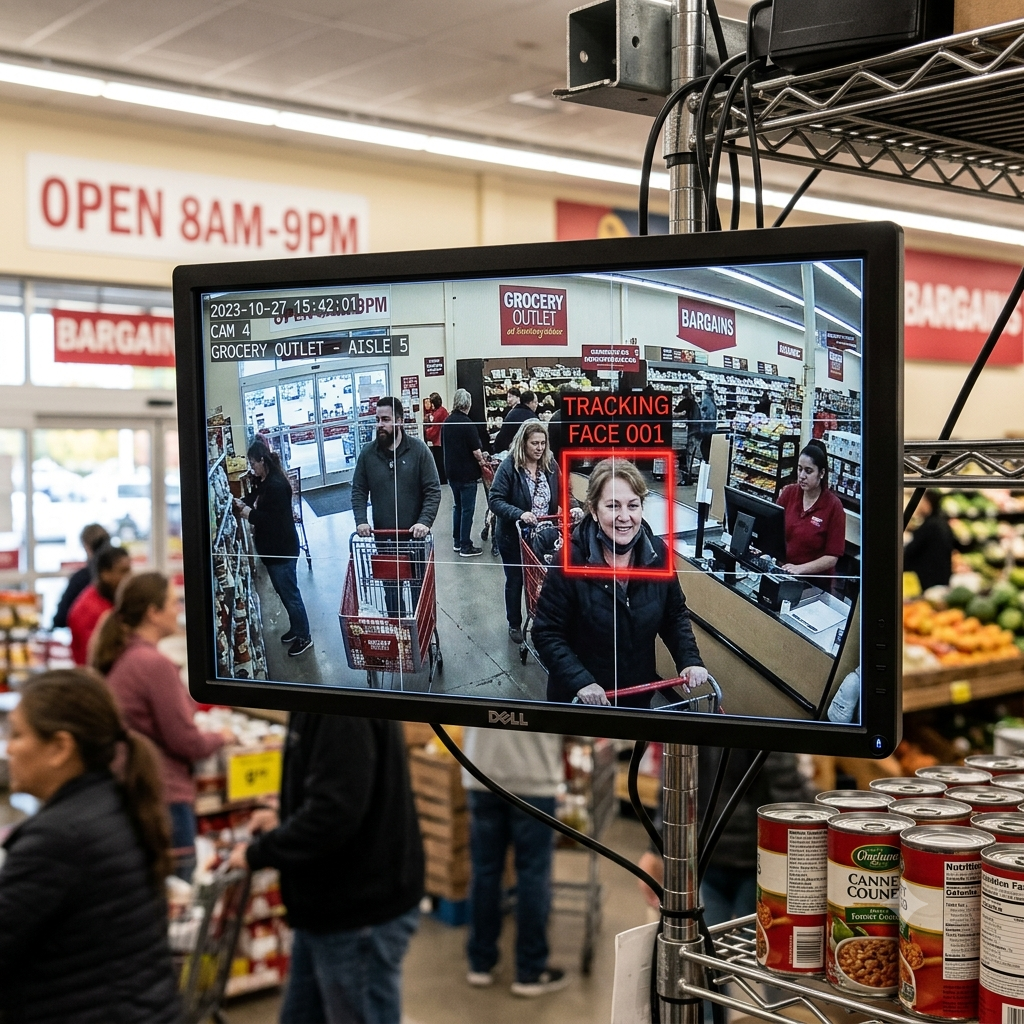
“Facial recognition systems are scanning shoppers as they enter a growing number of Grocery Outlet stores in the San Francisco Bay Area, comparing their faces against watchlists of people suspected of theft, violence, or other unlawful conduct.

“Signs disclosing the use of biometric face-matching software have been documented at Grocery Outlet stores in Pleasant Hill and Concord, as well as four San Francisco locations in the Mission, Portola, Bayview, and Richmond districts.

“The signs direct customers to the privacy policy for SAFR Guard, the system being used by the stores.”

Author Anthony Kimery notes that there are privacy concerns related to those people whose images are captured, but whose faces are NOT on a watchlist.

In addition, Grocery Outlet operates through independent operators, adding one complication to any concerns about privacy violations.

But at least Grocery Outlet isn’t located in Illinois, where their scanning of everybody’s faces could get them (and their independent operators) into BIPA trouble. They are primarily a Pacific (California, Oregon, Washington) and Atlantic (Maryland, Ohio, Pennsylvania) operation.

The Opposite of Customer Focus: Ron Johnson’s J. C. Penney

I’ve talked endlessly about product marketing with a customer focus. For a reason. If your product marketing makes your prospects indifferent, or even worse alienates them, you don’t make money.

J. C. Penney learned this the hard way when it brought in new leadership a decade ago.

“J.C. Penney brought in a bold new CEO. Ron Johnson had already created Apple Store, a chain of physical stores where people flocked to shop.”

I will state the obvious: the clientele at an Apple Store differs ever-so-slightly from J. C. Penney customers. But to be fair, Johnson had also worked at Target.

Yet Johnson’s first move was more suited to people whose idea of a bar included one preceded by the word “genius.”

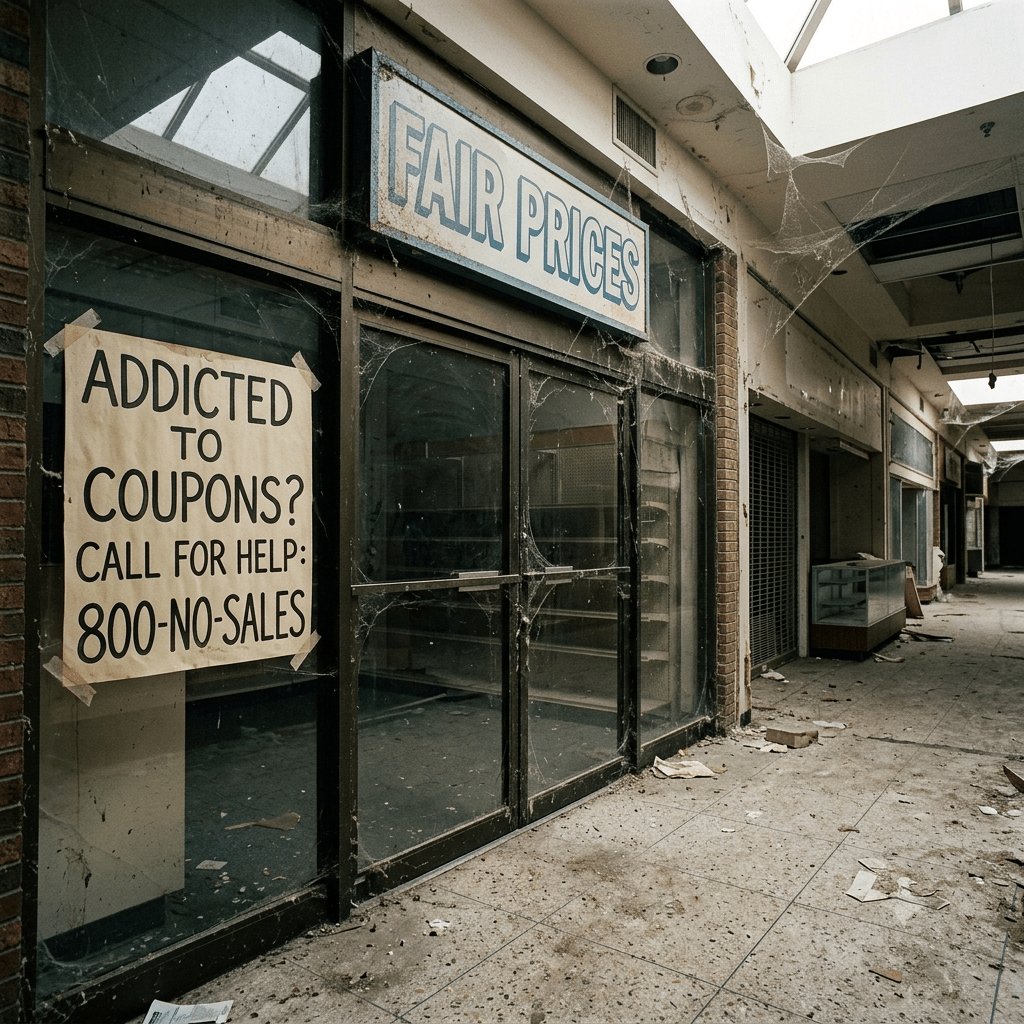
“And Johnson had a plan for J.C. Penney: Tell customers they don’t have to spend time anymore clipping coupons or waiting for sales to happen. Instead, the store would offer fair prices on its merchandise every day.”

Logically it sounds brilliant. Customers can save time and money simultaneously.

The only problem is that the customers LIKED clipping coupons and timing purchases to sales.

And when revenue decreased, J. C. Penney…BLAMED THEIR OWN CUSTOMERS. In a way that got attention.

“’He sort of said sales were akin to drugs, and he was trying hard and to wean customers off drugs,’ says retail analyst Rafi Mohammed.”

Or, as one of those long Facebook posts over-exaggerated it, Ron Johnson called his own customers drug addicts.

J. C. Penney not only walked back the changes, but also fired Johnson sixteen months later.

It’s good to attract new customers…but don’t alienate existing ones.

Now Bredemarket normally plays in the B2G and B2B space rather than B2C, but the lesson applies here also. If you need someone to help you speak to your prospects, let’s talk.

Use Bredemarket content.

And by the way, there are often third acts in business. Johnson co-founded Enjoy, an on-demand mobile retail store. It did well for years until it jumped in on the SPAC craze and filed for bankruptcy. The remnants survive today as part of Asurion.

J. C. Penney also survives today, thanks to a post-COVID, post-bankruptcy rescue by mall operators Simon Property Group and Brookfield Asset Management.

Its competitor Sears was not as fortunate.

You’re Not Lost in the Supermarket. The Supermarket Knows Exactly Who and Where You Are.

I’m all lost in the supermarket
I can no longer shop happily

Facial recognition laws and regulations vary from jurisdiction to jurisdiction, and as organizations apply facial recognition, they can’t just assume that facial recognition laws are the same as other privacy laws.

Caution urged as UK supermarkets check out facial recognition

This is the point that UK professor Fraser Sampson makes in a Biometric Update article. Among other things, Sampson (former UK Biometrics & Surveillance Camera Commissioner) notes the following:

This is not just any data processing, this is biometric processing. Major retailers have deep and wide experience handling customer data at macro level, but biometrics are elementally different. Using a biometric recognition system in the UK means they are processing ‘special category data’ and biometric data differs even from other types of special categories. This brings a number of significant risks, obligations and restrictions, some technological, some legal, some societal. The opportunities for missteps are many and the consequences profound. An early decision for the supermarket would be whether they want to be the controller, joint controller or processor; an early mistake would be to think it doesn’t matter.

Data controllers and data processors

For those who don’t inhabit the world of GDPR, the UK GDPR, and other privacy laws, here is Data Grail’s definition of a data controller:

A data controller is a service provider or organization determining the purposes and means of processing personal data. In simpler terms, a data controller decides why and how personal data collection, storage, and use occurs. They have the ultimate responsibility of ensuring data processing activities comply with applicable privacy laws and regulations. Data controllers bear the legal obligations associated with data protection, including providing transparency, obtaining consent, and safeguarding the personal data of data subjects.

Contrast that with a data processor:

Data processors are entities or organizations that process personal data on behalf of data controllers. They act under the authority and instruction of data controllers and handle personal data for the specified purposes defined by the data controller. Data processors are contractually bound to ensure data security and confidentiality. They don’t have the same decision-making power as data controllers and must adhere to the instructions provided by the data controller.

If you’re a supermarket in the United Kingdom, and you’re collecting facial biometric (and other) data, do you want to be a data controller or a data processor? And how will you manage the privacy aspects of your data collection?

Enter the facial recognition vendor

And if you’re a vendor of facial recognition software selling to UK supermarkets, how will you advise them?

And…you should have known this was coming…how will you provide content for your prospects and customers that educates them on the nuances of facial recognition privacy regulations?

If you need help with your facial recognition product marketing, Bredemarket has an opening for a facial recognition client. I can offer

  • compelling content creation
  • winning proposal development
  • actionable analysis

If Bredemarket can help your stretched staff, book a free meeting with me: https://bredemarket.com/cpa/

Bredemarket has an opening for a facial recognition client.

(All images from Imagen 3)