Bredemarket is not expert in anti-human trafficking campaigns, but several of Bredemarket’s clients and former clients have used biometrics to combat human trafficking and rescue the victims.
The Las Vegas Review-Journal reported this in September 2020:
“The Fontana Police Department in San Bernardino County, California, said it arrested Leonard Nash, 66, of Las Vegas on a warrant charging him with murder in the July 5, 1980, slaying of Michelle “Missy” Jones. The young woman was found slain in a grapefruit grove in Fontana.”
So why did it take 40 years to arrest Nash?
“Police said forensic evidence was collected during Jones’ autopsy, but technology at the time did not allow it to be connected to an offender.”
In 2020, the Riverside/San Bernardino CAL-DNA Laboratory successfully obtained a profile, but it did not match the DNA profile of any known offender. Nash, a person of interest, was matched to the profile via “discarded DNA.”
Anyway, Nash was convicted this month, but the news stories that described his conviction are inaccessible to you and me.
“According to an arrest report reviewed by Law&Crime, [James Anthony] Morris [Jr.] was mopping the floor of the Subway shop when a 10-year-old girl walked across the area he had just cleaned. The girl’s mother told her to apologize to Morris, who then allegedly grabbed the girl by the hand and brought her to the back of the restaurant.
“He then allegedly locked the girl in a room, and the mother began to ‘panic.’…
“After [Jacksonville FL] police read Morris his rights, he invoked his right to remain silent and “refused” to make a statement. He posted $5,000 bond after being booked into jail on one charge of false imprisonment of a child under the age of 13.”
I think one Jacksonville Subway franchise is going to be in real trouble…especially if Morris himself owns the franchise.
Because many of the subscribers and followers of my Substack page aren’t fingerprint experts (although a few are), my posts on Substack tend to be more introductory. So I wrote this for Substack, but also decided to share it on the Bredemarket blog at some point.
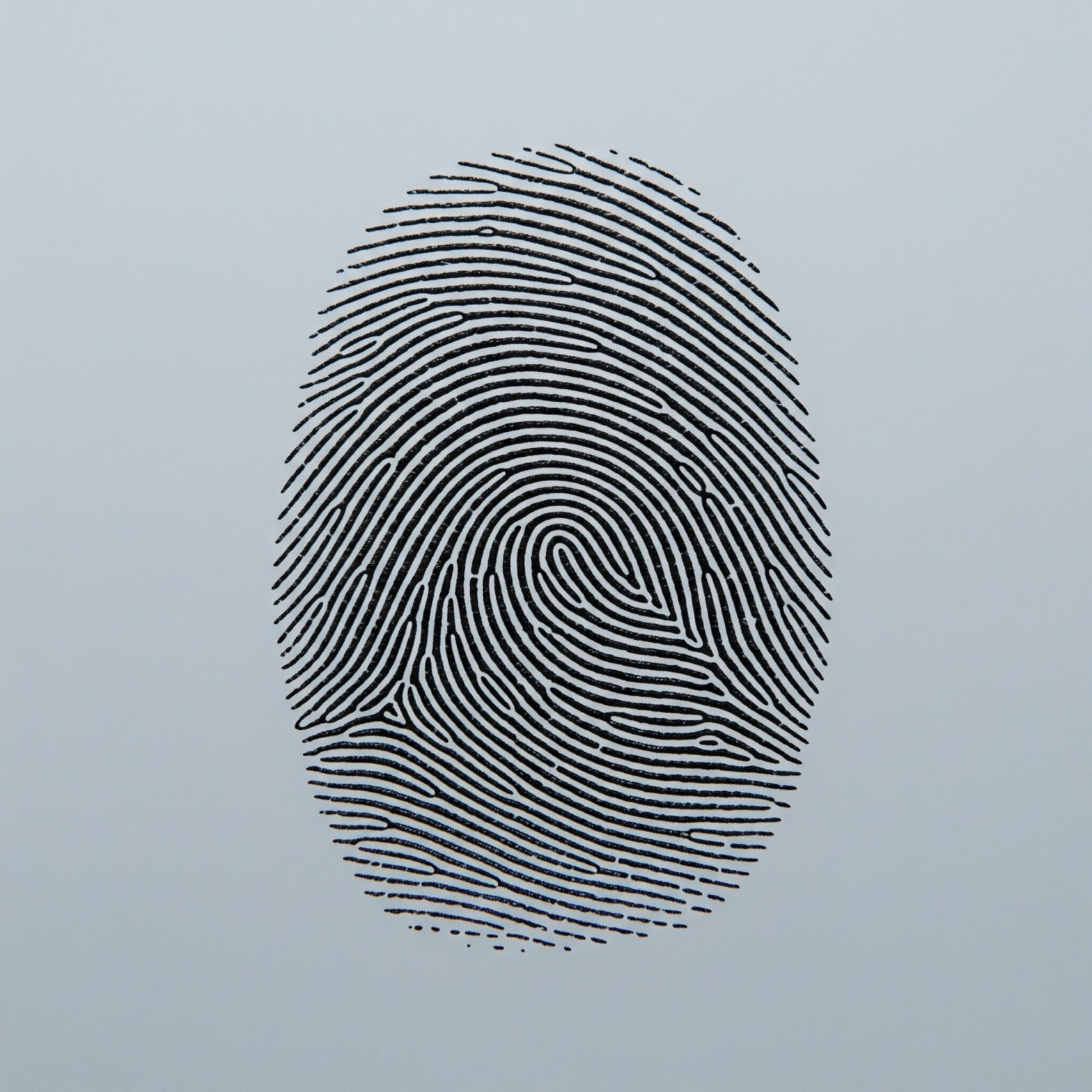
If you look sort of closely at your fingertip, you see one commonality between (most) fingers and Ruffles: both have ridges. For purposes of this exercise, take a close look at where the ridges go.
In some cases, the ridges just stop and go no further.
In other cases, a single ridge splits into two or more ridges. Or if you want to follow a different perspective, two or more ridges combine into a single ridge. But that perspective screws up the discussion later.
Ridges do other things which I will ignore for now.
The important things is that you can identify the specific point at which a ridge ending occurs. And you can identify the specific point of a bifurcation, where a ridge splits into two ridges. (If a ridge splits into three, that’s a trifurcation.)
Those ridge ending and bifurcation points? Those are the minutiae.
Human fingerprint examiners can identify these minutiae points.
So can the algorithms on an automated fingerprint identification system (AFIS) or an automated biometric identification system (ABIS).
And if two fingers have minutiae in the same locations, and don’t have minutiae in one finger that are not present on the other finger…then they’re the same finger. (I’m simplifying here, since the quality of the prints and the way the skin bends affect the ability to find minutiae.)
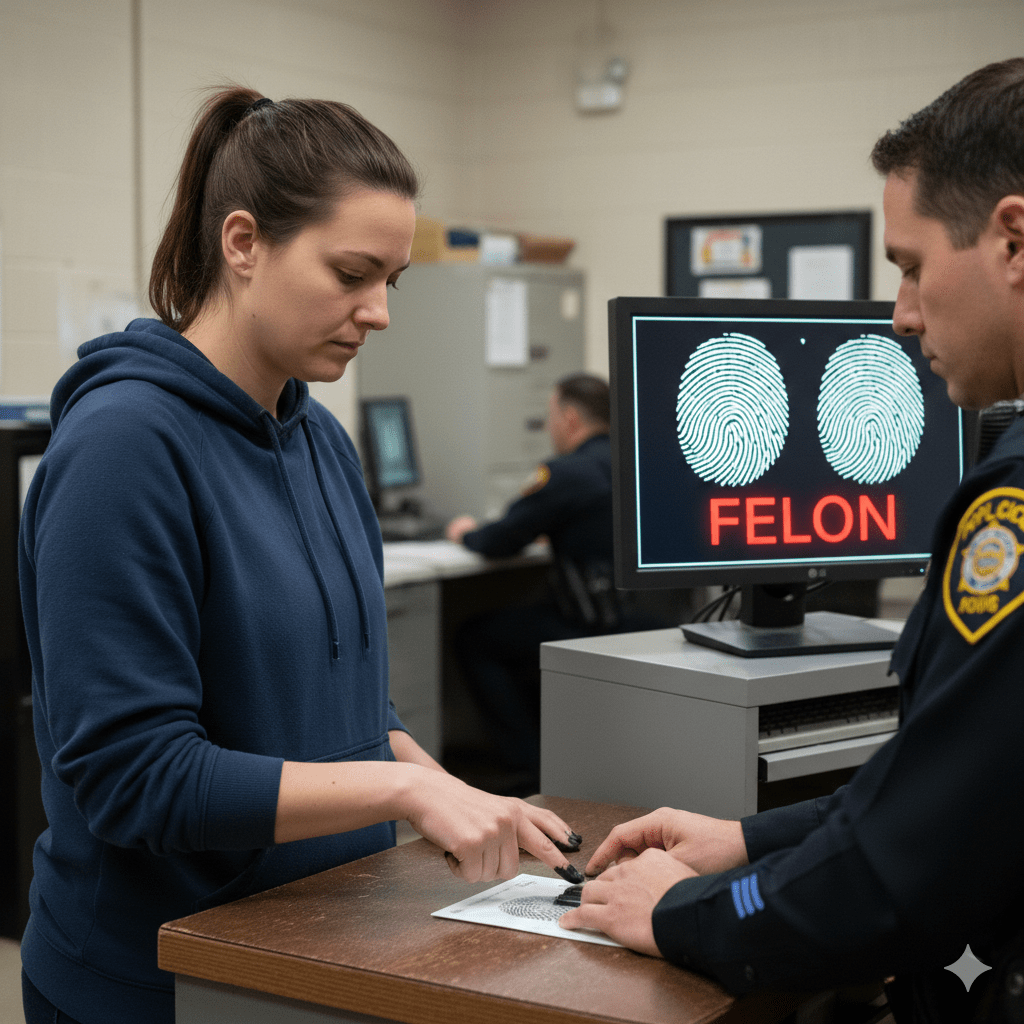
Which means that if the police find a fingerprint on a stolen car that doesn’t belong to the owner…
…and the minutiae on your finger match the minutiae on the print from the car…
…you’d better have a good lawyer.
Oh, and one more thing: you also have ridges, ridge endings, and bifurcations on your palms and toes. So don’t try to steal a car while barefoot.
People can use forged government identities to scare you, rob you, or kill you. How can you protect yourself from fake law enforcement officers, or fake ICE agents? And how can police agencies and ICE protect THEMSELVES from these fakes?
I’ve already shared the story of the person driving around Delaware with flashing lights. Nothing terrible happened in that encounter, but similar impersonation encounters have been more critical.
The visitor, wearing an American flag-adorned baseball cap and a tactical vest with the words “Security Enforcement Agent,” announced the single word “Immigration,” implying that he was from Immigration and Customs Enforcement (ICE).
Several employees fled the scene, but the cashier did not and was immediately zip-tied.
So what happened next?
The so-called ICE agent took $1,000 and was gone 30 seconds later.
Vance Boelter is alleged to have shot Minnesota State Senator John Hoffman and his wife Yvette at their home, then shot and killed State Representative Melissa Hortman and her husband.
In both cases Boelter presented himself as a police officer.
“[C]all 911 from your cell phone. Tell the 911 dispatcher that you are concerned that someone…may not be a police officer.”
Of course a person in a car is generally safer than a person at the front door of a home or business, but in any case you can call 911 and ask for confirmation.
“Do not flee.”
This appears to be sound advice if the person is a real police officer. But if the employees hadn’t fled from the fake ICE officer in Philadelphia, perhaps they would have been robbed also.
“If the dispatcher cannot confirm that you are being [visited] by a police officer, stay on the line with the dispatcher, and ask for police assistance.”
Wise to get the real cops on the scene.
“Do not provide personal documents – driver’s license, insurance information or other documents – to someone who you suspect of being a police impersonator.”
No need to add identity fraud on top of everything else.
How do you know if it IS ICE?
Unfortunately, telling true ICE agents from fake ones is a little more difficult. Your local 911 dispatcher isn’t going to know if that’s a real ICE agent at your door.
5NBCDFW published some tips for those who receive an email, call, or visit from ICE. In regards to personal visits, the station offered this advice:
“ICE agents carry official badges and credentials. They may have identification cards with their name, photo and the department logo. You can ask them to show you their badge or ID.”
“If they refuse to show their identification, you are under no obligation to open the door.”
This of course is not foolproof, since anyone can print a fake business card (perhaps on their own printer, avoiding a commercial business such as the UPS Store), create a fake ID, or create a fake badge.
Challenges of identifying police officers or ICE agents
It’s a challenging identity problem. Especially since police officers may NOT be required to identify themselves. Uniformed officers are required to identify themselves in California (California Penal Code Section 830.10), but plainclothes officers obviously don’t wear badges, and California identification laws don’t apply in other states.
“Hey,” someone suggests. “Why not create a database of all the police officers and ICE agents so that can immediately prove their authenticity?” Unfortunately, that runs into a huge privacy problem, because what happens when (not if) that database is hacked? Or if the data is intentionally leaked?
(And before you say “not my problem, those people need to be in a database,” what if it WAS your problem? In my case, what if all marketing/writing sole proprietors were required to be in a database managed by the Department of Commerce? You’d be worried if it affected YOU.)
The only way that this will change universally is when the police officers, ICE, and other agencies have to deal with impersonators. For example, if fake ICE agents cause problems for the real ones, then ICE itself will insist on positive identification of real ICE agents.
If you are a jobseeker on LinkedIn, you have probably seen people claim to be recruiters from well-known companies, when in truth they are nothing of the kind.
Faking your employer has existed for a long time. Just ask the Delaware State Police, who for some reason isn’t keen on people who impersonate police officers.
“[A] 23-year-old man from Laurel, Delaware…reported that he had been driving eastbound on Nine Foot Road, east of Laurel Road, when a white Dodge Magnum with Arizona registration pulled behind him and activated flashing red and blue lights. As the victim began to pull over, the Dodge passed him and continued driving.”
Because Arizona police officers patrol Delaware all the time.
The 23 year old was rightfully concerned, called 911, reported the incident, and described the vehicle. But that wasn’t the end of it.
“Shortly after, the driver of the Dodge pulled up next to the victim and verbally confronted him. The victim did not engage, and the suspect eventually fled the scene.”
After an investigation, the Delaware State Police arrested Blayden Rose of Selbyville, Delaware, for impersonating a police officer.
The real Blayden Rose, courtesy the Delaware State Police. The police like to take pictures of special people.
Not sure if Rose can get off on a technicality (“I wasn’t claiming to be a cop, I was just doing a strobe show”), but it reminds us that we have to trust, but verify.
There is a lot of discussion about identity verification for people working in certain jobs: police officers, teachers, financial professionals, and the like.
With one exception.
One job that isn’t frequently discussed in the identity verification world is that of a sex worker. Primarily because sex workers usually don’t undergo identity verification for employment, but identity checks for criminal proceedings.
Applicants are fingerprinted and are also required to submit a recent photo.
Applicants must provide their birth name and all subsequent “names or aliases used.”
Three years of residence addresses and employment information.
The applicant criminal record “except minor traffic violations.”
“A waiver of release of medical information,” since the nature of the work involves the possibility of transmission of communicable diseases. And you thought being a nuclear power plant worker was dangerous!
Presumably the fingerprints are searched against law enforcement databases, just like the fingerprints of school teachers and the other newer professions.
Why?
“The chief of police shall investigate, through all available means, the accuracy of all information supplied by the prostitute on the registration form.”
Included in the investigation:
Controlled substance criminal convictions.
Felony convictions.
Embezzlement, theft, or shoplifting convictions.
Age verification; you have to be 21.
As you can see, the identity verification requirements for sex workers are adapted to meet the needs of that particular position.
But…it takes two to tango.
Brothel clients need to be at least 18 years old.
But I don’t know if Nevada requires client age verification, or if age estimation is acceptable.
But I kept on moving my car through the end of May, every single week.
After a month of enforcement delay, Wednesday June 4 rolled around. And I reminded myself that I REALLY needed to move my car that morning before noon to avoid a ticket from the city.
You can guess what happened next.
I remembered to move my car…at 2:30 in the afternoon.
And found a $50 ticket that was left at 12:57 in the afternoon.
On the day that it REALLY counted.
I immediately tried to pay my fine online, but the (handwritten) ticket hadn’t been entered into the payment system yet.
I’ve been advised that it may take as long as a month to record the ticket in the payment system.
Sadly, I’m not counting on the system to forget about it.