At the Delta Hotel, across the street from the Ontario Convention Center.
That’s Ontario, California.
Visited the SBDC and several vendors.

Oh, and it was raining.
Liar.

Identity/biometrics/technology marketing and writing services

At the Delta Hotel, across the street from the Ontario Convention Center.
That’s Ontario, California.
Visited the SBDC and several vendors.
Oh, and it was raining.
Liar.

Today’s acronyms are TSA, ONT, and mDL.
I finally found a legitimate use for my California mobile driver’s license (mDL) this afternoon.
Ontario International Airport (ONT) allows people without tickets to reserve a day pass to see departing passengers off. The day pass functions as the equivalent of a real passenger’s boarding pass…with appropriate identification.
Both the day pass and my mDL were in my smartphone wallet, so all went smoothly. I wasn’t paying enough attention to know if the Transportation Security Administration (TSA) compared my live face to my mDL, but they probably did.
And I can confirm that Richard Reid rule is gone: no shoe removal required. Belts are another matter.
No true pictures, just an artistic re-creation.

It all seemed to promising back in June, when Arteco Partners appeared at Graber Olives’ salesroom (converted into an auditorium) and announced its intent to partner with Graber Olives to reopen the facility for olives and events.
But yesterday David Allen revealed that Arteco Partners appears to have backed out, presumably because the costs exceeded the possible revenue.
So what’s next?

I’m not for everyone.
And no, Bredemarket doesn’t offer resume writing services. (You wouldn’t want them anyway.)
(Dollar Tree, South Euclid, Ontario.)
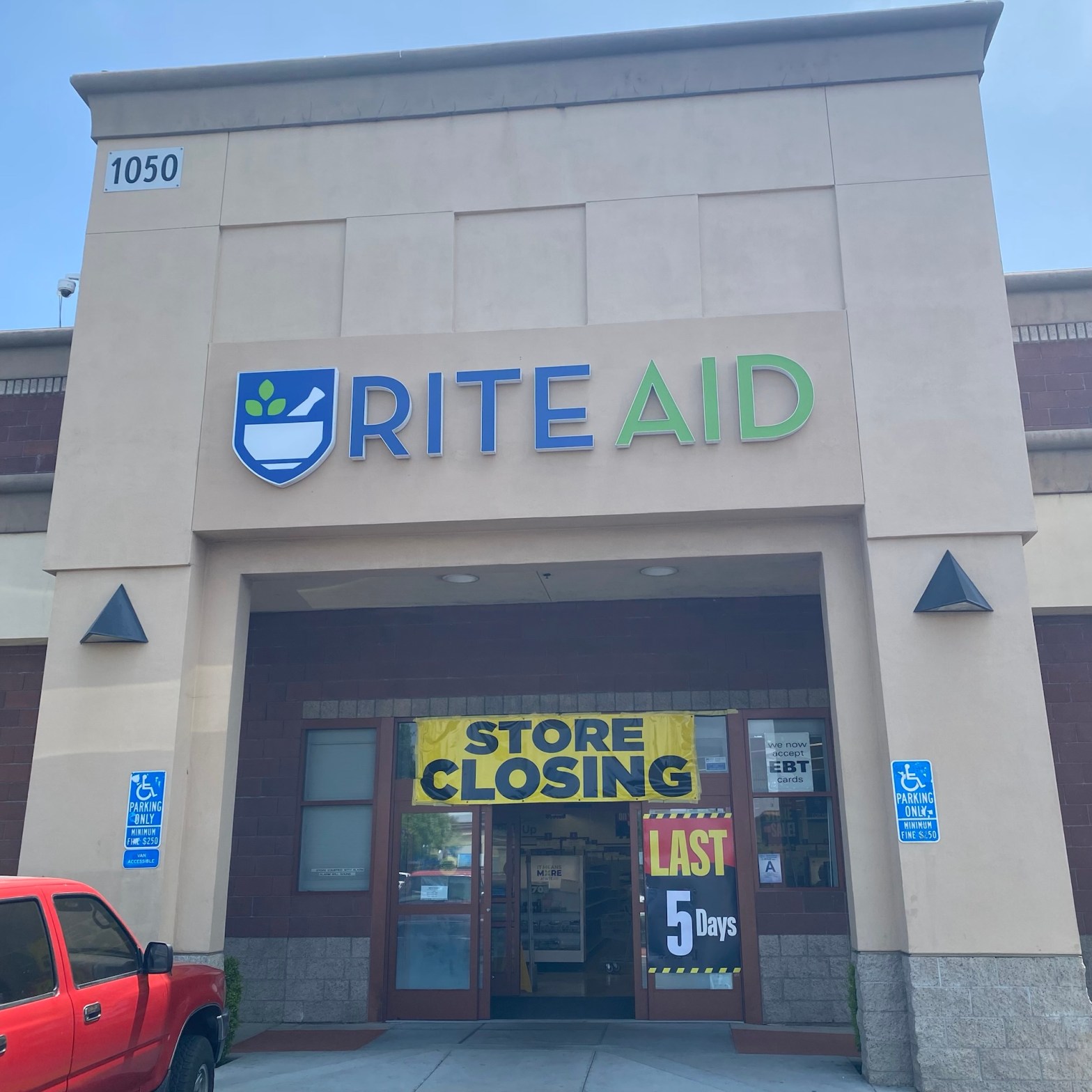
Update to my July 2 Bredemarket blog post.
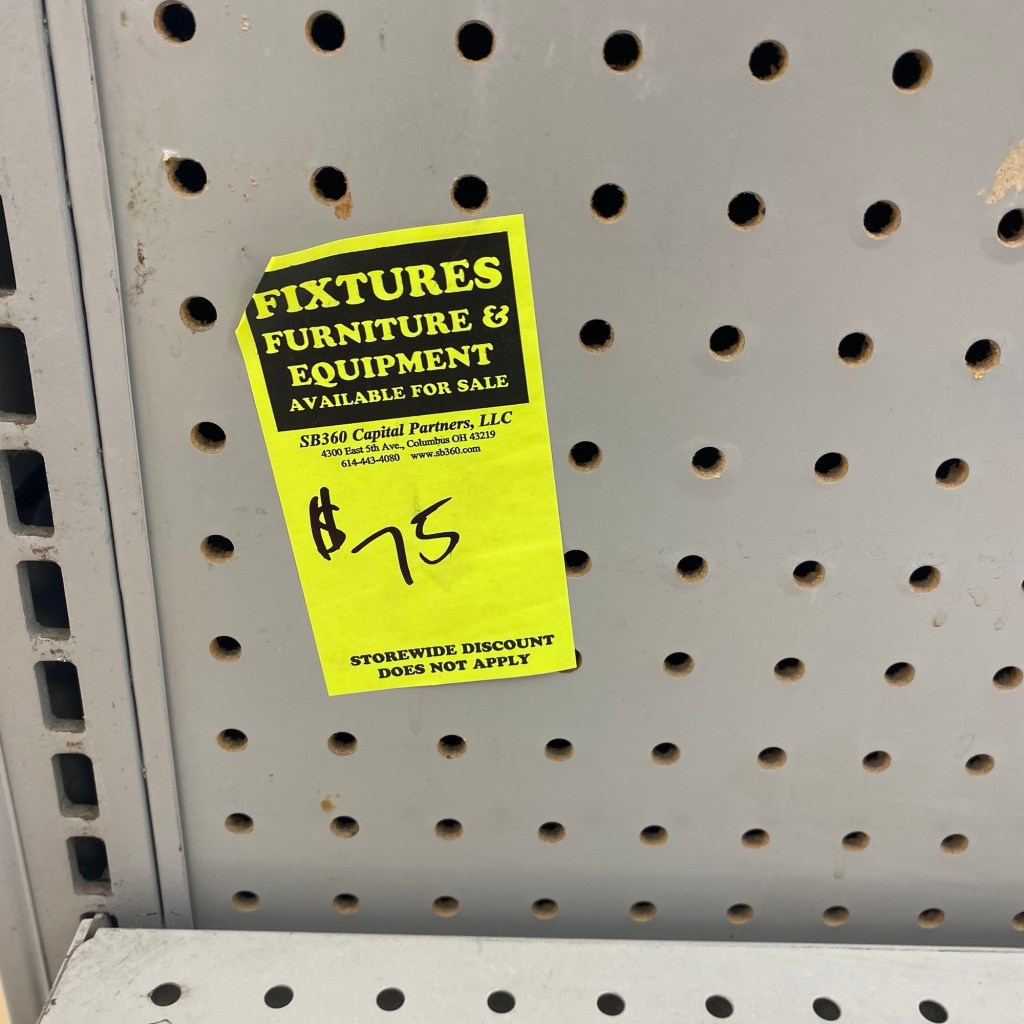
As of July 21, the Rite Aid at 4th and Mountain in Ontario, California IS closing. In the next five days.

And while the Thrifty Ice Cream counter at this store is empty, at least the Thrifty company survives.

More pictures below. Avoid if store closings depress you.


My July 4 included a parade and cherries.
Admittedly a lot of content, especially for a non-working day. (One was scheduled.) But if your technology firm lacks marketing content, I know a guy – https://bredemarket.com/mark/


I had heard that Corona’s Monster Beverage had purchased Thrifty Ice Cream as part of the Rite Aid bankruptcy proceedings, but wanted to confirm this. And the news was partially correct.
Yes, Thrifty Ice Cream’s sale was approved on July 1 at a purchase price of $19.2 million.
The buyer?
Not Monster Beverage, but a separate corporate entity known as Hilrod Holdings.
“Hilrod Holdings is linked to Hilton Schlosberg and Rodney Sacks, who until recently were co-CEOs at the energy drink company Monster Beverage Corporation. Sacks stepped down from his position as co-CEO in mid-June.”
Monster Beverage is primarily known for Monster Energy drinks, and used to be the original owner of Hansen’s non-energy drink (sold to Coca-Cola who then axed it).
Sacks, 75, is now Chairman at Monster, so both Schlosberg and Sacks are still connected with Monster while simultaneously running Hilrod. Not that ice cream directly competes with energy drinks, but the Hilrod hobby could raise some eyebrows.

Let’s promote our mall in Ontario by telling you to go to the IMPORTANT mall we own in Brea.
In addition to the security and pre-assembly videos I filmed before today’s July 4 Independence Day parade in Ontario, California, I also filmed a little bit of video during the parade itself.
But not the bagpipes. (I heard enough of them when I lived near Upland High years ago.)
The video below includes the Vietnam veterans and Chaffey High School. (Not that any current Chaffey students are Vietnam veterans.)
There is no video of horses, because I saw no horses during the parade. Don’t know why.
For comparison, here is my July 4, 2023 post.
Back to promoting Bredemarket content services (in Ontario and elsewhere) later.

Chaffey.

 Bredemarket