It’s All About Me 2: I Ask, Then I Act

Continuing my self-promotion, as opposed to promotion of my Bredemarket marketing and writing consultancy, how do I promote myself to companies outside of identity and biometrics? 

For example, cybersecurity firms, or third-party risk management (TPRM) firms, or content management system (CMS) firms, or healthcare firms (the non-identification biometric)?

By emphasizing that I ask, then I act.

Resonating with both the Simon Sinek devotees, and the bias to action adherents.

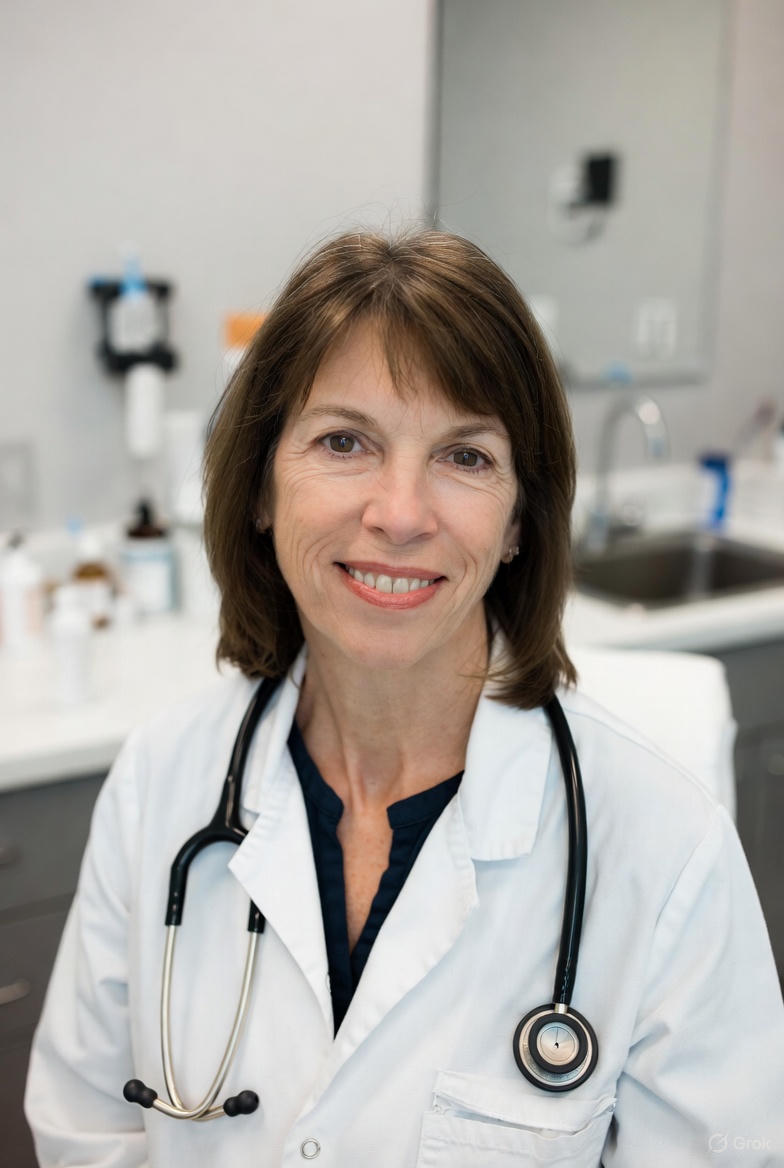
Short in duration, heavy on symbolism, and daring to mention “B2G” before “B2B.” That will start a conversation.

And then if someone fixates on the biometric modalities…

…I will redirect the person to Part One.

I ask, then I act.

More On AI-Powered Electronic Health Records

(Imagen 4)

My prior post may have given the false impression that Tebra is the only company that employs artificial intelligence to improve the speed and accuracy of electronic health records (EHRs) and electronic medical records (EMRs).

There are actually several companies using AI or other technologies to improve EHR and EMR completion. Here’s a (woefully incomplete) list. Many of these companies also handle other practice management functions required by a medical practice, including intake, telehealth, and payments.

In addition, the really big bunch (Google, IBM, Microsoft, Oracle) all play in the space.

Who did I miss?

Oh, and if any of these companies need a product marketing consultant (or employee) to get the message out about your product, talk to me.

Increasing Speed and Accuracy of Electronic Health Record (EHR) Note Taking

(Imagen 4)

Electronic health records (EHRs) can be a pain in a particular body part. But Tebra and other firms offer ways to automate portions of the record keeping process. And if these automations work, they also increase EHR accuracy.

I’ve previously talked about how an EHR can incorporate a patient identifier, derived from the facial recognition of the patient. This prevents misidentification, which can cause severe problems if the EHR data is applied to the wrong patient.

But how do you populate the rest of the EHR?

According to Tebra, with EHR+.

“Tebra’s EHR+ platform connects care, billing, scheduling, and more. Built-in AI speeds up notes, handles reviews, and automates repetitive admin work.”

Tebra’s AI Note Assist claims to “[t]urn spoken or written words into structured notes,” presumably using natural language processing (NLP) and machine learning specifically trained on medical record keeping.

But always remember to comply with health, privacy, and other relevant laws.

“Before using AI-powered scribe tools, review applicable laws and regulations in your practice’s jurisdiction regarding electronic recordings, AI scribes, and informed consent. Some jurisdictions require verbal or written consent prior to any form of ambient documentation. Check your state board or consult legal counsel for guidance.”

And watch the video.

But Tebra and its competitors face a problem: you can only scream “AI” for so long before your prospects ask, “So what?” 

Bredemarket can create written content for tech marketers that attracts prospects.

Contact Bredemarket.

Content for tech marketers.

AI-Analyzing Computed Tomography (CT) Scans

From Philips’ announcement of a case study.

“Imagine a radiology department with over one hundred staff members analyzing thousands of CT images daily. Every minute of efficiency gain and workflow improvement means radiologists can spend more time with patients. Several years back, the radiology department at the Hospices Civils de Lyon (HCL) in France began a research collaboration journey with Philips to advance task automation using AI. Many of the algorithms generated in this clinical partnership are now available to radiologists everywhere via Advanced Visualization Workspace….

“‘“We perform many chest CT scans in the hospital. Most patients only need a scan of a specific body area: the neck, thorax, or abdominal. The more specific we can target, the better we are able to minimize the X-ray dose. In our first study, we developed an algorithm to classify the thorax, abdominal, or neck during a thoracic CT scan. This method has helped us raise awareness among radiology technicians to limit exploration to the region of interest only. Reducing the margin could reduce the X-ray dose on average by 20 per cent.’”

An additional result? Tasks that used to take minutes or hours now only take seconds.

For more information, see https://www.philips.com/a-w/about/news/archive/case-studies/co-creating-ai-solutions-that-free-up-time-to-spend-with-patients.html

Make America Hallucinate Again

While some are concentrating on the political aspects of this story, I would like to focus on the technological aspects.

“[Dr. Katherine] Keyes is cited in a paper titled ‘Changes in mental health and substance use among US adolescents during the COVID-19 pandemic,’ which appears on page 52 of the MAHA report and lists JAMA Pediatrics as the journal. A representative for the journal confirmed to ABC News the paper does not exist.”

Quoted from https://abcnews.go.com/Politics/rfk-jrs-maha-report-contained-existent-studies/story?id=122321059

Anybody who has paid attention over the last two years knows EXACTLY what happened.

The word “hallucination” comes to mind.

Figure it out yet?

Someone took a shortcut in researching and/or writing the MAHA paper…something that all the generative AI companies are saying is a perfectly wonderful thing to do. After all, you won’t lose your job to AI…you will lose your job to someone who uses AI’s “help.” Until AI hallucinates and puts organic food dye-free egg whites on your face.

The continued inaccuracies in generative AI-authored writing are not limited to one political movement.

(Imagen 4)

Can Non-productive Weeks Be Productive?

This has been a weird week.

Productivity-wise, I started off on the wrong foot because of pre-scheduled personal appointments on Monday and Tuesday afternoon.

No sweat, I thought, I will make up the time on Wednesday.

Until I fell ill mid-morning Wednesday and spent most of the rest of the day doing nothing.

With limited work yesterday and today.

Which reminded me that the best-laid plans can derail quickly.

But I still completed some critically important tasks…so that’s good.

What is Protected Health Information?

Many laws and regulations impact health information—not just the Health Information Portability and Accountability Act (HIPAA).

But what IS Protected Health Information?

Kirk Nahra and Daniel Solove shared this example in a webinar:

Is “I drink Diet Coke” health information?

  • Maybe it’s not health information at all.
  • Maybe it indicates healthy practices (no sugar).
  • Maybe it indicates unhealthy practices (artificial sweetener use).

The answer isn’t simple.

Now I’m Just Playing with Google Gemini

I asked Imagen 3 to help me illustrate nth party risk management.

Where you are connected with everyone to whom your connections are connected.

But I wanted to illustrate third-party risk management in a clean way. Back when AIDS became a sad feature of our lives in the 1980s, the description of how it spread from person to person could get a little graphic.

April 2025 Update on Bredemarket’s Proposal Services

This post has two purposes:

  • To brag about myself.
  • To let you know how this braggart can help you with your identity, cybersecurity, and technology proposals.

First, the bragging

Let’s start the bragging by announcing that one of Bredemarket’s consulting clients was recently notified of an award by a federal agency.

I won’t name the client or the agency, other than to clarify that the agency is NOT the U.S. Department of Education, the Agency for International Development, the Voice of America, or similar agencies that have taken a beating over the last 2 1/2 months. So the award is fairly safe.

So what do I have to brag about?

To be honest, not much.

Second, the reality

Yes, I made sure that the proposal was compliant and persuasive, that it addressed all the required points, that it went to the correct person, that it stayed within the mandated page and word limits, and that it was delivered before the due date and time.

But if the client had proposed an inferior solution, questionable implementation plan, or unqualified personnel, there would NOT have been an award regardless of whether the text was in 12-point Times New Roman with the appropriate margins.

Like all Bredemarket projects, I collaborated with the client to submit the proposal, which in the end was a winning proposal.

Third, how did I get here?

I’ve told the story before, but I kind of fell into the proposals world in October 1994 when I began consulting for the Proposals Department at a company called Printrak International. After several acquisitions, the company became part of IDEMIA 23 years later.

During my time at Printrak, Motorola, MorphoTrak, and IDEMIA I spent two separate stints in Proposals, primarily focusing on state and local opportunities with various international opportunities thrown in.

Things changed in 2020 when Bredemarket started offering proposal services. With one exception (a State of California healthcare-related proposal), all my proposal work has been at the federal level.

I’ve worked at various proposal maturity levels, ranging from working via SMA in a mature proposal development process, to cases in which I was the sole proposal expert. But the keys always remain the same: work with the client, do great work, and turn the thing in on time.

Fourth, how will YOU get THERE?

If your organization has the need to submit a technology software proposal, perhaps I can help. I can plug into your existing proposals organization, or if necessary I can BE your proposals organization.

If you’d like to talk about it, schedule a free consultation via my “CPA” page (the “P” stands for Proposal) and check the “Proposal services” check box.

https://bredemarket.com/cpa/

(Wildebeest proposal picture from Imagen 3)

The One PII/PHI Data Point No One is Discussing

In a February 2024 discussion of the differences and similarities between personally identifiable information (PII) and protected health information (PHI), I published an exhaustive list of types of PII, some of which are also PHI.

  • Social Security Number. 
  • Passport number.
  • Driver’s license number.
  • Taxpayer identification number.
  • Patient identification number.
  • Financial account number.
  • Credit card number.
  • Personal address.
  • Personal telephone number.
  • Photographic image of a face.
  • X-rays.
  • Fingerprints.
  • Retina scan.
  • Voice signature.
  • Facial geometry.
  • Date of birth.
  • Place of birth.
  • Race.
  • Religion.
  • Geographical indicators.
  • Employment information.
  • Medical information.
  • Education information.
  • Financial information.

Looks complete to you, doesn’t it? Well, it isn’t. To, um, identify the missing bit of information that is both PII and PHI, take a look at this LinkedIn post from Jack Appleby. (Thanks to packaging expert Mark Wilson for bringing this post to my attention.)

“A dream brand just sent me a gift package & invite… but they broke the two most important rules of influencer gifting…

“The package was a ridiculously cool collab hoodie + an invite to an event I’ve wanted to go to since I was just a little kid… but the hoodie is a medium… and I’m an XL… and my name was spelled wrong on the invitation.”

And no, I’m not talking about Jack Appleby’s name.

I’M TALKING ABOUT HIS HOODIE SIZE.

And yes, hoodie size in combination with other information is both PII (personally identifiable information) and PHI (protected health information). If your hoodie size is XXL, but your height is only 5’1”…that has some health implications.

Yet at the same time it’s also vital business information. It’s collected from prospects and new employees at trade shows and during employee onboarding. And as Appleby’s example shows, there are potentially severe consequences if you get it wrong.

But does your favorite compliance framework include specific and explicit clauses addressing hoodie size? I bet it doesn’t. And that could be a huge privacy hole.

(The hoodie in my selfie is from my 2022-2023 employer. And yes I still wear it. But I got rid of my IDEMIA, MorphoTrak, Motorola, and Printrak attire.)