A More Positive Update on the Apple Vision Pro

Earlier this year, I quoted sources that claimed that Apple “may have ceased production of its first-generation Vision Pro headset.”

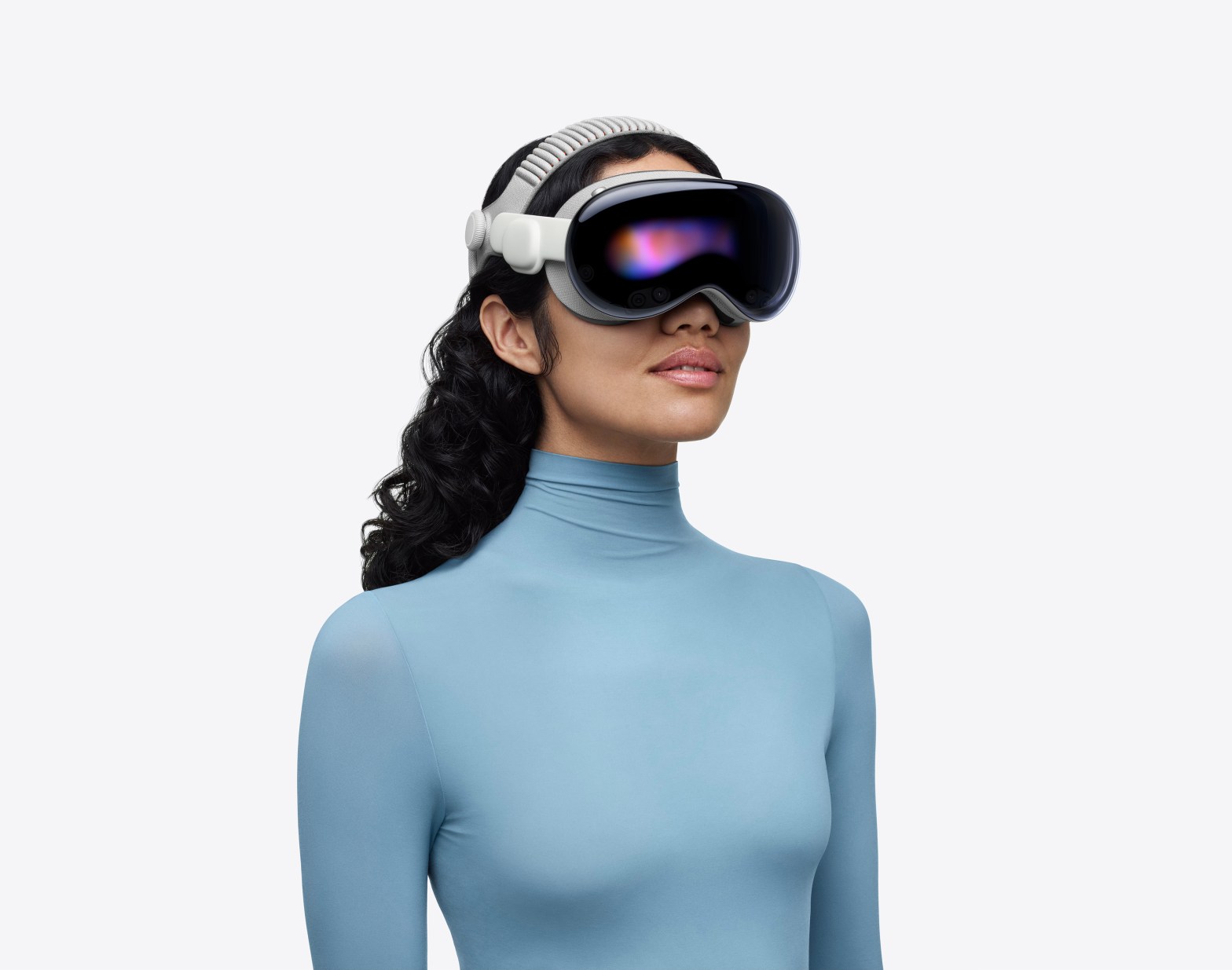
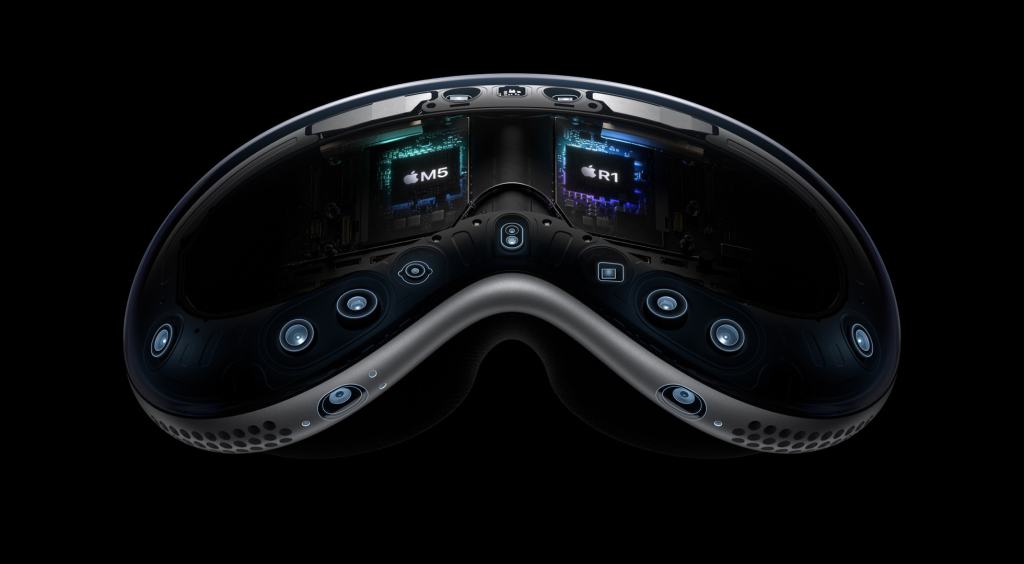
But as is often true in the tech world, there is now a SECOND generation of the Vision Pro headset, featuring more power (via the M5 chip that Apple is introducing everywhere) and more comfort (via the new “Dual Knit Band”).

Source: Apple.

“M5 provides an even faster, smoother, and more responsive experience for Apple Vision Pro users, while introducing new opportunities for developers to create more advanced spatial and immersive experiences. Built using third-generation 3-nanometer technology, M5 on Vision Pro features an advanced 10-core CPU that delivers higher multithreaded performance, resulting in faster experiences throughout the system, including faster load times for apps and widgets and more responsive web browsing.”

Source: Apple.

“The Dual Knit Band delivers an even more comfortable fit for users. It features upper and lower straps that are 3D-knitted as a single piece to create a unique dual-rib structure that provides cushioning, breathability, and stretch. The lower strap features flexible fabric ribs embedded with tungsten inserts that provide a counterweight for additional comfort, balance, and stability. And the intuitive dual-function Fit Dial allows users to make fine-tuned adjustments to achieve their ideal fit. The new Dual Knit Band comes in small, medium, and large sizes; is available to purchase separately; and is compatible with the previous-generation Apple Vision Pro.”

For all the details of the new Apple Vision Pro, read the press release.

But it’s still pretty pricey, more niche than revolutionary event.

Oh, and “one more thing”…

I had to read the fine print in the press release, and this is what it says about Apple.

“Apple revolutionized personal technology with the introduction of the Macintosh in 1984. Today, Apple leads the world in innovation with iPhone, iPad, Mac, AirPods, Apple Watch, and Apple Vision Pro. Apple’s six software platforms — iOS, iPadOS, macOS, watchOS, visionOS, and tvOS — provide seamless experiences across all Apple devices and empower people with breakthrough services including the App Store, Apple Music, Apple Pay, iCloud, and Apple TV. Apple’s more than 150,000 employees are dedicated to making the best products on earth and to leaving the world better than we found it.”

All right and fine, but Apple (then Apple Computer) existed before 1984. And while the Macintosh changed everything, including the non-Apple computer that I’m typing on today, there never would have been a Macintosh if it hadn’t been for the Apple II. Remember the Apple II, Tim? Woz does.

And another thing

Reminder to marketing leaders: if you need Bredemarket’s content-proposal-analysis help, book a meeting at https://bredemarket.com/mark/

Deepfake App Secret Purposes and Age Non-verification

It’s nearly impossible to battle a tidal wave.

CBS News recently reported on the attempts of Meta and others to remove advertisements for “nudify” apps from their platforms. The intent of these apps is to take pictures of existing people—for example, “Scarlett Johansson and Anne Hathaway”—and creating deepfake nudes based on the source material.

Two versions of “what does this app do”

But the apps may present their purposes differently when applying for Apple App Store and Google Play Store approval.

“The problem with apps is that they have this dual-use front where they present on the app store as a fun way to face swap, but then they are marketing on Meta as their primary purpose being nudification. So when these apps come up for review on the Apple or Google store, they don’t necessarily have the wherewithal to ban them.”

How old are you? If you say so

And there’s another problem. While the apps are marketed to adult men, their users extend beyond that.

“CBS News’ 60 Minutes reported on the lack of age verification on one of the most popular sites using artificial intelligence to generate fake nude photos of real people. 

“Despite visitors being told that they must be 18 or older to use the site…60 Minutes was able to immediately gain access to uploading photos once the user clicked “accept” on the age warning prompt, with no other age verification necessary.”

We’ve seen this so-called “age verification” before.

From another age-regulated industry.

But if whack-a-mole fighting against deepfake generators won’t work, what will?

I don’t have the answer. Even common sense won’t help here.

Behind “No KYC” Crypto

This ad displayed in a smartphone game I was playing and linked to a downloadable app in Apple’s App Store. Possibly Google’s and Samsung’s official stores offer this app also.

You know, the authorized places to get apps—for our own protection.

So what’s the big deal about “no KYC” apps? CoinLedger explains. Note: this post is constantly updated to reflect regulatory changes. The text below was captured this morning.

“KYC stands for Know Your Customer. This refers to a set of standards and regulations that allow financial institutions to verify a customer’s identity. KYC laws were originally put into place to protect against money laundering and terrorist activity. 

“Exchanges that abide by KYC policies will ask you for information like your name, address, and a copy of government-issued ID upon signup….

“MexC is a cryptocurrency exchange founded in 2018 and headquartered in Seychelles. 

“You can get started using the platform with no KYC. However, MecX does require KYC for certain types of transactions, such as crypto-to-crypto and derivative trades. 

“For years, MexC was one of the most popular no KYC exchanges in the United States. However, MexC stopped offering services to US customers in 2023. Trying to get around this restriction with a VPN may lead to you losing access to your crypto.”

Steve Jobs Ruined “Shell Oil”

(Image from https://www.textstudio.com//logo/digital-clock-text-effect-985)

Jobs and his danged calligraphy.

Back before Jobs co-founded Apple Computer, typing “71077345” into a dedicated calculator (with an “LCD” style typeface) and flipping it upside down showed a recognizable word. Isn’t that cool?

Now, hardly anyone has dedicated calculators, and the one on my smartphone has a “normal” typeface that ruins the trick.

Not the same.

And with Adobe Firefly creating typefaces now, the “SHELLOIL” days are a distant “let’s get you home Grandpa” memory.

An Apple a Day Keeps the Doctor Busy

(Imagen 3)

Like Google Glass before it, Apple Vision Pro truly shines in vertical niche applications—not the mass market. Take healthcare:

“Apple Vision Pro’s price and weight are of no concern to doctors in the operating room, as the spatial computing platform helps replace expensive monitors and stiff necks.”

From “300 doctors attended a summit on Apple Vision Pro’s applications in surgery”

https://appleinsider.com/articles/25/01/31/300-doctors-attended-a-summit-on-apple-vision-pros-applications-in-surgery

I Restarted the Bredemarket Podcast…For Now

Almost a year ago I retreated from many of Bredemarket’s social channels, but I’ve slowly added some of them back.

Even the podcast.

For those of you who don’t remember the Bredemarket podcast, it consisted of short episodes (usually 1-2 minutes). When Spotify (the successor to Anchor) announced the elimination of its podcast creation capability, I wondered if it was worth it to continue with the podcast any more. Especially without the cool Jupiter sound effect.

Well, I just published a new episode with that outstanding podcast creation software package Voice Memos.

Here’s the latest episode (Spotify; it should be rolling out to other podcast platforms).

https://open.spotify.com/episode/62N3mcsezQlv5KHiJxUFz4?si=n4pDewegSzesnrz-3pIaZw

Apple Watch is a Passive Verb

(Imagen 3)

When Woz was building computers 50 years ago, he didn’t realize his successors would build medical devices that would receive FDA approval.

I touched on this earlier in my Thursday post about H.R. 238 and its proposal to use AI tools to write prescriptions.

But just in passing. Here’s a deeper, um, dive from May 2024.

“The FDA created the Medical Device Development Tools (MDDT) program to reduce uncertainty in device development.…Through MDDT, the FDA has created a portfolio of qualified tools that sponsors know the agency will accept without needing to reconfirm their suitability for use in a study.”

And now the Apple Watch is one of those qualified tools.

“Apple applied to get its AFib history feature qualified as a MDDT in December (2023). It is the first digital health technology qualified under the program.”

The advantage of using an Apple Watch to gather this data?

“Officials said the wearable can help address the challenges ‘by allowing for passive, opportunistic AFib burden estimation in a wearable form that is already familiar to Apple Watch users.’”

Medical measurements are often skewed by stress from the health experience itself. But if you’re already wearing an Apple Watch, and you always wear an Apple Watch, the passive nature of AFib data collection means you don’t even know you’re being measured.

Update on the Apple Vision Pro

(Image from Apple)

For Bredemarket’s first blog post in 2025, I’m updating a blog post from 2023 with updated information from Duncan Riley of SiliconANGLE.

“Apple Inc. may have ceased production of its first-generation Vision Pro headset after the product, which came to market in 2024, turned out to be a massive flop for the company.”

Riley cites a MacRumors post as his source. Why stop?

“Apple now has a sufficient number of Vision Pro units in its inventory to meet demand for the device’s remaining lifespan through to 2025.”

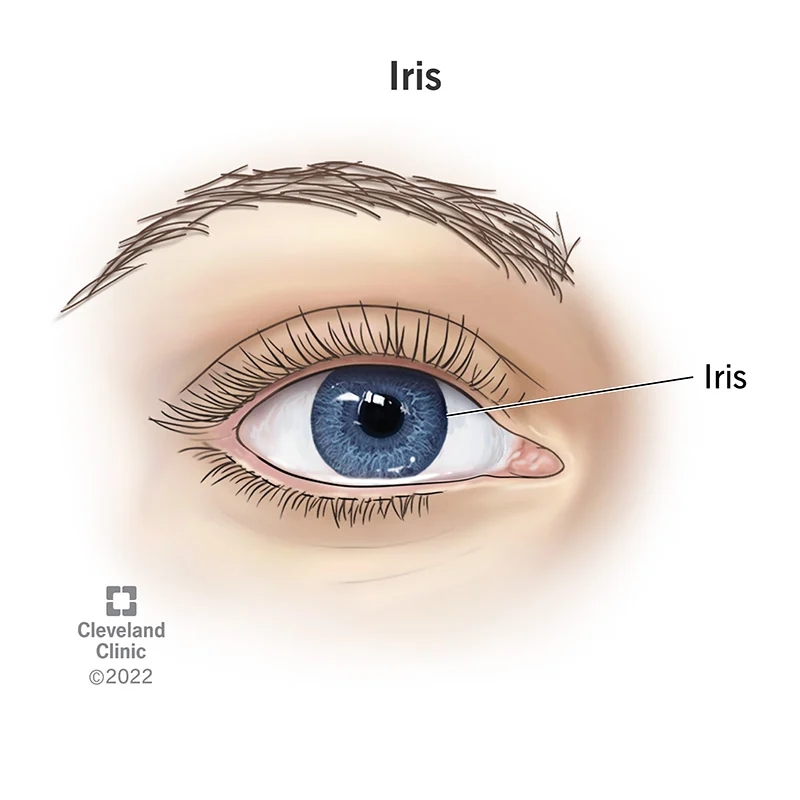
You may recall that I characterized the Apple Vision Pro as a technological biometric advance. But the difficulty and the expense of capturing irises has apparently prevented Vision Pro from achieving world domination.

From Cleveland Clinic. (Link)

Back to face, finger, and voice—with some exceptions.

Getting Around the Warring Standards (Lightning vs. USB-C)

I’ve talked about standards to death, but what do you do when there are two standards? Do you support standard 1, or standard 2?

Yes.

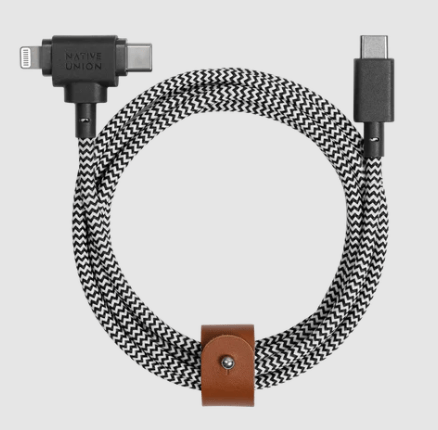
If you need to charge both USB-C and Lightning mobile devices, Native Union has the cable for you.

The ultimate cable you’ve been searching for is finally here. Solve all your power needs with a faster, more sustainable, more durable cable. Designed for superior convenience and versatility, this unique 2-in-1 connector houses both USB-C and Lightning connectors in a single head and is strong enough to withstand the most active all-day, all-device use.

Belt Cable Duo (USB-C to USB-C & Lightning). From Native Union website.

As you can see from the image above (upper left corner), you can choose either the Lightning adapter or the USB-C adapter.

Sounds great…

…except that Apple is slowly discontinuing use of Lightning, to comply with European Union regulations in 2022. The 2023 iPhone 15 doesn’t offer Lightning at all, and over the next several years Lightning will go away as older Apple devices become obsolete.

But for now it’s a good cable.

Dr. Jones MD, NPE

I have a telehealth appointment next week with a medical professional whom I have previously met. And I assume she will participate in the telehealth appointment.

In the future, of course, she may not.

Way back in April 2013, I wrote a tymshft piece entitled “You will still take a cab to the doctor’s office. For a while.” It speculated about a future 2023 medical appointment in which the patient took a driverless cab to a medical facility. In the office, the patient was examined by remote staff…or so she thought.

“Well, I’m glad you’ve gotten used to the procedure,” replied the friendly voice. “I hope you like me!”

“I do,” said Edith. “You’ve been very helpful. But I’ve always wondered exactly WHERE you were. If you were in Los Angeles, or in Mississippi, or perhaps in India or China, or perhaps even in one of the low-cost places such as Chad. If you don’t mind my asking, exactly where ARE you?”

“I don’t mind answering the question,” replied the friendly voice, “and I hope you don’t take my response the wrong way, but I’m not really a person as you understand the term. I’m actually an application within the software package that runs the medical center. But my programmers want me to tell you that they’re really happy to serve you, and that Stanford sucks.” The voice paused for a moment. “I’m sorry, Edith. You have to forgive the programmers – they’re Berkeley grads.”

“Oh,” said Edith after a moment. “This is something new. I’m used to it in banking, but I didn’t realize that a computer program could run an entire medical center. Well…who picks up the trash?”

“That’s an extra question! Just kidding,” replied the friendly voice. “Much of the trash pickup is automated, but we do have a person to supervise the operation. Ron Hussein. You actually know him – he was your cab driver in 2018 when you came here.”

Re-reading this 2013 piece, I was amused at three things I got wrong.

  • First, Google, Facebook, and Apple did NOT merge to form Gaceapple, “the important merger that saved the tech industry in the United States from extinction.” American tech firms are still powerful…for now.
  • Second, my assumption of cab companies adopting driverless cars assumed the continued existence of cab companies. Ride share services have reduced the presence of traditional companies dramatically.
  • Third, my assumption that medical firms would sink untold sums of money into centralized automated medical examination rooms could be questioned…especially for routine appointments like Edith’s. Why not just let Edith’s smartphone—perhaps with a single attachment—gather the data?

Of course, there are medical ethics questions that underlie this entire discussion of remote telehealth and the use of non-person entities (NPEs). And we are struggling with those right now.

Image of Dr. Jones MD, NPE from Google Gemini.