
This post explains what “pillar pages” are, the pros and cons of Bredemarket’s pillar pages, what I’ve learned from the “Target Audience” pillar page that I created, and how this can help your business deliver effective, converting messages to your prospects.
What are pillar pages?
I’ve been working on “pillar pages” for the Bredemarket website for over a year now.

As I stated before in an April 2022 blog post, a “pillar page” is simply a central “cluster” page on your website that discusses an important topic, and which is linked to other pages that provide more detail on the topic.
Think of a wheel with a hub and spokes. The pillar page is the hub, and the related pages are the spokes.

How can Bredemarket’s pillar pages be better?
As of July 5, 2023, I have created five pillar pages, which I label as “topics of interest” on Bredemarket’s “Information” page.
- Benefits.
- Customer Focus.
- Identity blog post writing.
- Inland Empire case study writing.
- Target Audience.
Now these pillar pages aren’t as mature as I’d like them to be.
- I haven’t really multi-layered my keywords that link to the pillar; currently things are fairly simplistic where benefit “spoke” blog posts link to the benefits “hub” pillar. I haven’t explicitly optimized the “hub and spokes” for people who search for, say, features.
- Similarly, the organization of each pillar page is fairly simplistic. Each pillar starts with a brief discussion of the topic in question, and is then followed by excerpts from and links to blog posts that provide more detail on the topic. (And the blog posts themselves link back to the pillar, providing bidirectional…um, benefits.) It’s functional, but perhaps you’d be better served if the pillars grouped subtopics together, rather than listing all the blog posts in reverse chronological order.
But the pillars do their work in terms of navigation and search engine optimization. If you want to find out what Bredemarket says about a topic such as benefits, it’s fairly easy to find this.
What have I learned from the Bredemarket Target Audience pillar page?
This post delves into the fifth of my five pillar pages, the Target Audience page.
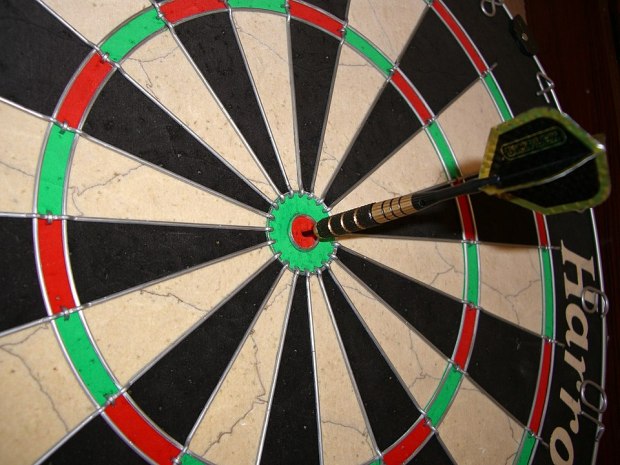
I’ve recently worked on beefing up this pillar page by linking to more Bredemarket blog posts that discuss target audiences. And in the process of making these additions, I’ve realized some things about target audiences that I wanted to summarize here. (Repurposing content refocuses the mind, I guess.)
In the process of improving my pillar page, I’ve gleaned five truths about target audiences:
- You need to define at least one target audience.
- It’s not illegal to have multiple target audiences.
- Different target audiences get different messages.
- You can create personas, or you can not create personas. Whatever floats your boat.
- Target audience definition focuses your content.
I’ll discuss each of these truths and suggest how they can improve your firm’s content.
One: You Need to Define At Least One Target Audience.
The first and most important thing is that you need a target audience before you start writing.

If you have no target audience, who is receiving your message? How do you know what to say?
For example, the primary target audience for THIS blog post is anyone from any type of company who could use Bredemarket’s marketing and writing services. It’s not limited to just the identity folks, or just the Inland Empire folks. If it were, I’d write it differently.
Here’s another target audience example that I used in an October 2022 blog post:
From https://bredemarket.com/2022/10/30/six-questions-your-content-creator-should-ask-you/
- If you’re a lollipop maker and you’re writing for kids who buy lollipops in convenience stores, you’ll write one way.
- If you’re a lollipop maker and you’re writing to the convenience stores who could carry your lollipops, you’ll write another way.
Do you see how target audiences influence what you write?
Two: It’s Not Illegal to Have Multiple Target Audiences.
I recently criticized myself in jest because my self-promotional LinkedIn post identified two target audiences: companies who could use my services as a full-time employee, and companies who could use my services as a Bredemarket contract consultant.
This does have some drawbacks, since if I had chosen one or the other, I could have streamlined my post and made my message stronger.
But in this particular case, I chose to “muddy the waters.” Mary, grab the baby, targets rising.
The content addressed two target audiences at the same time, although this post prioritized the companies looking for full-time employees.
As long as you know in advance what you’re going to do, you can define multiple target audiences. Just don’t define a dozen target audiences for a 288-character tweet.
Three: Different Target Audiences Get Different Messages.
Perhaps you are writing a single piece of content that must address multiple target audiences. A proposal is an example of this. For example, a proposal in response to a request for proposal (RFP) for an automated biometric identification system (ABIS) affects multiple target audiences.

Here’s an example of multiple target audiences for a theoretical Ontario, California ABIS proposal, taken from a May 2021 Bredemarket post:
- Field investigators.
- Examiners.
- People who capture biometrics.
- Information Technologies.
- Purchasing.
- The privacy advocate.
- The mayor.
- Others.
That’s a lot of target audiences, but if you’re submitting a 300 page proposal that answers hundreds of individual questions, you have the ability to customize each of the hundreds of responses to address the affected target audience(s).
For example, if the RFP asks about the maximum resolution of captured latent fingerprint images, your response will address the needs of the “examiner” target audience. Your response to that question won’t need to say anything about your compliance with city purchasing regulations. (Unless you have a really weird city, which is possible I guess.)
At the same time, if the RFP asks if you comply with E-Verify, this is NOT the time to brag about supporting 4,000 pixels per inch image capture.
Four: You Can Create Personas, Or You Can Not Create Personas. Whatever Floats Your Boat.
If you haven’t read the Bredemarket blog that much, you should know that I’m not very hung up on processes—unless my client (or my employer) insists on them. Then they’re the most important thing in the world.
If you find yourself trapped in a room (preferably padded) with a bunch of certified marketing professionals, they’ll probably toss around the word “persona” a lot. A persona helps you visualize your target audience by writing to someone with a particular set of attributes. Here’s an example from the October 2022 post I cited earlier:
Jane Smith is a 54 year old single white owner of a convenience store in a rural area with an MBA and a love for Limp Bizkit…
From https://bredemarket.com/2022/10/30/six-questions-your-content-creator-should-ask-you/
If I’m going to write a particular piece of content, this persona helps me focus my writing. As I write, I can picture Jane in my mind, fetching the giant cups for the soda dispenser, planning her next trip to the big city, and wondering if her customers would mind if she started blasting this song.
Having this persona in my mind can be an excellent writing support.
- What would Jane think about a list of target audience truths?
- What would Jane think if a Limp Bizkit song appeared in the middle of the list? (She’d like that.)
- Most importantly, would that post about target audiences induce Jane to explore the Bredemarket 400 Short Writing Service?
So you can create personas, either on the fly (take a LinkedIn profile of a real person and change a few facts so that the persona becomes Jim, a 35 year old product/content marketer who specializes in healthcare) or through an extensive and expensive persona research program.

But what if you escape from the padded room, run away from the marketing professionals, and swear up and down that you will never ever create a persona?
Will your marketing efforts die?
No they won’t.
You can still target your writing without inventing demographic information about the person reading your content.
It depends upon the effort you want to invest in the task.
Five: Target Audience Definition Focuses Your Content.
I kind of already said this, but I wanted to explicitly repeat it and emphasize it.
Regardless of whether your target audience is defined by an expensive research effort, a tweak of a real person’s LinkedIn profile, or the simple statement “we want to target latent fingerprint examiners,” the simple act of defining your target audience focuses your content.

Your text addresses the target audience, and doesn’t go off on tangents that bear no relation to your target audience.
This makes your message much more effective.
But is the message of this post resonating with companies needing content creators?
If you’re still reading, I guess it is.
Bredemarket can help you define your target audience for your content, and can help you define other things also that are necessary for effective content.
Would you like to talk to me about the content you want to create, and the message you want to deliver to your target audience?
Are you ready to take your firm to the next level with a compelling message that addresses your target audience(s) and increases awareness, consideration, conversion, and long-term revenue?
Let’s talk today!
- Email me at john.bredehoft@bredemarket.com.
- Book a meeting with me at calendly.com/bredemarket.
- Contact me at bredemarket.com/contact/.
Now if you’ll excuse me, I have to cross-reference this blog post with my Target Audience pillar page.

 Bredemarket