
(Part of the biometric product marketing expert series)
(UPDATE JUNE 24: CORRECTED THE YEAR THAT COVID BEGAN.)
I haven’t said anything publicly about Apple Vision Pro, so it’s time for me to be “how do you do fellow kids” trendy and jump on the bandwagon.
Actually…
It ISN’T time for me to jump on the Apple Vision Pro bandwagon, because while Apple Vision Pro affects the biometric industry, it’s not a REVOLUTIONARY biometric event.
The four revolutionary biometric events in the 21st century
How do I define a “revolutionary biometric event”?

I define it as something that completely transforms the biometric industry.
When I mention three of the four revolutionary biometric events in the 21st century, you will understand what I mean.
- 9/11. After 9/11, orders of biometric devices skyrocketed, and biometrics were incorporated into identity documents such as passports and driver’s licenses. Who knows, maybe someday we’ll actually implement REAL ID in the United States. The latest extension of the REAL ID enforcement date moved it out to May 7, 2025. (Subject to change, of course.)
- The Boston Marathon bombings, April 2013. After the bombings, the FBI was challenged in managing and analyzing countless hours of video evidence. Companies such as IDEMIA National Security Solutions, MorphoTrak, Motorola, Paravision, Rank One Computing, and many others have tirelessly worked to address this challenge, while ensuring that facial recognition results accurately identify perpetrators while protecting the privacy of others in the video feeds.
- COVID-19, spring 2020 and beyond. COVID accelerated changes that were already taking place in the biometric industry. COVID prioritized mobile, remote, and contactless interactions and forced businesses to address issues that were not as critical previously, such as liveness detection.
These three are cataclysmic world events that had a profound impact on biometrics. The fourth one, which occurred after the Boston Marathon bombings but before COVID, was…an introduction of a product feature.
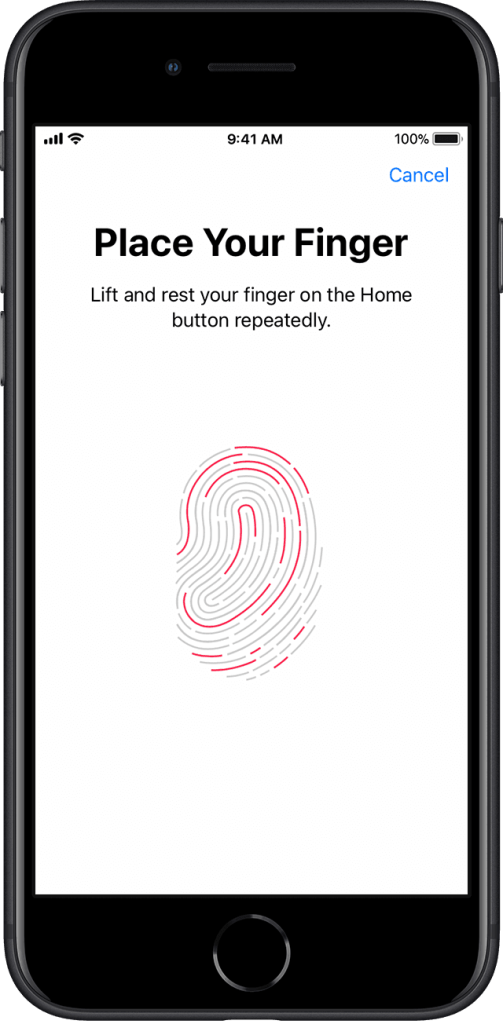
- Touch ID, September 2013. When Apple introduced the iPhone 5s, it also introduced a new way to log in to the device. Rather than entering a passcode, iPhone 5S users could just use their finger to log in. The technical accomplishment was dwarfed by the legitimacy that this brought to using fingerprints for identification. Before 2013, attempts to implement fingerprint verification for benefits recipients were resisted because fingerprinting was something that criminals did. After September 2013, fingerprinting was something that the cool Apple kids did. The biometric industry changed overnight.
Of course, Apple followed Touch ID with Face ID, with adherents of the competing biometric modalities sparring over which was better. But Face ID wouldn’t have been accepted as widely if Touch ID hadn’t paved the way.
So why hasn’t iris verification taken off?
Iris verification has been around for decades (I remember Iridian before L-1; it’s now part of IDEMIA), but iris verification is nowhere near as popular in the general population as finger and face verification. There are two reasons for this:
- Compared to other biometrics, irises are hard to capture. To capture a fingerprint, you can lay your finger on a capture device, or “slap” your four fingers on a capture device, or even “wave” your fingers across a capture device. Faces are even easier to capture; while older face capture systems required you to stand close to the camera, modern face devices can capture your face as you are walking by the camera, or even if you are some distance from the camera.
- Compared to other biometrics, irises are expensive to capture. Many years ago, my then-employer developed a technological marvel, an iris capture device that could accurately capture irises for people of any height. Unfortunately, the technological marvel cost thousands upon thousands of dollars, and no customers were going to use it when they could acquire fingerprint and face capture devices that were much less costly.
So while people rushed to implement finger and face capture on phones and other devices, iris capture was reserved for narrow verticals that required iris accuracy.
With one exception. Samsung incorporated Princeton Identity technology into its Samsung Galaxy S8 in 2017. But the iris security was breached by a “dummy eye” just a month later, in the same way that gummy fingers and face masks have defeated other biometric technologies. (This is why liveness detection is so important.) While Samsung continues to sell iris verification today, it hadn’t been adopted by Apple and therefore wasn’t cool.
Until now.
About the Apple Vision Pro and Optic ID

The Apple Vision Pro is not the first headset that was ever created, but the iPhone wasn’t the first smartphone either. And coming late to the game doesn’t matter. Apple’s visibility among trendsetters ensures that when Apple releases something, people take notice.
And when all of us heard about Vision Pro, one of the things that Apple shared about it was its verification technique. Not Touch ID or Face ID, but Optic ID. (I like naming consistency.)
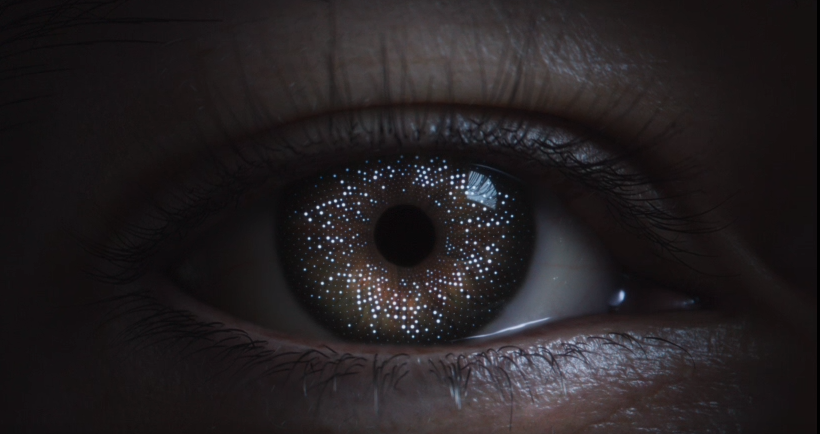
According to Apple, Optic ID works by analyzing a user’s iris through LED light exposure and then comparing it with an enrolled Optic ID stored on the device’s Secure Enclave….Optic ID will be used for everything from unlocking Vision Pro to using Apple Pay in your own headspace.
From The Verge, https://www.theverge.com/2023/6/5/23750147/apple-optic-id-vision-pro-iris-biometrics
So why did Apple incorporate Optic ID on this device and not the others?
There are multiple reasons, but one key reason is that the Vision Pro retails for US$3,499, which makes it easier for Apple to justify the cost of the iris components.
But the high price of the Vision Pro comes at…a price
However, that high price is also the reason why the Vision Pro is not going to revolutionize the biometric industry. CNET admitted that the Vision Pro is a niche item:
At $3,499, Apple’s Vision Pro costs more than three weeks worth of pay for the average American, according to Bureau of Labor Statistics data. It’s also significantly more expensive than rival devices like the upcoming $500 Meta Quest 3, $550 Sony PlayStation VR 2 and even the $1,000 Meta Quest Pro.
From CNET, https://www.cnet.com/tech/computing/why-apple-vision-pros-3500-price-makes-more-sense-than-you-think/
Now CNET did go on to say the following:
With Vision Pro, Apple is trying to establish what it believes will be the next major evolution of the personal computer. That’s a bigger goal than selling millions of units on launch day, and a shift like that doesn’t happen overnight, no matter what the price is. The version of Vision Pro that Apple launches next year likely isn’t the one that most people will buy.
From CNET, https://www.cnet.com/tech/computing/why-apple-vision-pros-3500-price-makes-more-sense-than-you-think/
Certainly Vision Pro and Optic ID have the potential to revolutionize the computing industry…in the long term. And as that happens, the use of iris biometrics will become more popular with the general public…in the long term.
But not today. You’ll have to wait a little longer for the next biometric revolution. And hopefully it won’t be a catastrophic event like three of the previous revolutions.

 Bredemarket
9 Comments