
Saving Money When Filling Prescriptions: Not You, The Companies

Healthcare is complicated. When most of us receive prescriptions from our doctor, either the doctor gives us a physical slip of paper with the prescription, or the doctor electronically sends the prescription to your pharmacy of choice. After that, you deal with the pharmacy yourself. Normally it goes smoothly. Sometimes it doesn’t.

  • Maybe the patient’s insurance company doesn’t cover the prescription, or charges an exorbitant price for it.
  • Maybe the patient never picks the prescription up. (The industry term is “adherence.”)
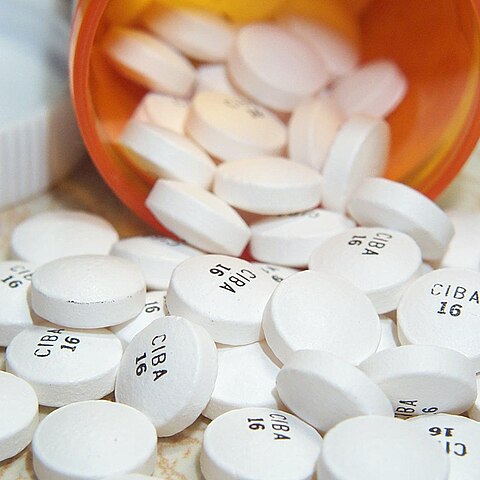
There are a lot of companies that want to help drug companies, physicians, and others make this process more seamless and less costly (for example, by maximizing gross-to-net, or GTN).

How many companies want to help? One afternoon I estimated that 30 companies are in this market. Based upon past experience in the identity verification industry (namely, all those battlecards my team created), this means that there are probably really more than 100 companies in the market.

While the companies obviously have to please the patients who need the prescriptions, they’re not critically important because the patients (usually) don’t pay the companies for the improved service.

So the companies have to sell others on their services.

Alto Technologies: “Alto Technologies’ configurable platform integrates hub and dispensing capabilities into an automated and seamless single service provider solution that improves patient experience and reduces administrative burden.”

Medisafe: “Patient support begins with onboarding and continues throughout treatment, with intuitive guidance throughout every encounter. From initial prescription to benefits investigation and authorization to shipment tracking, patients receive streamlined support with educational information and real-time updates.”

Phil: “Streamline medication access for your patients and providers. Our digital hub platform empowers retail and specialty-lite manufacturers with an alternative channel solution…”

Truepill: “Whether you’re an established brand looking to reach your patients directly, or an emerging company planning your go-to-market strategy, Virtual Pharmacy is the digital pharmacy solution built to scale.”

Of course, there are many more.

And they all need to tell their stories…

Why isn’t there a Pharmaceutical Justice League?

In case you missed it, Blake Hall of ID.me recently shared an article by Stewart Baker about “The Flawed Claims About Bias in Facial Recognition.”

As many of you know, there have been many claims about bias in facial recognition, which have even led to the formation of an Algorithmic Justice League.

By Jason Fabok and Alex Sinclair / DC Comics – [1], Fair use, https://en.wikipedia.org/w/index.php?curid=54168863

Whoops, wrong Justice League. But you get the idea. “Gender Shades” and stuff like that, which I’ve written about before.

Back to Hall’s article, which makes a number of excellent points about bias in facial recognition, including the studies performed by NIST (referenced later in this post), but I loved one comparison that Baker wrote about.

So technical improvements may narrow but not entirely eliminate disparities in face recognition. Even if that’s true, however, treating those disparities as a moral issue still leads us astray. To see how, consider pharmaceuticals. The world is full of drugs that work a bit better or worse in men than in women. Those drugs aren’t banned as the evil sexist work of pharma bros. If the gender differential is modest, doctors may simply ignore the difference, or they may recommend a different dose for women. And even when the differential impact is devastating—such as a drug that helps men but causes birth defects when taken by pregnant women—no one wastes time condemning those drugs for their bias. Instead, they’re treated like any other flawed tool, minimizing their risks by using a variety of protocols from prescription requirements to black box warnings. 

From https://www.lawfareblog.com/flawed-claims-about-bias-facial-recognition

As an (tangential) example of this, I recently read an article entitled “To begin addressing racial bias in medicine, start with the skin.” This article does not argue that we should ban dermatology because conditions are more often misdiagnosed in people with darker skin. Instead, the article argues that we should improve dermatology to reduce these biases.

In the same manner, the biometric industry and stakeholder should strive to minimize bias in facial recognition and other biometrics, not ban it. See NIST’s study (NISTIR 8280, PDF) in this regard, referenced in Baker’s article.

In addition to what Baker said, let me again note that when judging the use of facial recognition, it should be compared against the alternatives. While I believe that alternatives should be offered, even passwords, consider that automated facial recognition supported by trained examiner review is much more accurate than witness (mis)identification. I don’t think we want to solely rely on that.

Because falsely imprisoning someone due to non-algorithmic witness misidentification is as bad as kryptonite.

By Apparent scan made by the original uploader User:Kryptoman., Fair use, https://en.wikipedia.org/w/index.php?curid=11736865