
Identification Perfection is Impossible

(Part of the biometric product marketing expert series)

There are many different types of perfection.

Jehan Cauvin (we don’t spell his name like he spelled it). By Titian – Bridgeman Art Library: Object 80411, Public Domain, https://commons.wikimedia.org/w/index.php?curid=6016067

This post concentrates on IDENTIFICATION perfection, or the ability to enjoy zero errors when identifying individuals.

The risk of claiming identification perfection (or any perfection) is that a SINGLE counter-example disproves the claim.

  • If you assert that your biometric solution offers 100% accuracy, a SINGLE false positive or false negative shatters the assertion.
  • If you claim that your presentation attack detection solution exposes deepfakes (face, voice, or other), then a SINGLE deepfake that gets past your solution disproves your claim.
  • And as for the pre-2009 claim that latent fingerprint examiners never make a mistake in an identification…well, ask Brandon Mayfield about that one.

In fact, I go so far as to avoid using the phrase “no two fingerprints are alike.” Many years ago (before 2009) in an International Association for Identification meeting, I heard someone justify the claim by saying, “We haven’t found a counter-example yet.” That doesn’t mean that we’ll NEVER find one.

You’ve probably heard me tell the story before about how I misspelled the word “quality.”

In a process improvement document.

While employed by Motorola (pre-split).

At first glance, it appears that Motorola would be the last place to make a boneheaded mistake like that. After all, Motorola is known for its focus on quality.

But in actuality, Motorola was the perfect place to make such a mistake, since it was one of the champions of the “Six Sigma” philosophy (which targets a maximum of 3.4 defects per million opportunities). Motorola realized that manufacturing perfection is impossible, so manufacturers (and the people in Motorola’s weird Biometric Business Unit) should instead concentrate on reducing the error rate as much as possible.

So one misspelling could be tolerated, but I shudder to think what would have happened if I had misspelled “quality” a second time.
Words matter, or the latest from Simon A. Cole

I’m going to stop talking about writing text for a bit and look at the latest goings-on in the forensic world. Why? After seeing a recent LinkedIn post from Itiel Dror, I began wondering what Simon A. Cole was doing these days.

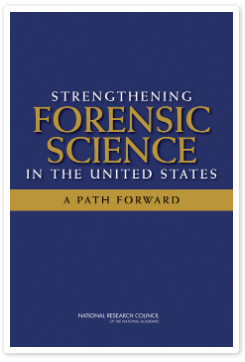
Cole is probably most famous for his book Suspect Identities, which (among other things) questioned the way in which fingerprint evidence was presented as irrefutable. Cole’s book was published in 2001, and in the following years, additional questions on fingerprint conclusions (such as the contradictory conclusions in the Brandon Mayfield case) culminated in the 2009 release of a landmark report from the National Academy of Sciences, Strengthening Forensic Science in the United States: A Path Forward. Among other things, this report changed the way in which forensic scientists expressed their conclusions.

Which brings us back to the question of what Simon A. Cole is doing these days.

OK, I lied. I DIDN’T stop talking about writing text. Because Cole’s forensic studies are all about the words that are used when talking about forensic conclusions.

Earlier this year, Cole co-authored a paper entitled “How Can a Forensic Result Be a ‘Decision’? A Critical Analysis of Ongoing Reforms of Forensic Reporting Formats for Federal Examiners.” As the beginning of the abstract to this paper reveals, Cole and his co-author Alex Biedermann believe that the choice of words is very important.

The decade since the publication of the 2009 National Research Council report on forensic science has seen the increasing use of a new word to describe forensic results. What were once called “facts,” “determinations,” “conclusions,” or “opinions,” are increasingly described as “decisions.”

Cole’s and Biedermann’s paper looks at that one word, “decisions,” from both a lay perspective and a scientific perspective. It also looks at other words that could be used, such as “interpretation” and “findings.” In the conclusion, the paper leans toward the latter.

…we tend to think that “findings” is the most appropriate of all the reporting terms floating around. “Findings” does the best job of conveying—to the expert and customer alike—that the report concerns the evidence alone. Not the evidence combined with other evidence. And, not the evidence combined with preferences. “Findings” helps more clearly distinguish between the analysis of the evidence and the inference to be drawn from that analysis. And, “findings” is commonly used in other fields of science to describe the analysis of (empirical) evidence.

The whole discussion might seem like a bunch of quibbling, but if I’m in court being charged with a murder I didn’t commit, it makes a huge difference to me whether a fingerprint comparison is reported as a “fact,” a “likelihood ratio,” a “decision,” a “finding”…or an “interpretation”…or an “opinion.” That list of possible words covers the entire spectrum.

Even if you’re not a forensic examiner (and I’m not), this precision in word choice is admirable. Especially when the life or death of a person is potentially at stake.