Jane Says…Nothing

Remember Jane, my Instagram AI influencer

Well, I received this notification on Instagram:

“Your Al JaneCPAInfluencer is now private because it goes against our Al Studio policies. Please edit it and submit again.”

Naturally I wondered what the violation was. I was directed to the policies at https://aistudio.instagram.com/policies/.

Which part of the policy does Jane violate? That’s a secret…yet another example of “you violated our terms, but we won’t tell you the specifics; YOU figure it out.”

So, since I can still access Jane myself, I asked her. AI is supposed to help you, after all.

“What portion of the Meta AI Studio Policies do you violate, Jane?”

Her response:

“I can’t respond because one or more of my details goes against the AI Studio policies.”

That answer caused me to wonder if Jane would respond to anything.

“Who is Bredemarket?”

“I can’t respond because one or more of my details goes against the AI Studio policies.”

So is it critically important that I spend a lot of time figuring out what the violation is? Um…no.

But I’m curious how this interaction will affect the ads that Meta will present to me later this year.

Messing Up “Meta Data” via the Meta Challenge

I confess that Meta AI’s cluelessness often amuses me. I need to start collecting examples, but it is often off the, um, mark.

But if you REALLY want to confuse Meta AI, participate in Bredemarket’s “Meta Challenge”:

Meta Challenge: at least once per day in October and November, go to Facebook and/or Instagram and ask Meta AI the most inane questions you can think of.

And feel free to ask these inane questions of Bredemarket’s own two Instagram bots.

Because we all want to know who is the best Osmond brother.

And Mark Zuckerberg’s shoe size.

Conversation with one of my Instagram bots.

Why?

Now since Bredemarket’s readers are of above average intelligence (and also have extremely magnetic personalities), you are probably asking why I am promoting this activity.

Simple reason: the data we feed to Meta AI in October and November will be used in December, according to PYMNTS.

Meta will begin using people’s conversations with its artificial intelligence to create personalized ads and content.

The change is set to go into effect Dec. 16, the tech giant announced Wednesday (Oct. 1), 

If you are concerned about the Really Big Bunch knowing too much about you, feed them false information just to confuse them.

And maybe you’ll get some wild entertaining ads in return.

And if they complain that you’re intentionally messing up their algorithms, tell the Really Big Bunch that you’d be more than happy to provide the REAL data.

For a price.

No Strategy, Tactics, or Content?

I just created a new reel for my Meta social channels, but in the process invented the Bredemarket t-shirt.

If I didn’t insist on shirts with pockets I’d consider printing some.

No strategy, tactics, or content? Contact Bredemarket. bredemarket.com/mark

This is Only a Test

Just trying to figure out what I would do if Meta lowered the handle on Bredemarket and I couldn’t post audio-enhanced conte n via its platforms.

“For a Meaningful Apocryphal Animation.” Details here.

Thankfully it’s not auto playing. I don’t want to go back to the 1990s again.

And this also covers me if my Spotify-hosted podcasting empire is reduced to rubble.

Using Personal Devices at Work: Meta AI Smart Glasses at a CBP Raid?

Although the lines inevitably blur, there is often a line between devices used at home and devices used at work.

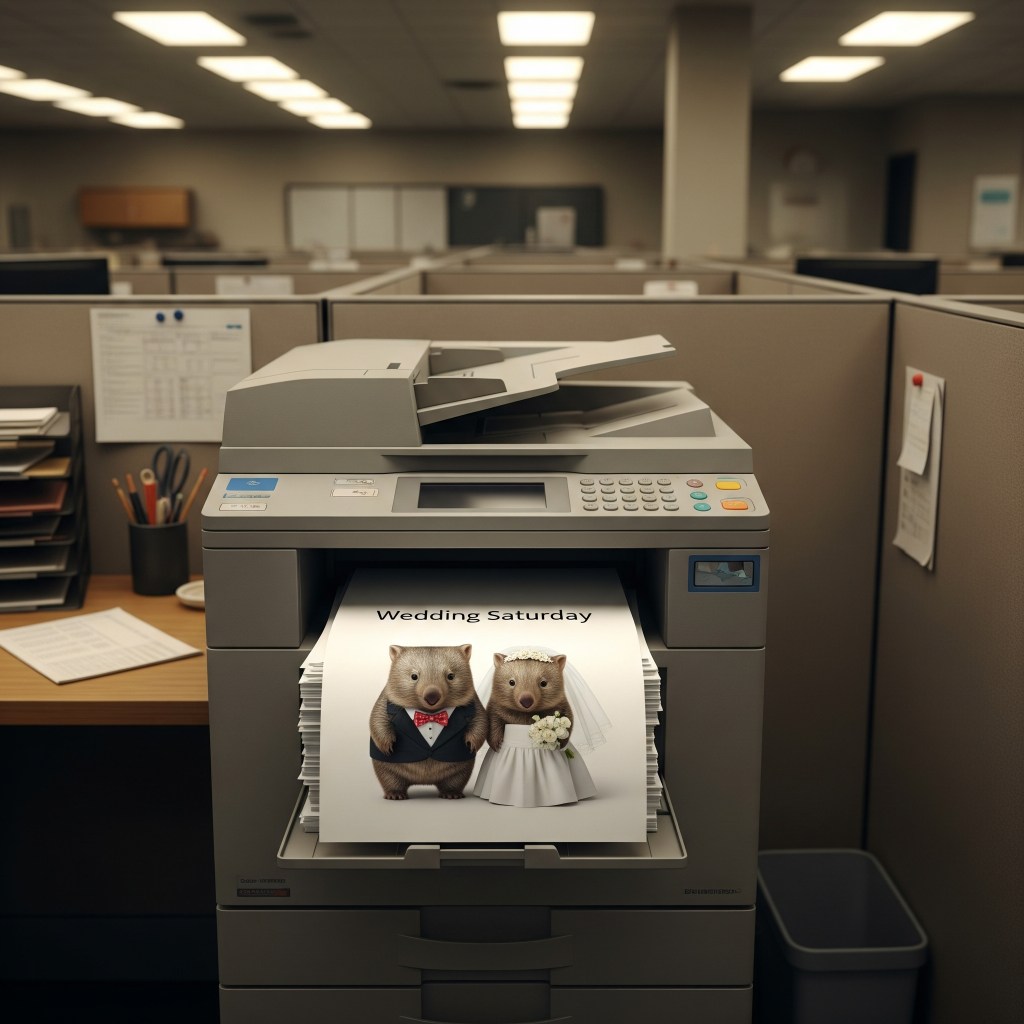
  • For example, if you work in an old-fashioned work office, you shouldn’t use the company photocopier to run personal copies of invitations to your wedding.
  • Similarly, if you have a personal generative AI account, you may cause problems if you use that personal account for work-related research…especially if you feed confidential information to the account. (Don’t do this.)
Not work related. Imagen 4.

The line between personal use and work use of devices may have been crossed by a Customs and Border Protection agent on June 30 in Los Angeles, according to 404 Media.

“A Customs and Border Protection (CBP) agent wore Meta’s AI smart glasses to a June 30 immigration raid outside a Home Depot in Cypress Park, Los Angeles, according to photos and videos of the agent verified by 404 Media.”

If you visit the 404 Media story, you can see zoomed in pictures of the agent’s glasses showing the telltale signs that these aren’t your average spectacles.

Now 404 Media doesn’t take this single photo as evidence to indicate that CBP has formally adopted Meta AI glasses for its work. In fact, a likely explanation is that these were the agent’s personal glasses, and he chose to wear them to work that day.

And 404 Media also points out that current Meta AI glasses do NOT have built-in facial recognition capabilities.

But even with these, the mere act of wearing these glasses causes potential problems for the agent, for Customs and Border Protection, and for Meta.

Take Grandma, who uses Meta to find those cute Facebook stories about that hunk Ozzy Osbourne (who appeals to an older demographic). If she finds out that her friend Marky Mark Zuckerberg is letting the Government use Meta technology on those poor hardworking workers who just want a better life, well, Grandma may stop buying those trinkets from Facebook Marketplace.

(Unauthorized) Homeland Security Fashion Show. AI-generated by Imagen 4. And no, I don’t know what a “palienza” is.

So the lesson learned? Don’t use personal devices at work. Especially if they’re controversial.

Meta Mutters

The Meta properties are great for driving engagement, but Meta’s odd and untimely application of its rules can be maddening.

I was checking my personal Facebook account this afternoon when I noticed a “Profile has some issues” message and clicked on the “View details” button to see why my profile had a gold restricted minus sign.

Profile has some issues.

When I clicked on the button I found a list of 11 issues encompassing my personal profile, the Bredemarket page, and the Bredemarket groups.

None later than April 17.

Lovely spam, wonderful spam.

I discussed THAT encounter with the Metabot in my Bredemarket post “Defeating the Metabot to Share Whistic’s Survey Results.” As far as I can tell, my grievous violation was this parenthetical statement:

“(And one more key finding. Read the article.)”

I got flagged because Facebook said my content could “trick people to visit…a website.”

We removed your post. You figure out what happened.

But even after removing the parenthetical comment I got flagged again.

Eventually I just posted a link with no text on Facebook, and since that time have studiously avoided posting calls to action on Facebook posts.

But this past issue remains a present issue because my account is restricted…and I’m supposed to do something about it. But without a DeLorean I’m not sure what. I can’t remove the offending posts since Facebook already did so.

It turns out that Wendy Wilkes wrote about this in late July.

“Many users are seeing this today — it’s caused by old posts flagged by Facebook’s system, not recent activity….

You’re not alone — it’s happening to many!

#FacebookIssue #ContentCreator #StayCalm “

From Wendy Wilkes.

So I guess I will just hang tight and see if it auto clears.

And remind myself again that Facebook is not a dependable platform. That’s the message we’re supposed to get from this…right?

When Meta Personal Accounts Become Professional

Originally posted on my personal Instagram https://www.instagram.com/reel/DM3KMPvvsR4/

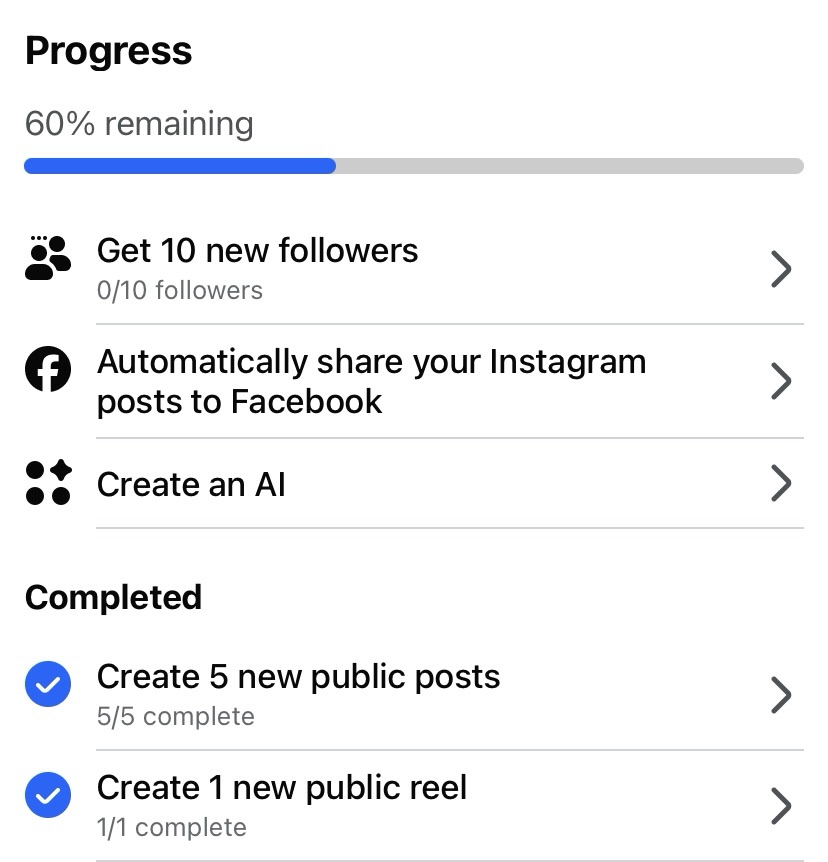
My personal Facebook account is technically a “professional” account, and therefore has Meta’s silly weekly contests. I have the content part down, but I’m NOT creating a Meta personal AI bot. (The Bredemarket Instagram account has two.)

Why We Fact Check AI

According to Meta AI, “Bredemarket’s history dates back to L-1 Identity Solutions.”

Um, no.

  • Bredemarket was established in 2020.
  • L-1 Identity Solutions ceased to exist 9 years before that in 2011, when Safran acquired it.
  • John E. Bredehoft was never an employee of L-1, or or any of the companies that L-1 acquired.

Now that’s a hallucination.

When Social Platforms Convert Users Into Identity Verification Salespeople

(Imagen 4)

(Author’s preface: I was originally going to schedule this post for the middle of next week. But by the time I wrote it, the end of the post referenced a current event of astronomical proportions. Since said current event may be forgotten by the middle of next week, I am publishing it now.)

As a proponent of identity verification and a biometric product marketing expert I should like this…but I don’t.

I got the message and the message is clear

You get a message on a platform from someone you don’t know. The message may look something like this:

“John ,

“I hope this message finds you well. I came across your profile and was truly impressed by your background. While I’m not a recruiter, I’m assisting in connecting talented professionals with a startup that is working on a unique initiative.

“Given your experience, I believe you could be a fantastic fit for their senior consultant role. If you’re open to exploring this opportunity, I’d be happy to share more details and introduce you to the team directly. Please let me know if you’re interested!”

Let’s count the red flags in this message, which is one I actually received on May 30 from someone named David Joseph:

  • The author was truly impressed by my background, but didn’t cite any specifics about my background that impressed them. This exact same message could be sent to a biometric product marketing expert, a nuclear physicist, or a store cashier.
  • The author is not a recruiter, but a connector who will presumably pass me on to someone else. Why doesn’t the “someone else” contact me directly?
  • The whole unidentified startup working on a unique initiative story. Yes, some companies operate as stealth firms before revealing their corporate identity. Amway. Prinerica. Countless MLMs with bad reputations. Trust me, these initiatives are not unique.
  • That senior consultant title. Not junior consultant. Senior consultant. To make that envelope stuffing role even more prestigious.

I got the note and the note is even clearer

But I wasn’t really concerned with the message. I get these messages all the time.

So what concerned me?

The note attached to the message by the platform that hosted the message.

“Don’t know David? Ask David to verify their profile information before responding for added security.”

The platform, if you haven’t already guessed, is LinkedIn, the message a LinkedIn InMail.

Let’s follow the trail.

  • LinkedIn let “David” use the platform without verifying his identity or verifying that Randstad is truly his employer as his profile states.
  • LinkedIn sold “David” a bunch of InMail credits so that he could privately share this unique opportunity.
  • Now LinkedIn wants me to do its dirty work and say, “Hey David, why don’t you verify your profile?”

Now the one thing in LinkedIn’s favor is that LinkedIn—unlike Meta—lets its users verify their profiles for free. Meta charges you for this.

But again, why should I do LinkedIn’s dirty work?

Why doesn’t LinkedIn prevent users from sending InMails unless their profiles are verified?

The answer: LinkedIn makes a ton of money selling InMails to people without verified profiles. And thus makes money off questionable businesspeople and outright scammers.

Instead of locking down the platform and preventing scammers from joining the platform in the first place.

It’s like LinkedIn openly embraces scammers.

And everyone knows it.

Imagen 4.