“I ask, then I act” is an attention-grabbing statement, but it’s admittedly simplistic. I don’t fall in the “ready, fire, aim” school, but believe that action incorporates review. As the management consultants Daft Punk stated many years ago:
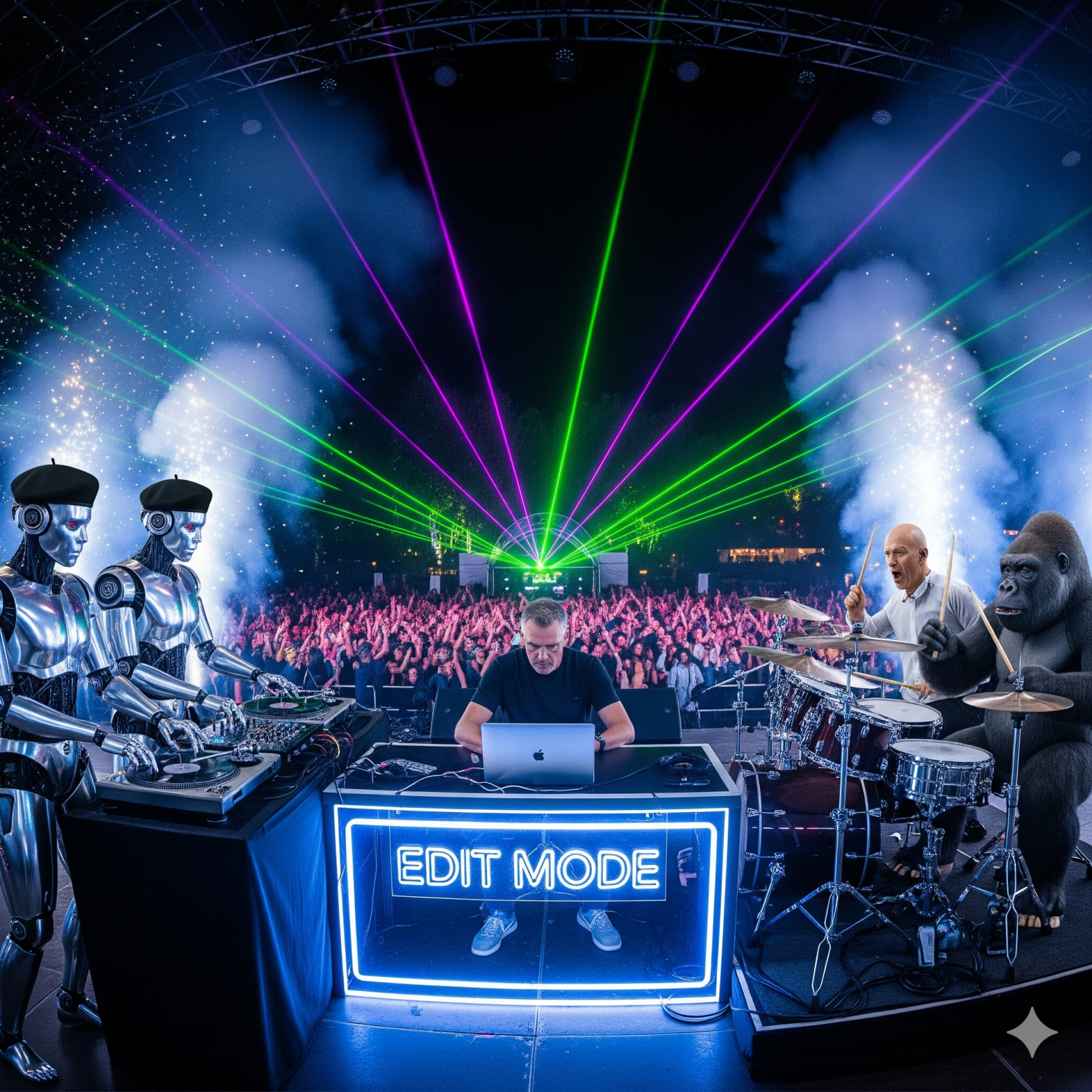
One more time
And they proceeded to say:
One more time
So I guess it’s important.
“One more time” with a client’s content
One time I used my technology product marketing expertise to draft a piece for a client, which the client then edited with Track Changes on. The client made a number of improvements to my text, so I should have been happy with that and let it go. But I thought I’d look at the document.
One more time.
Stupid Word tricks, the Read Aloud edition
So I made a copy of the document, accepted all the changes in the copy, and had Microsoft Word read the document to me (Review menu, Speech section, Read Aloud).
Imagen 4.
Unlike the audio transcription tool (now superseded by AI meeting assistants), the built-in “Read Aloud” feature remains essential today.
Everything flowed well, and Word’s built-in editor didn’t flag anything.
My eyes had seen the problem
But my eye caught something.
In my initial draft, I had referenced the client’s 800 number.
Which in and of itself isn’t bad.
Except for the fact that this is a worldwide company, and many of the prospects who responded to the piece would be calling from outside the United States, where 800 numbers are not supported.
Imagen 4.
So I shot an urgent message saying to correct my error and change the number from an 800 number to a domestic number.
That one additional review eliminated a possible source of friction between my client and its prospects.
Problem solved, even before anyone noticed there was a problem.
You knew this was coming
Anyone notice the similarity between this song and Phil Collins’ “One More Night”? Or is it just me?
I’m a member of a local Facebook “news” group, and the group just emphatically stated that expression of opinions is NOT allowed in that group.
Because facts are free of bias. (Supposedly. I should address that topic in another post.)
Because this post includes two contentious opinions, it’s no surprise that I will NEVER share this post in that local news group. Their loss.
Actually the post is off-topic for the news group anyway. But as you will see, it is entirely on-topic for Bredemarket. I’ll explain, after I discuss a couple of songs and their singers.
Two Facts and One Opinion About “Girl from the North Country”
“Girl from the North Country” is a Bob Dylan song, which he started writing in 1962 while in England. The song was recorded in New York in 1963 and released that same year on the album “The Freewheelin’ Bob Dylan.”
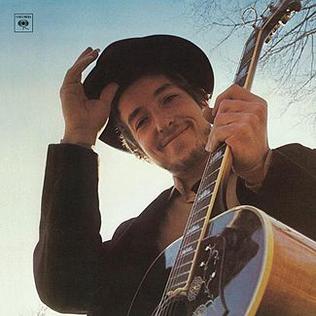
I care about Dylan’s cover of his own song, released several years later on the 1969 album “Nashville Skyline.” But Dylan had a special guest on this album: Johnny Cash.
Here are two facts about the 1969 version:
Bob Dylan has a distinctive voice.
Johnny Cash has a distinctive voice.
These are facts, not opinions, since I am not casting a value judgement on whether they are any good at singing. For the record, I love Bob Dylan’s solo songs, and I love Johnny Cash’s solo songs.
Now my opinion: the 1969 version of “Girl from the North Country” is an unmitigated disaster, because the distinctive voices do not blend at all.
If you’ve never heard this version of the song, let me provide a play-by-play account.
The song begins with Dylan and Cash strumming their guitars, accompanied by a backing band of Nashville stars. (Not Starrs.)
Dylan then sings the first verse, in a lower key than his original version, and the listeners were introduced to the newest version of Bob Dylan. Shed of a rock band, he has not returned to his early folk days, but appears in a new version of a peaceful, satisfied country crooner. More versions of Dylan were to follow.
Then we get the second verse, in which Johnny Cash picks up the story about the girl. Cash himself appears in a new guise, having moved beyond the Memphis rockabilly sound and the horn-infused “Ring of Fire” sound. Cash now entered a period in which he associated with people such as Dylan who were leap years away from both traditional country and the newer countrypolitan sound. Cash, like Dylan, would continue to travel all over the musical map, gaining fame at the end of his life by covering Nine Inch Nails.
Back to 1969. After Cash sings the second verse, Dylan returns to sing the third. Everything is going fine so far.
Then (again, in my opinion) all hell breaks loose at the 1:52 mark in the song, because now the two sing together.
Sort of.
Cash starts singing the fourth verse, Dylan joins in a second later, and then they kinda sorta sing the words of the fourth and fifth verses at kinda sorta the same time, with some harmonizing—some intentional, some unintentional when they couldn’t hit the notes. Hear the result on YouTube.
Now I will admit that my negative opinion of the Dylan-Cash duet on “Girl of the North Country” is not universal. A high school friend who shall remain anonymous (just call her “Editor Extraordinaire” and old school Rick Dees fan) thinks this version is charming. I find it amusing in a not-so-good way.
As far as I’m concerned, this collaboration didn’t work.
Which brings us to Christina Aguilera.
Three Facts and One Opinion About “Birds of Prey”
In 2010 Aguilera released her sixth album, “Bionic,” a massive 18-track album featuring a more electronic sound and numerous collaborations with Nicki Minaj, Sia, Linda Perry, and others.
I care about the Deluxe edition, with an even more massive total of 23 tracks.
One of which was co-written and produced by the (then) four members of the UK band Ladytron. As OC Weekly (R.I.P.) documented at the time, Aguilera was a fan of the quartet:
Ladytron followers were startled to learn that Christina Aguilera was not only a fan, but had also already worked with the band on a variety of songs to be released in the near future.
“We went in with no expectations; the whole thing was a massive surprise,” explains Wu. “But it was incredible. She was so musically talented, a vocalist who really knows her voice. The first takes sounded really amazing, and while we’d made demos, it was only when her voice was on them that it all came to life.
One of the songs was “Birds of Prey.” Not to be confused with “Bird of Prey” or “Sunset (Bird of Prey),” the Aguilera-Ladytron version builds upon the usual Ladytron vocal delivery from Helen Marine and Mira Aroyo by adding Christina Aguilera to the mix.
Which brings me to my three facts about this song:
Christina Aguilera has a distinctive voice, with a four-octave range that she frequently exercises to the fullest.
Helen Marnie has a distinctive voice, featured as the light “singing voice” of Ladytron.
Mira Aroyo has a distinctive voice, whose spoken word delivery blends with Marnie’s in many classic Ladytron songs. (For example, “Seventeen.”)
In my opinion, this vocal collaboration—unlike the Dylan-Cash one mentioned earlier—works out beautifully. Aguilera naturally opens the song (it’s her album after all), but as the song progresses you hear Marnie lightly chiming in and Aroyo whispering, building up to the closing of the song. Hear it here.
Again, this opinion is not universal—Aroyo in particular is an acquired taste—but the combination seems to work.
But what do “Girl from the North Country” and “Birds of Prey” have to do with B2B sales—whoops, I mean collaboration? And Bredemarket?
The art of collaboration
Bredemarket’s services are built upon the principle that I work together with my clients. My process includes a lot of references to “Bredemarket and you,” because we are both involved in every step, from the seven questions I address at the beginning to the iterative drafts and reviews that occur throughout.
But that isn’t the only way to manage a project, as I noted in June 2023. There are two others.
The first approach is to yield all control to the expert. You sit back, relax, and tell your content marketing consultant to do whatever they want. They provide the text, and you pay the consultant with no questions asked. The content marketing consultant is the pilot here.
The second approach is to retain all control yourself. You tell the content marketing consultant exactly what you want, and exactly what words to say to describe your best-of-breed, game-changing, paradigm-shifting, outcome-optimizing solution. (That last sentence was painful to write, but I did it for you.) The content marketing consultant follows your exact commands and produces the copy with the exact words you want. You are the pilot here.
So which of these two methods is the best way to create content?







 Bredemarket