
Each person has certain immutable attributes associated with them, such as their blood type. And other attributes, such as their fingerprints and iris characteristics, which are mostly immutable. (Although I defy anyone to change their irises.)
But other things associated with us are all too mutable. If we use these for identification, we’ll end up in trouble.
Elvis Presley, songwriter?
Let’s take one of the many attributes associated with Elvis Presley. If you haven’t heard of Presley, he was a popular singer in the mid 20th century. He’s even in Britannica.
(As a point of clarification, the song “Radio Radio” is associated with a DIFFERENT Elvis.)
Among many other songs, Presley is associated with the song “Don’t Be Cruel.”
Presley was not only the performer, but also the credited co-songwriter.
After all, that’s what BMI says when you search its Songview database. See BMI work ID 317493.

So if BMI says Presley co-wrote it, it must be true. Right?
Um, no. In reality, the song was written by Otis Blackwell alone.

So what’s the deal? The deal was this:
“…he listened to a selection of acetate demos provided by Freddy Bienstock, the new song representative assigned to Elvis by his publishers, Hill and Range. He chose “Don’t Be Cruel” by an obscure Brooklyn-born r&b singer and songwriter, Otis Blackwell. As per Hill and Range’s contractual requirement, it came with the assignment of half the publishing to Elvis Presley Music and half the writer’s share to Elvis Presley, but as Blackwell, the first of Elvis’ great “contract” writers, was always quick to point out, it was the best deal he ever made.”
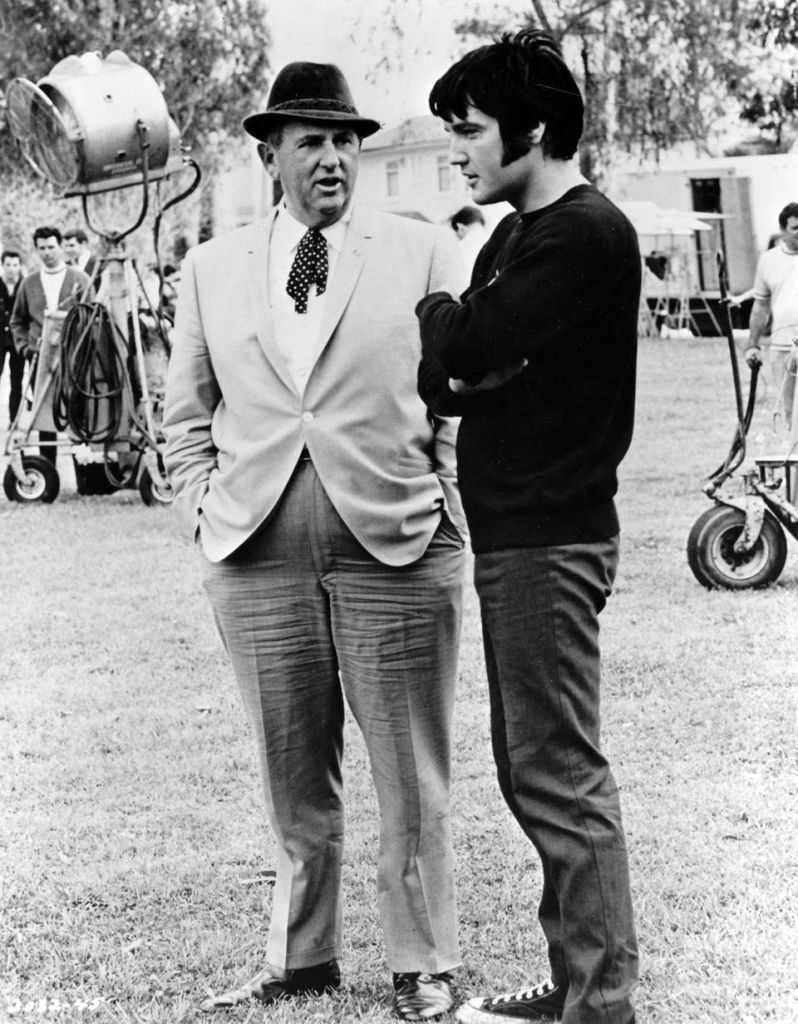
Many songs are credited to Presley as a songwriter, but in reality he wrote few if any of them. Yet the “songwriter” attribute is assigned to him. Do we simply accept what BMI says and move on?
But there are other instances in which there are no back room deals, yet a song is strongly associated with a musical entity who never wrote it.
George Jones, not a songwriter
Take BMI Work ID 542061. The credited songwriters for this particular song are Robert Valentine Braddock and Claude Putnam, more commonly known as Bobby Braddock and Curly Putnam. According to RolandNote, Braddock and Putnam began writing this song on March 4, 1977 and finished it on October 18, 1977.
It was recorded by Johnny Russell on either March 7, 1978 (RolandNote), or January 18, 1979 (Second Hand Songs), or both (Classic Country Music Stories). But no recording was released.
Then George Jones recorded the song on February 6, 1980 with subsequent overdubs (“You know she came to see him one last time”) when he was more sober. His reaction?
“I looked [producer] Billy [Sherrill] square in the eye and said ‘nobody’s gonna buy that thing, it’s too morbid.’”
And morbid it was. Although popular music in general and country music in particular has never shied away from morbid songs.
Released the next month on March 18, the song was never associated with Braddock, Putnam, Russell, or Sherrill ever again. “He Stopped Loving Her Today” is completely associated with George Jones.
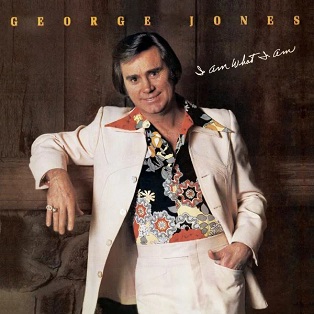
I am moved by the lyrical and emotional build-up, beginning with the very first line.
He said, “I’ll love you ’til I die”
After additional lines regarding a man’s unrequited love, the narrator enters the picture.
I went to see him just today
Oh but I didn’t see no tears
All dressed up to go away
First time I’d seen him smile in years
As for what happened next…listen to the song.
The bridge
Now there’s a particular article that I wrote for a Bredemarket client a couple of years ago that used a slow reveal “reverse timeline” effect. Starting with 2022 and moving back in time to 2019, I slowly dropped the details about a missing person who was identified via biometric technology, finally solving the mystery of the person’s identity (Connerjack Oswalt).
But I’m no Braddock/Putnam.
And I’m no George Jones.

 Bredemarket
2 Comments