
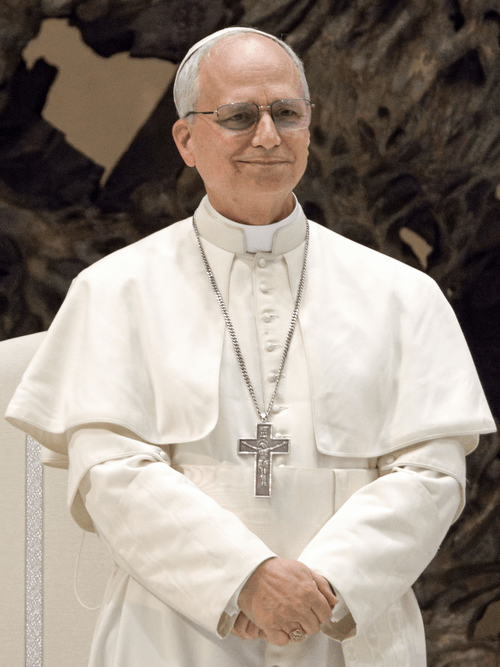
(Image By Edgar Beltrán, The Pillar, CC BY-SA 4.0, https://commons.wikimedia.org/w/index.php?curid=165153532.)
ID Tech recently announced that “the Pope has entered the chat.”
Or, in official terms, Pope Leo XIV issued his first encyclcial.
An encyclical is a document issued by a Roman Catholic pope providing guidance upon an issue that affects church members…and frankly non-church members also.
They are officially entitled in Latin, although the text is translated into many languages. The title of the encyclicals issued by Pope Leo’s predecessor, Pope Francis, include
- Dilexit nos: 24 October 2024
- Fratelli tutti: October 3, 2020
- Laudato si’ May 24, 2015
- Lumen Fidei June 29, 2013
Magnifica Humanitas
Pope Leo’s is called “Magnifica Humanitas” (English here).
Why would ID Tech, or Bredemarket, spend time discussing the writings of a Roman Catholic Pope?
Because the encyclical is subtitled as follows:
ON SAFEGUARDING THE HUMAN PERSON
IN THE TIME OF ARTIFICIAL INTELLIGENCE
That seems…relevant.
Because while we can consider artificial intelligence from technological and business perspectives, we can also certainly consider it from a moral perspective. And Pope Leo did, in a document numbered with 245 paragraphs. Let’s take a look at…um…the 95th one (heh):
“95. Here, we must recognize another crucial aspect, which I have noted earlier. In many cases within the digital context, control over platforms, infrastructure, data and computing power does not rest with States, but with major economic and technological actors. These entities effectively set the conditions for access, determine the rules of visibility and shape the very possibilities for participation. When such power is concentrated in the hands of a few, it tends to become opaque and evade public oversight, increasing the risk of distorted forms of development that give rise to new dependencies, exclusions, manipulations and inequalities.”
Why does Pope Leo care about tech bros? To answer that question we have to go to the beginning of the first paragraph.
“Humanity, created by God in all its grandeur, is today facing a pivotal choice: either to construct a new Tower of Babel or to build the city in which God and humanity dwell together.”
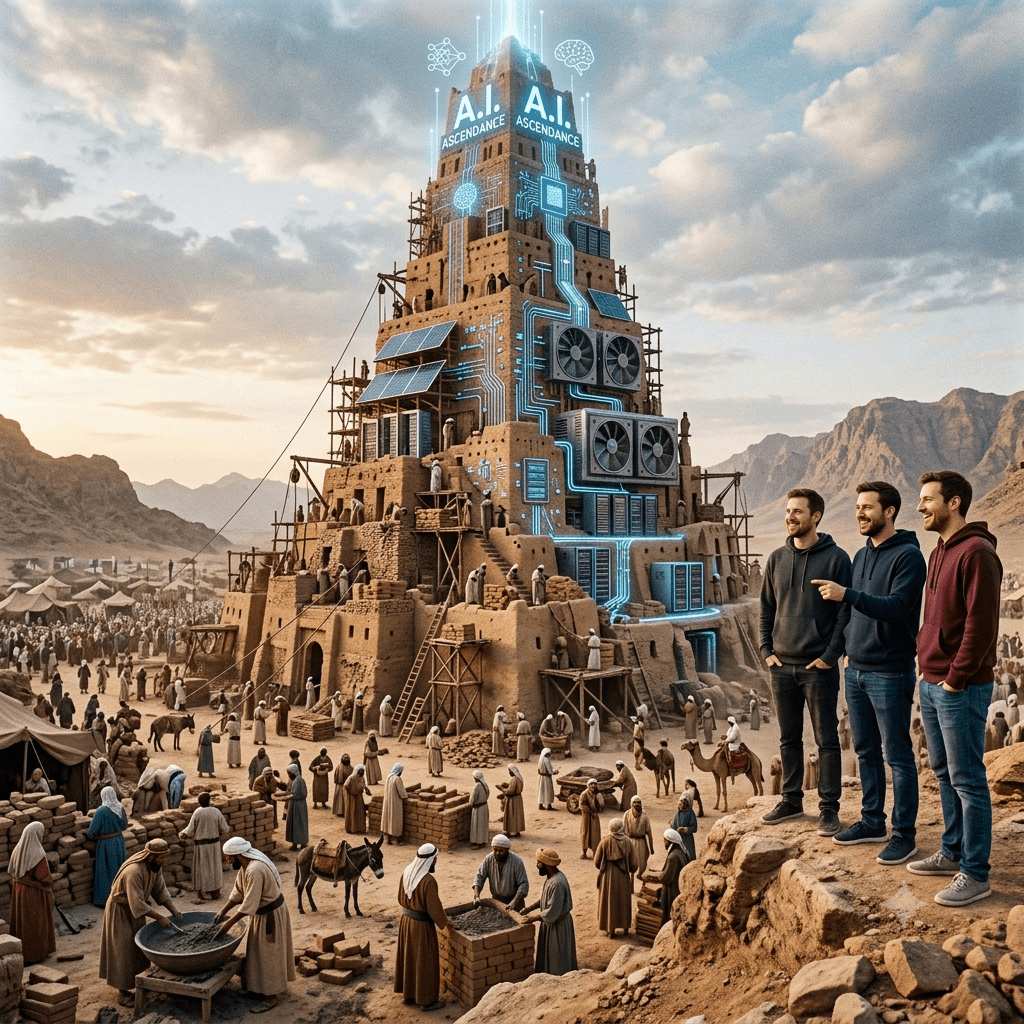
For those not familiar with the Bible, the Tower of Babel story in the Old Testament represents an episode in which, due to “stuff,” all the people of the world were divided and unable to talk to each other. Pope Leo goes into more detail in paragraph 7:
“7. In order to answer these questions and discern how to navigate responsibly the era of AI, I would like to bring to mind two scenes from the Bible: the construction of the Tower of Babel (cf. Gen 11:1-9) and the rebuilding of the walls of Jerusalem (cf. Neh 2–6). The story of Babel appears in the Book of Genesis, at the origins of humanity, immediately after the genealogies of Noah’s sons. After settling in a plain in the land of Shinar, the people decided to build a city and a tower “with its top in the heavens” (Gen 11:4). Fearing being scattered across the earth, they sought to guarantee stability and power for themselves, and above all to “make a name” for themselves. It was an impressive feat: a single language, a single technology, a single direction. However, the project concealed a profound danger. It was a project conceived without reference to God, supported by a uniformity that eliminated diversity and that chose homogenization over communion. When a city is built on pride and the claim to self-sufficiency, communication breaks down, languages are confused and people no longer understand each other. The result is not unity, but dispersion. Babel thus reveals the limits of any effort that, however grandiose, arises from self-affirmation, sacrifices human dignity for efficiency and aspires to reach heaven without God’s blessing.”
If you strip the Tower of Babel episode from its religious trappings, it describes the pursuit of technology for technology’s sake, not necessarily benefiting the people and their needs. (Actually, their diverse needs.)
Most people agree that sacrificing human dignity for efficiency is undesirable regardless of your religious beliefs or lack thereof.
Pope Leo isn’t the only religious leader sounding a warning
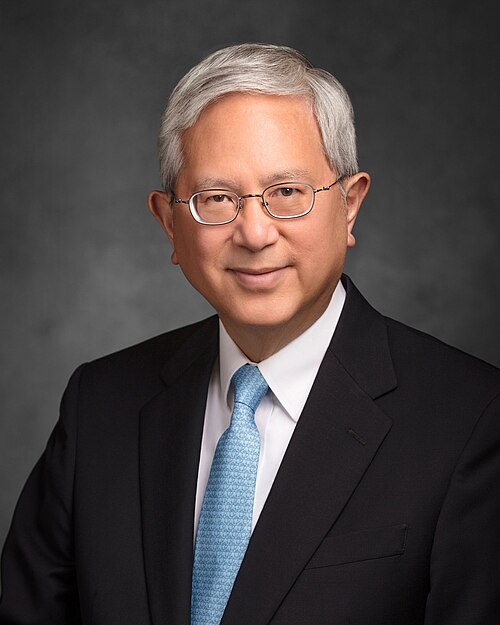
Elder Gerrit W. Gong of the Church of Jesus Christ of Latter-Day Saints has also spoken on the topic.
“Increasingly, AI influences how we perceive real and unreal; the relationships we hold most important; the ways we work and organize society. We know AI needs stable character for moral judgment. Highly capable algorithmic reasoning is not human intelligence. AI systems will manifest admirable human values and judgment only as we imbue AI personas with such. Questions transcend technology. We need trust, safeguards, and goodwill as we work through competing values and priorities regarding AI.
“A high-stakes public conversation is opening. Publics want AI to be used safely, ethically, transparently—for children, others who are vulnerable, and citizens concerned for community costs and uses of water, electricity, and land, and for continuing impacts on jobs, education, and opportunity.”
And Elder Gong also addressed the tech bros.
“Beyond the speed and scope of AI disruption is another unprecedented challenge: AI is concentrating information, technology, and capital and thereby centralizing power. Concentrated, centralized power infringes freedom. It undermines the sovereignty of individuals, companies and countries. The complexities of data (including autonomy, integrity, privacy, security, sovereignty) and intellectual property (including creativity, ownership, provenance) further complicate individual, company, and country independence.”
Considering the history of this church as a minority group often facing persecution, it fears (from its perspective) being shut out of the international conversation.
“These developments underscore the need for pluralistic faith and ethics AI evaluation benchmarks and moral compass in AI. Pluralistically portraying faith traditions accurately, honestly, and respectfully does not privilege one faith tradition over another, or belief over nonbelief. It does not seek to convert individuals. It does not adjudicate faith claims. Pluralistically benchmarking faith and ethics in AI is not an imposition of religion on AI.”
Do you see the repeated references to “pluralistic” here?
We don’t want an LDS AI, or a Catholic AI, or a Tech Bro AI, or any other narrowly-defined AI. That would be catastrophic.
We want an AI for all of us.
But what does this mean?
 Bredemarket