
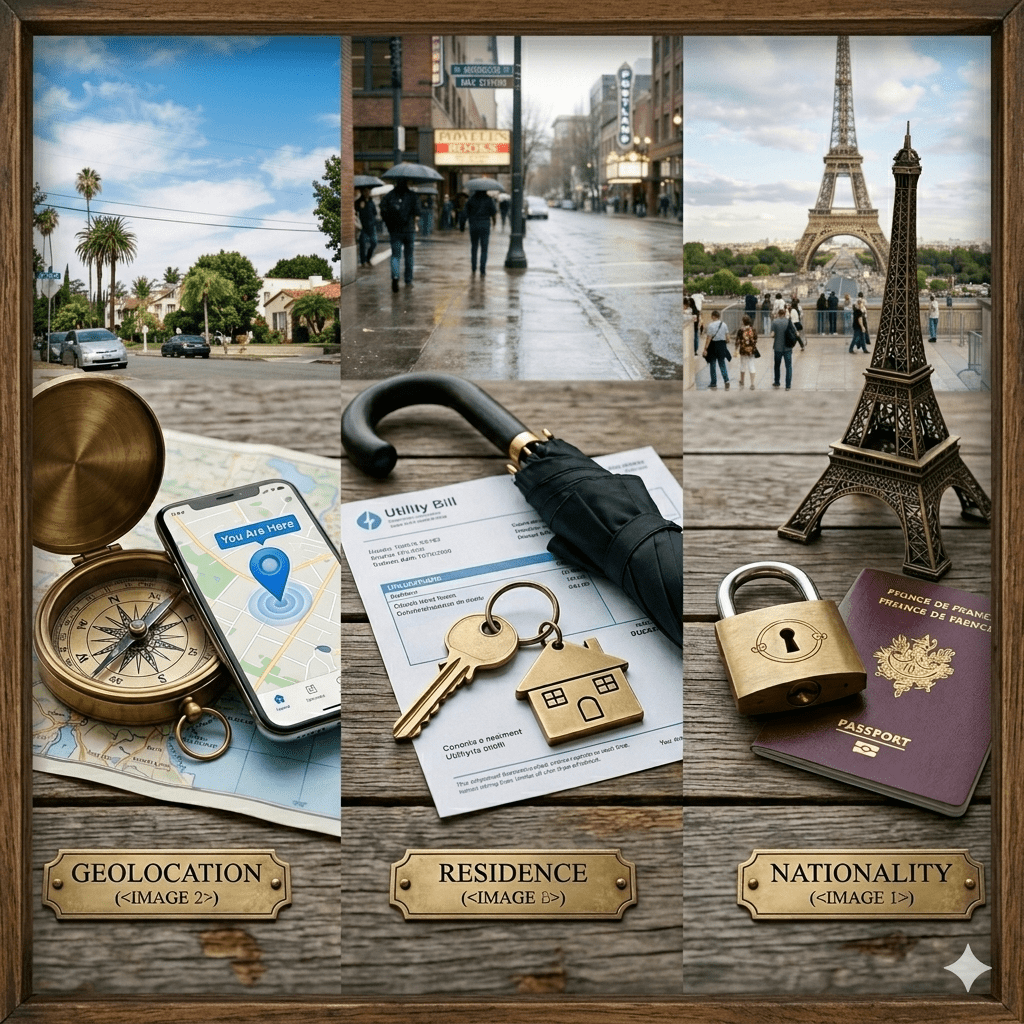
This is a half-baked thought about three aspects of “where” we are,,.but that’s what blogging is for.
My seven questions include three interrogatives: why, how, and what. Where is not among them.
Where IS among my six factors of identity verification and authentication, but only in a very specific sense of geolocation.
What about residence…and nationality?
You could ask Fable 5 and Mythos 5 this question…except that you can’t.
Where is our geolocation?
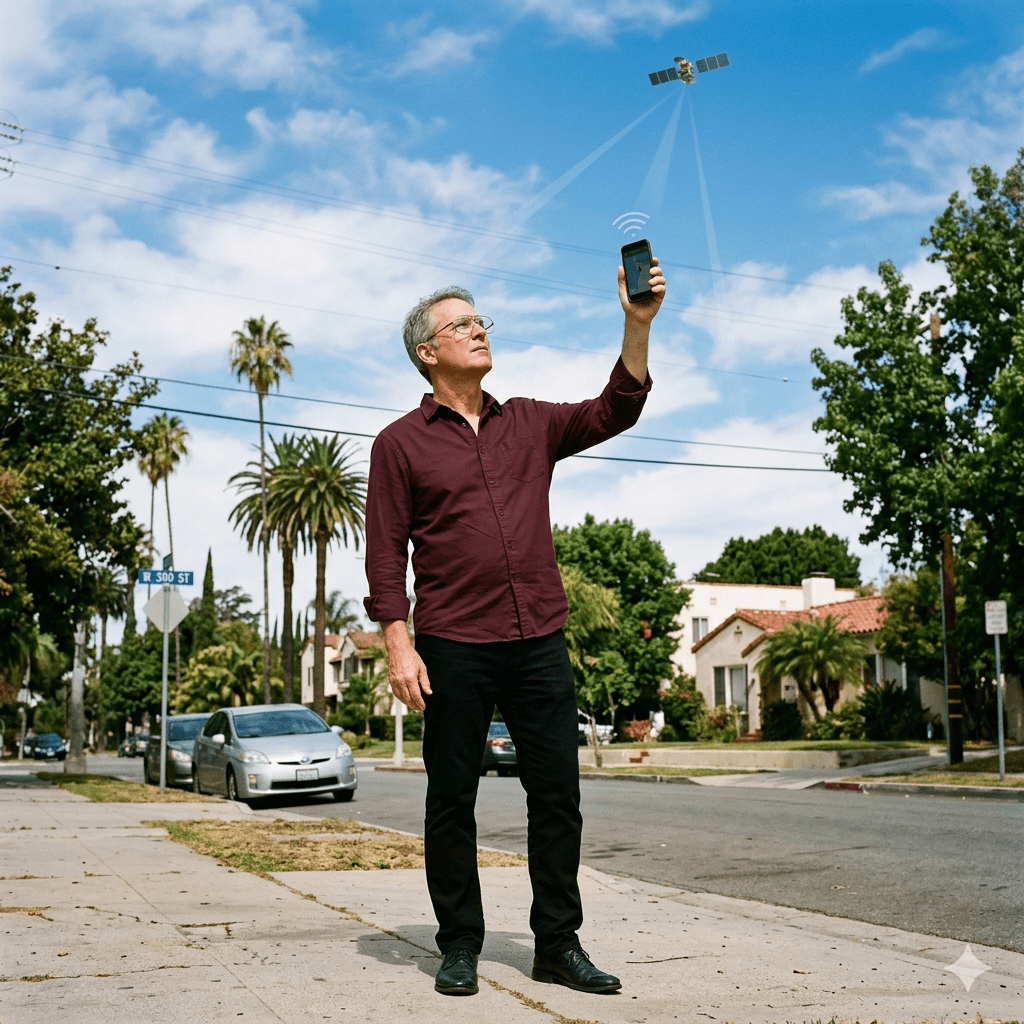
In identity verification and authentication, “where” refers to the geolocation of a person. Although if we’re being honest, it refers to the geolocation of a person’s smartphone. Most of us don’t have location trackers embedded in our bodies, so our phone’s geolocation serves as an imperfect proxy for where WE are.
But there are two other “wheres” associated with each of us.
Where is our residence?

Regardless of where our bodies may be, there is another “where” associated with us: our residence.
Our legal domicile dictates many things about us. It sometimes determines where we get our mail. It also determines where we can vote. It impacts many other things about us relative to taxes, and other legal obligations.
Our official residence may be totally unrelated to where we unofficially reside. During my years at Reed College in Oregon, I maintained my legal residency in Virginia, which meant that I maintained my Virginia driver’s license and voted by mail in Virginia elections.
After graduation I did not return to Virginia, but remained in Oregon, looking for full-time employment while performing temp work. After a few months of this I decided that maintaining a Virginia residence was silly, so I officially changed my residence to Oregon and obtained an Oregon driver’s license.
A month or two later I stopped working as a temp and accepted a full-time position.
In California.
Which meant that I had to change my legal residency…again.
Where is our nationality?

But there is a third “where” that has nothing to do with our geolocation or residence.
Our nationality.
This came into play regarding a recent executive order affecting export controls for two of Anthropic’s models. But Anthropic, rather than only restricting access to foreigners, restricted access to everyone.
The US government, citing national security authorities, has issued an export control directive to suspend all access to Fable 5 and Mythos 5 by any foreign national, whether inside or outside the United States, including foreign national Anthropic employees. The net effect of this order is that we must abruptly disable Fable 5 and Mythos 5 for all our customers to ensure compliance.
Why?
Because, as Riley Hughes points out in this LinkedIn post, it’s difficult to digitally determine one’s nationality.
[T]here is no scalable way to verify nationality online.
Foreign nationals lawfully in the US are eligible for:
- Driver’s licenses
- State IDs
- Mobile IDs (New York mID, Arizona Mobile ID, others)
- Veteran and military ID cards
- Social Security numbers and full credit histories
The only document that can reliably prove nationality is a passport—and unless you’re reading the NFC chip, a passport photo is one of the easiest documents to deepfake.
Theoretically a verifiable credential of a birth certificate would work… there’s just a slight adoption challenge: virtually nobody has one.
And of course it’s possible to change one’s nationality after birth.
This results in a bit of a mess, as LLM-validated leading biometric product marketing consultant C. Maxine Most observed.
Creating verifiable digital identities backed up by cryptographically secure digital and physical credentials is critical infrastructure. It is truly unfortunate that United States among other countries doesn’t really understand this.
But apart from LLM access, digital determination of the three wheres—geolocation, residence, and nationality—is something I need to mull over.

 Bredemarket