
A former coworker reshared the story of Clifford Stoll investigating an accounting error and discovering a Cold War spy network. But a few years later, Stoll was wrong about the emerging Internet…and also right.
Stoll shared his views in a 1995 Newsweek article that was an amusing read after the fact.
Replacing your daily newspaper?
For example:
“The truth is no online database will replace your daily newspaper…”
Stoll lived long enough to see the decline of printed newspapers in the early 21st century.
Electronic books?
Another one:
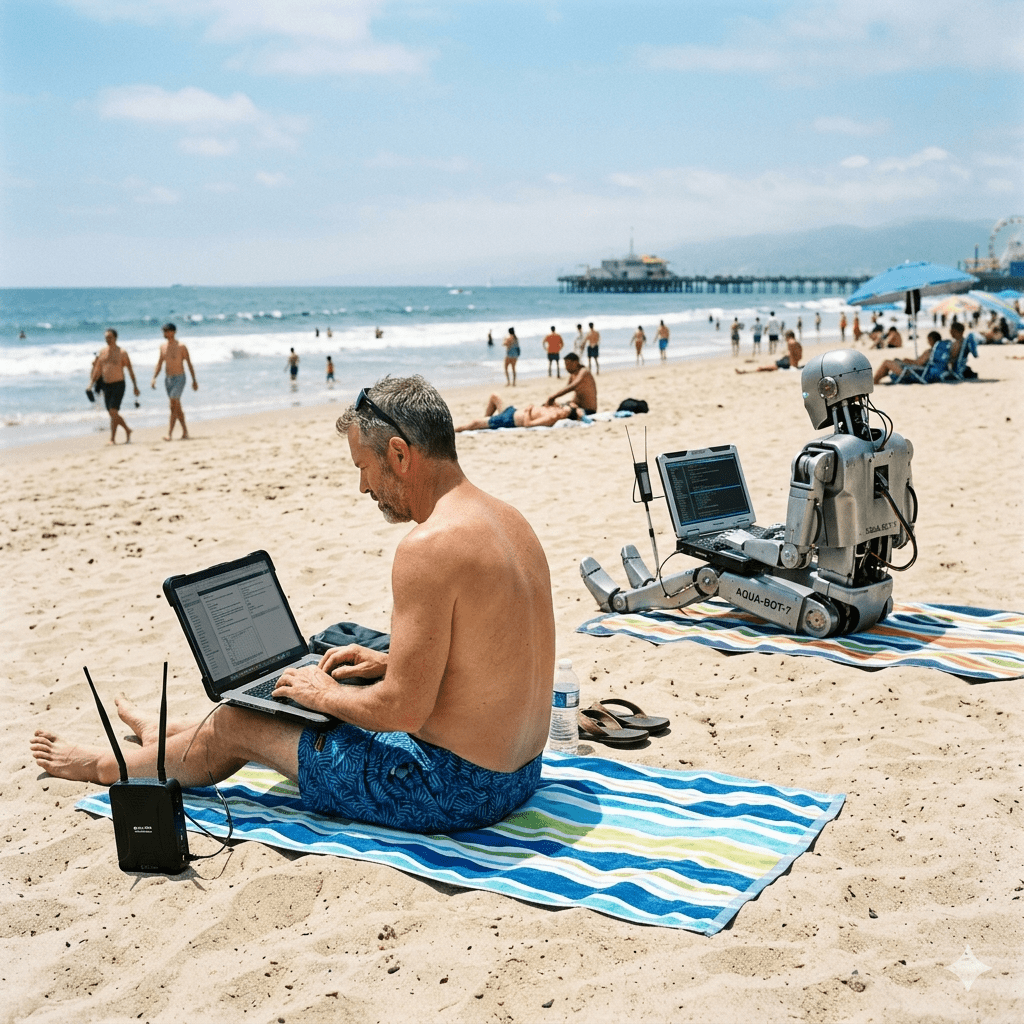
“How about electronic publishing? Try reading a book on disc. At best, it’s an unpleasant chore: the myopic glow of a clunky computer replaces the friendly pages of a book. And you can’t tote that laptop to the beach. Yet Nicholas Negroponte, director of the MIT Media Lab, predicts that we’ll soon buy books and newspapers straight over the Internet. Uh, sure.”
Let’s pick this one apart piece by piece.
- A book on disc? What’s a disc?
- Yes, to some the myopic glow of an electronic book isn’t the best experience, whether on light or dark mode. But a traditional printed book cannot be read at all when you turn the lights off.
- Stoll assumed that you would always need a laptop to read an electronic book. He did not envision dedicated electronic reading devices that were smaller than a laptop…to say nothing of “smart” phones with an “app” called “Kindle.”
- Speaking of Amazon Kindles, you CAN buy books straight over the Internet. And music also, from a company that is no longer called Apple Computer.
So Stoll was not perfect. But he anticipated some things that we still struggle with today.
Unedited data!
“What the Internet hucksters won’t tell you is tht the Internet is one big ocean of unedited data, without any pretense of completeness. Lacking editors, reviewers or critics, the Internet has become a wasteland of unfiltered data. You don’t know what to ignore and what’s worth reading.”
While many companies from Yahoo to Altavista to Google to Wikipedia to OpenAI have tried to solve this problem, it is not fully solved.
And then there’s the biggie.
Isolation!
“What’s missing from this electronic wonderland? Human contact. Discount the fawning techno-burble about virtual communities. Computers and networks isolate us from one another. A network chat line is a limp substitute for meeting friends over coffee. No interactive multimedia display comes close to the excitement of a live concert. And who’d prefer cybersex to the real thing?”
Today’s world is actually worse than the one Stoll envisioned. Not only have I conducted most of my interactions with people over chat boxes and screens. But in 2026 we are now interacting with “HAL 9000” non-person entities…and we may not even know that they aren’t human, but synthetic or deepfake identities.
Despite the benefits of remote interactions—they’ve kept me (and my former coworker) employed—Stoll’s warnings about this new world remain valid.
Wrong but right
So I wouldn’t laugh at Stoll’s derision over the emerging Internet. If you were alive in 1995, be honest: did you anticipate THIS?

 Bredemarket