
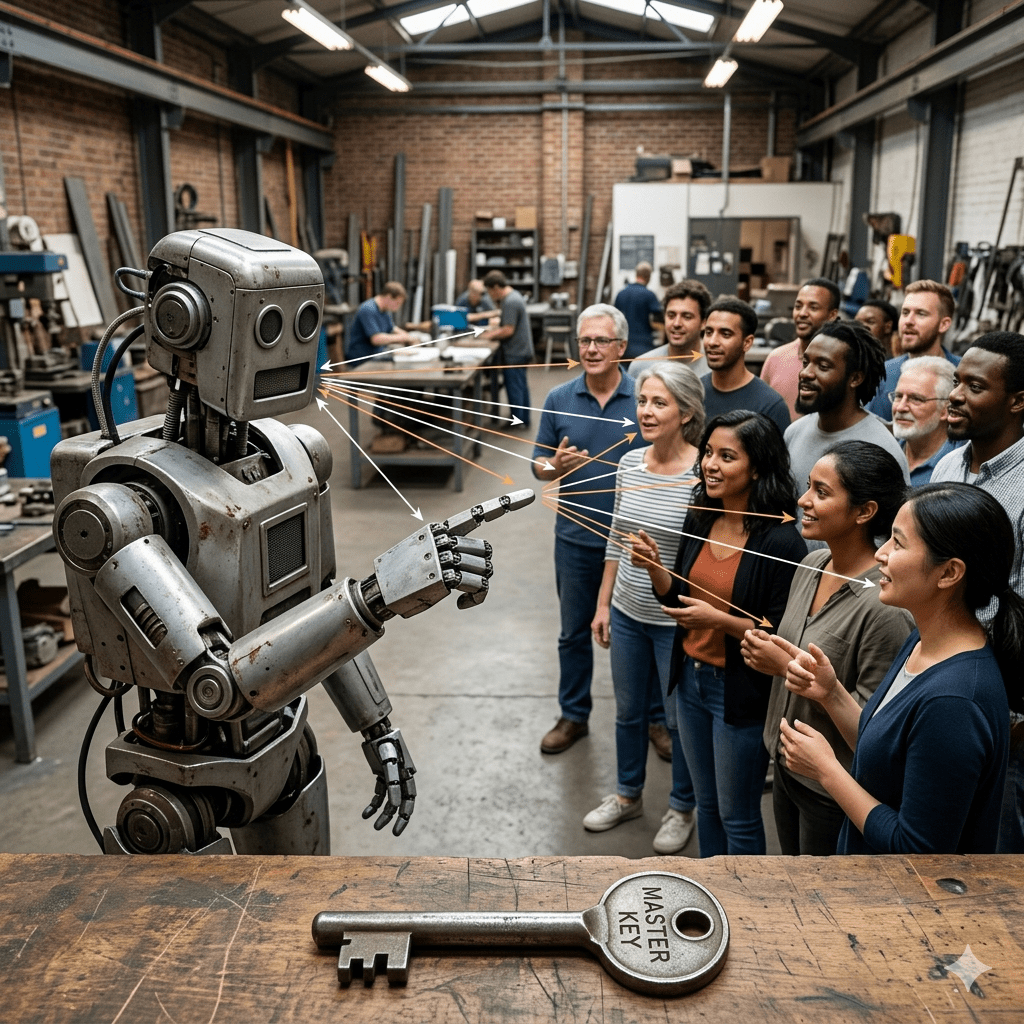
I swear I’ve written about “MasterPrints” before, but I can’t find any such article. Maybe I just discussed it internally at IDEMIA when I worked there in 2018.
“Generative adversarial network produces a “universal fingerprint” that will unlock many smartphones“
“Researchers at NYU and U Michigan have published a paper explaining how they used a pair of machine-learning systems to develop a “universal fingerprint” that can fool the lowest-security fingerprint sensors 76% of the time (it is less effective against higher-security sensors).
“The researchers used “generative adversarial networks” (GAN) to develop their attack: this technique uses a pair of machine learning systems, a “generator” which tries to fool a “discriminator,” to produce a kind of dialectical back-and-forth in that creates fakes that are harder and harder to detect.”
While this happened over seven years ago and is probably harder to implement with today’s technology, I was reminded of this when I ran across this Biometric Update article.
“Voice morphing attack blends identities to bypass voice biometrics: study“
“A new research paper explores a signal-level approach to voice morphing attacks that exposes vulnerabilities in biometric voice recognition systems.
“The abstract describes Time-domain Voice Identity Morphing (TD-VIM) as “a novel approach for voice-based biometric morphing” which “enables the blending of voice characteristics from two distinct identities at the signal level.” TD-VIM allows for seamless voice morphing directly in the time domain, allowing “identity blending without any embeddings from the backbone, or reference text.””
So it, um, sounds like we not only have MasterPrints, but also MasterVoices.

 Bredemarket