
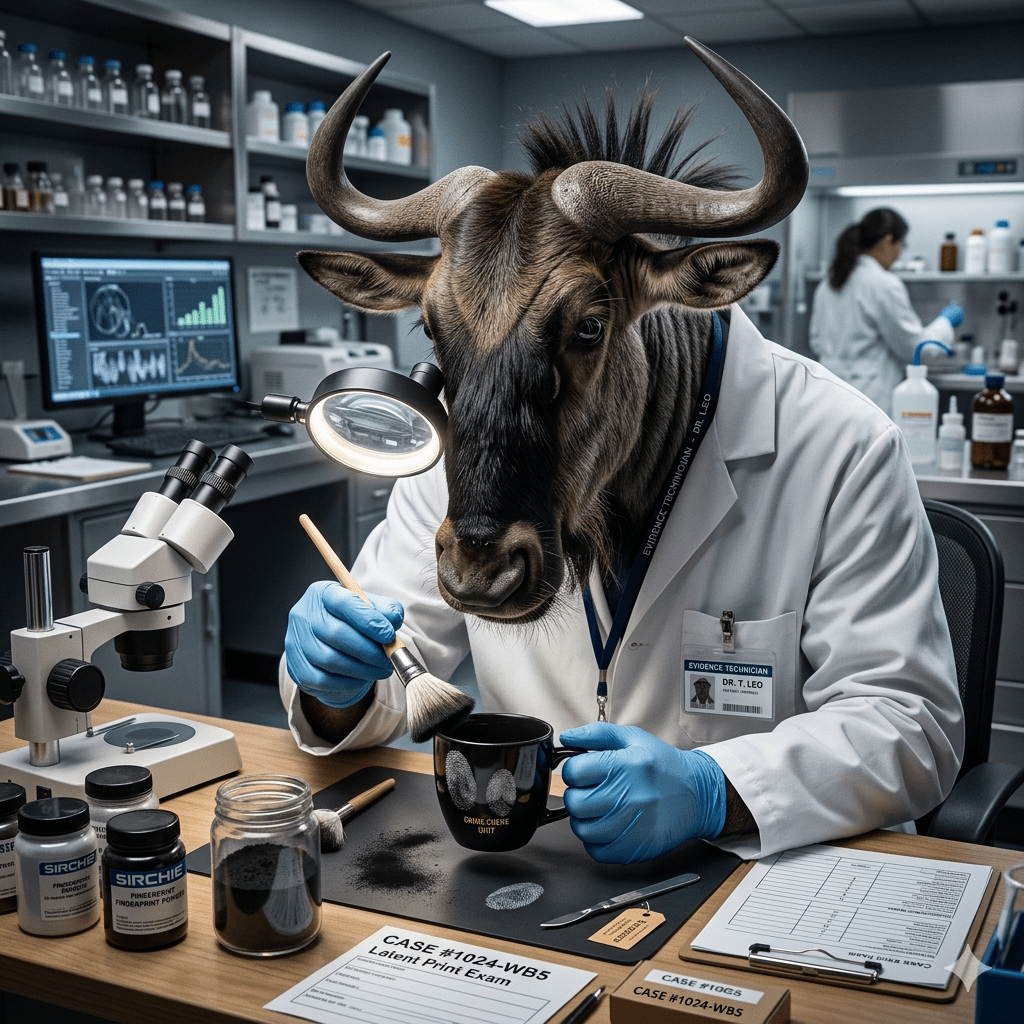
Let’s revisit analysis, comparison, evaluation, and verification.
You may recall my post about a collection of judicial decisions, one of which included the following:
“The term “scientific” to describe his opinion “arguably verged on suggesting that the ACE-V process is more scientific than warranted,” and there was one instance in which Dolan testified without using the term “opinion.” The court concludes that there was no error because, “viewed as a whole,” his testimony was largely expressed in terms of an “opinion” and his testimony did not claim that the ACE-V process was infallible or absolutely certain.”
For those who aren’t familiar with the acronym ACE-V, here is how the U.S. National Institute of Standards and Technology defines it:
“The friction ridge examination process is commonly referred to as ACE‐V: Analysis, Comparison, Evaluation, and Verification.
“Analysis: An initial information‐gathering phase in which the examiner studies the unknown print to assess the quality and quantity of discriminating detail present. The examiner considers information such as substrate, development method, various levels of ridge detail, and pressure distortions. A separate analysis then occurs with the exemplar.
“Comparison: The side‐by‐side observation of the friction ridge detail in the two impressions to determine the agreement or disagreement in the details
“Evaluation: The examiner assesses the agreement or disagreement of the information observed during Analysis and Comparison and forms a conclusion.
“Verification: In some agencies is a review of an examiner’s conclusions with knowledge of those conclusions; in other agencies, it is an independent re‐examination by a second examiner who does not know the outcome of the first examination.”
To make things easier for latent examiners, some automated biometric identification system (ABIS) software packages incorporate ACE-V either as a separate module or as an integrated part of their workflow. I know that IDEMIA and Thales include it, and it appears that CSIpix, Eviscan, Noblis, and ROC also include it.
But I’m going to talk about Innovatrics in this post.
“Innovatrics is expanding ACE-V capabilities in ABIS for Criminal Investigation with new features that help forensic teams manage examinations more clearly, support different review models, and keep unresolved latent evidence active as investigations move forward….
“ACE-V is widely used in forensic work, but the way it is applied can vary across agencies, regions, and countries, often shaped by local legislative requirements. Some agencies require clear separation between roles, while others rely on smaller teams with a more flexible way of dividing work. Innovatrics is shaping the workflow to support different use cases and agency ACE-V policies, from small teams to large departments, without forcing agencies to change the established workflows they already rely on.”
More here.

 Bredemarket
1 Comment