
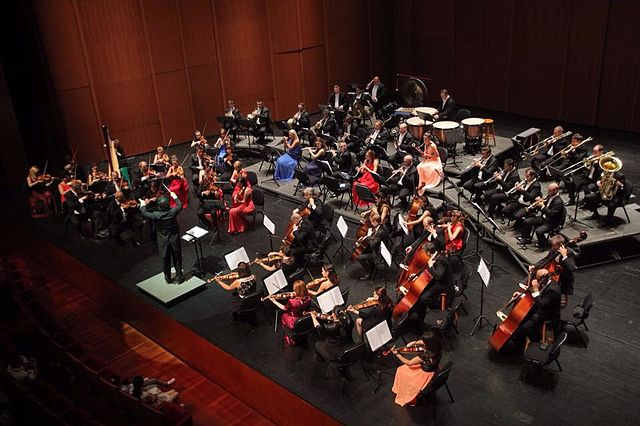
If you come from the musical world rather than the technology world, then “orchestration” suggests a collection of instruments, such as the Bucharest Symphony Orchestra (CC BY-SA 4.0 for those keeping score).
But in the technology world, “orchestration” knits different applications together. As far as I’m concerned, the most notable example is identity orchestration, the topic of a recent Biometric Update post by Chris Burt.
Different apps, different identity systems
I won’t go into Chris Burt’s identity orchestration examples from Ping Identity and Strata Identity, but I’d like to delve into a Productiv survey cited by IBM.
“According to one report, the average business department uses 87 different SaaS apps. These apps often have their own identity systems, which might not readily integrate with one another. As a result, many organizations deal with fragmented identity landscapes and awkward user experiences.”
It’s tough enough to get a bunch of different apps to work together. It’s even tougher when each of those apps has its own identity system, which may be incompatible with the identity systems from the other apps.
You can’t get all your SaaS apps from one vendor
How do some SaaS vendors approach the problem?
By telling you to buy a single multi-functional solution from them.
The only problem is that for medium and large organizations, no single vendor can provide ALL the functionality the organization needs.
So you STILL have to stitch things together.
Because identity orchestration, unlike musical orchestration, is not under the direct control of a single conductor.

 Bredemarket