Time for the FIRST Iteration of Your Firm’s UK Online Safety Act Story

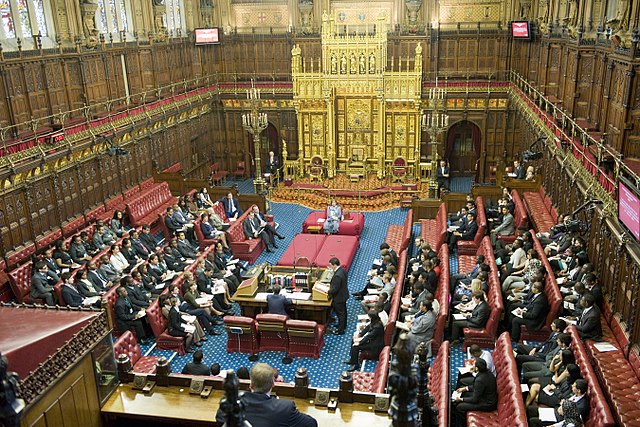
By Adrian Pingstone – Transferred from en.wikipedia, Public Domain, https://commons.wikimedia.org/w/index.php?curid=112727

A couple of weeks ago, I asked this question:

Is your firm affected by the UK Online Safety Act, and the future implementation of the Act by Ofcom?

From https://bredemarket.com/2023/10/30/uk-online-safety-act-story/

Why did I mention the “future implementation” of the UK Online Safety Act? Because the passage of the UK Online Safety Act is just the FIRST step in a long process. Ofcom still has to figure out how to implement the Act.

Ofcom started to work on this on November 9, but it’s going to take many months to finalize—I mean finalise things. This is the UK Online Safety Act, after all.

This is the first of four major consultations that Ofcom, as regulator of the new Online Safety Act, will publish as part of our work to establish the new regulations over the next 18 months.

It focuses on our proposals for how internet services that enable the sharing of user-generated content (‘user-to-user services’) and search services should approach their new duties relating to illegal content.

From https://www.ofcom.org.uk/consultations-and-statements/category-1/protecting-people-from-illegal-content-online

On November 9 Ofcom published a slew of summary and detailed documents. Here’s a brief excerpt from the overview.

Mae’r ddogfen hon yn rhoi crynodeb lefel uchel o bob pennod o’n hymgynghoriad ar niwed anghyfreithlon i helpu rhanddeiliaid i ddarllen a defnyddio ein dogfen ymgynghori. Mae manylion llawn ein cynigion a’r sail resymegol sylfaenol, yn ogystal â chwestiynau ymgynghori manwl, wedi’u nodi yn y ddogfen lawn. Dyma’r cyntaf o nifer o ymgyngoriadau y byddwn yn eu cyhoeddi o dan y Ddeddf Diogelwch Ar-lein. Mae ein strategaeth a’n map rheoleiddio llawn ar gael ar ein gwefan.

From https://www.ofcom.org.uk/__data/assets/pdf_file/0021/271416/CYM-illegal-harms-consultation-chapter-summaries.pdf

Oops, I seem to have quoted from the Welsh version. Maybe you’ll have better luck reading the English version.

This document sets out a high-level summary of each chapter of our illegal harms consultation to help stakeholders navigate and engage with our consultation document. The full detail of our proposals and the underlying rationale, as well as detailed consultation questions, are set out in the full document. This is the first of several consultations we will be publishing under the Online Safety Act. Our full regulatory roadmap and strategy is available on our website.

From https://www.ofcom.org.uk/__data/assets/pdf_file/0030/270948/illegal-harms-consultation-chapter-summaries.pdf

If you want to peruse everything, go to https://www.ofcom.org.uk/consultations-and-statements/category-1/protecting-people-from-illegal-content-online.

And if you need help telling your firm’s UK Online Safety Act story, Bredemarket can help. (Unless the final content needs to be in Welsh.) Click below!

What Is Your Firm’s UK Online Safety Act Story?

It’s time to revisit my August post entitled “Can There Be Too Much Encryption and Age Verification Regulation?” because the United Kingdom’s Online Safety Bill is now the Online Safety ACT.

Having passed, eventually, through the UK’s two houses of Parliament, the bill received royal assent (October 26)….

[A]dded in (to the Act) is a highly divisive requirement for messaging platforms to scan users’ messages for illegal material, such as child sexual abuse material, which tech companies and privacy campaigners say is an unwarranted attack on encryption.

From Wired.
By Adrian Pingstone – Transferred from en.wikipedia, Public Domain, https://commons.wikimedia.org/w/index.php?curid=112727

This not only opens up issues regarding encryption and privacy, but also specific identity technologies such as age verification and age estimation.

This post looks at three types of firms that are affected by the UK Online Safety Act, the stories they are telling, and the stories they may need to tell in the future. What is YOUR firm’s Online Safety Act-related story?

What three types of firms are affected by the UK Online Safety Act?

As of now I have been unable to locate a full version of the final final Act, but presumably the provisions from this July 2023 version (PDF) have only undergone minor tweaks.

Among other things, this version discusses “User identity verification” in 65, “Category 1 service” in 96(10)(a), “United Kingdom user” in 228(1), and a multitude of other terms that affect how companies will conduct business under the Act.

I am focusing on three different types of companies:

  • Technology services (such as Yoti) that provide identity verification, including but not limited to age verification and age estimation.
  • User-to-user services (such as WhatsApp) that provide encrypted messages.
  • User-to-user services (such as Wikipedia) that allow users (including United Kingdom users) to contribute content.

What types of stories will these firms have to tell, now that the Act is law?

Stories from identity verification services

From Yoti.

For ALL services, the story will vary as Ofcom decides how to implement the Act, but we are already seeing the stories from identity verification services. Here is what Yoti stated after the Act became law:

We have a range of age assurance solutions which allow platforms to know the age of users, without collecting vast amounts of personal information. These include:

  • Age estimation: a user’s age is estimated from a live facial image. They do not need to use identity documents or share any personal information. As soon as their age is estimated, their image is deleted – protecting their privacy at all times. Facial age estimation is 99% accurate and works fairly across all skin tones and ages.
  • Digital ID app: a free app which allows users to verify their age and identity using a government-issued identity document. Once verified, users can use the app to share specific information – they could just share their age or an ‘over 18’ proof of age.
From Yoti.

Stories from encrypted message services

From WhatsApp.

Not surprisingly, message encryption services are telling a different story.

MailOnline has approached WhatsApp’s parent company Meta for comment now that the Bill has received Royal Assent, but the firm has so far refused to comment.

Will Cathcart, Meta’s head of WhatsApp, said earlier this year that the Online Safety Act was the most concerning piece of legislation being discussed in the western world….

[T]o comply with the new law, the platform says it would be forced to weaken its security, which would not only undermine the privacy of WhatsApp messages in the UK but also for every user worldwide. 

‘Ninety-eight per cent of our users are outside the UK. They do not want us to lower the security of the product, and just as a straightforward matter, it would be an odd choice for us to choose to lower the security of the product in a way that would affect those 98 per cent of users,’ Mr Cathcart has previously said.

From Daily Mail.

Stories from services with contributed content

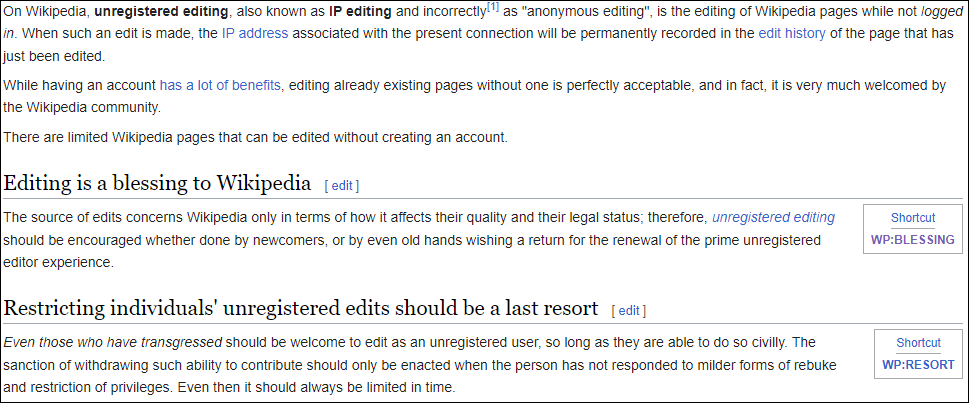
From Wikipedia.

And contributed content services are also telling their own story.

Companies, from Big Tech down to smaller platforms and messaging apps, will need to comply with a long list of new requirements, starting with age verification for their users. (Wikipedia, the eighth-most-visited website in the UK, has said it won’t be able to comply with the rule because it violates the Wikimedia Foundation’s principles on collecting data about its users.)

From Wired.

What is YOUR firm’s story?

All of these firms have shared their stories either before or after the Act became law, and those stories will change depending upon what Ofcom decides.

But what about YOUR firm?

Is your firm affected by the UK Online Safety Act, and the future implementation of the Act by Ofcom?

Do you have a story that you need to tell to achieve your firm’s goals?

Do you need an extra, experienced hand to help out?

Learn how Bredemarket can create content that drives results for your firm.

Click the image below.

Can There Be Too Much Encryption and Age Verification Regulation?

Designed by Freepik.

Approximately 2,700 years ago, the Greek poet Hesiod is recorded as saying “moderation is best in all things.” This applies to government regulations, including encryption and age verification regulations. As the United Kingdom’s House of Lords works through drafts of its Online Safety Bill, interested parties are seeking to influence the level of regulation.

The July 2023 draft of the Online Safety Bill

On July 25, 2023, Richard Allan of Regulate.Tech provided his assessment of the (then) latest draft of the Online Safety Bill that is going through the House of Lords.

In Allan’s assessment, he wondered whether the mandated encryption and age verification regulations would apply to all services, or just critical services.

Allan considered a number of services, but I’m just going to hone in on two of them: WhatsApp and Wikipedia.

The Online Safety Bill and WhatsApp

WhatsApp is owned by a large American company called Meta, which causes two problems for regulators in the United Kingdom (and in Europe):

  • Meta is a large company.
  • Meta is an American company.

WhatsApp itself causes another problem for UK regulators:

  • WhatsApp encrypts messages.

Because of these three truths, UK regulators are not necessarily inclined to play nice with WhatsApp, which may affect whether WhatsApp will be required to comply with the Online Safety Bill’s regulations.

Allan explains the issue:

One of the powers the Bill gives to OFCOM (the UK Office of Communications) is the ability to order services to deploy specific technologies to detect terrorist and child sexual exploitation and abuse content….

But there may be cases where a provider believes that the technology it is being ordered to deploy would break essential functionality of its service and so would prefer to leave the UK rather than accept compliance with the order as a condition of remaining….

If OFCOM does issue this kind of order then we should expect to see some encrypted services leave the UK market, potentially including very popular ones like WhatsApp and iMessage.

From https://www.regulate.tech/online-safety-bill-some-futures-25th-july-2023/

And this isn’t just speculation on Allan’s part. Will Cathcart has been complaining about the provisions of the draft bill for months, especially since it appears that WhatsApp encryption would need to be “dumbed down” for everybody to comply with regulations in the United Kingdom.

Speaking during a UK visit in which he will meet legislators to discuss the government’s flagship internet regulation, Will Cathcart, Meta’s head of WhatsApp, described the bill as the most concerning piece of legislation currently being discussed in the western world.

He said: “It’s a remarkable thing to think about. There isn’t a way to change it in just one part of the world. Some countries have chosen to block it: that’s the reality of shipping a secure product. We’ve recently been blocked in Iran, for example. But we’ve never seen a liberal democracy do that.

“The reality is, our users all around the world want security,” said Cathcart. “Ninety-eight per cent of our users are outside the UK. They do not want us to lower the security of the product, and just as a straightforward matter, it would be an odd choice for us to choose to lower the security of the product in a way that would affect those 98% of users.”

From https://www.theguardian.com/technology/2023/mar/09/whatsapp-end-to-end-encryption-online-safety-bill

In passing, the March Guardian article noted that WhatsApp requires UK users to be 16 years old. This doesn’t appear to be an issue for Meta, but could be an issue for another very popular online service.

The Online Safety Bill and Wikipedia

So how does the Online Safety Bill affect Wikipedia?

Wikipedia article about the Online Safety Bill as of August 1, 2023. https://en.wikipedia.org/wiki/Online_Safety_Bill

It depends on how the Online Safety Bill is implemented via the rulemaking process.

As in other countries, the true effects of legislation aren’t apparent until the government writes the rules that implement the legislation. It’s possible that the rulemaking will carve out an exemption allowing Wikipedia to NOT enforce age verification. Or it’s possible that Wikipedia will be mandated to enforce age verification for its writers.

Let’s return to Richard Allan.

If they do not (carve out exemptions) then there could be real challenges for the continued operation of some valuable services in the UK given what we know about the requirements in the Bill and the operating principles of services like Wikipedia.

For example, it would be entirely inconsistent with Wikipedia’s privacy principles to start collecting additional data about the age of their users and yet this is what will be expected from regulated services more generally.

From https://www.regulate.tech/online-safety-bill-some-futures-25th-july-2023/

Left unsaid is the same issue that affects encryption: age verification for Wikipedia may be required in the United Kingdom, but may not be required for other countries.

It’s no surprise that Jimmy Wales of Wikipedia has a number of problems with the Online Safety Bill. Here’s just one of them.

(Wales) used the example of Wikipedia, in which none of its 700 staff or contractors plays a role in content or in moderation.

Instead, the organisation relies on its global community to make democratic decisions on content moderation, and have contentious discussions in public.

By contrast, the “feudal” approach sees major platforms make decisions centrally, erratically, inconsistently, often using automation, and in secret.

By regulating all social media under the assumption that it’s all exactly like Facebook and Twitter, Wales said that authorities would impose rules on upstart competitors that force them into that same model.

From https://www.itpro.com/business-strategy/startups/370036/jimmy-wales-online-safety-bill-could-devastate-small-businesses

And the potential regulations that could be imposed on that “global community” would be anathema to Wikipedia.

Wikipedia will not comply with any age checks required under the Online Safety Bill, its foundation says.

Rebecca MacKinnon, of the Wikimedia Foundation, which supports the website, says it would “violate our commitment to collect minimal data about readers and contributors”.

From https://www.bbc.com/news/technology-65388255

Regulation vs. Privacy

One common thread between these two cases is that implementation of the regulations results in a privacy threat to the affected individuals.

  • For WhatsApp users, the privacy threat is obvious. If WhatsApp is forced to fully or partially disable encryption, or is forced to use an encryption scheme that the UK Government could break, then the privacy of every message (including messages between people outside the UK) would be threatened.
  • For Wikipedia users, anyone contributing to the site would need to undergo substantial identity verification so that the UK Government would know the ages of Wikipedia contributors.

This is yet another example of different government agencies working at cross purposes with each other, as the “catch the pornographers” bureaucrats battle with the “preserve privacy” advocates.

Meta, Wikipedia, and other firms would like the legislation to explicitly carve out exemptions for their firms and services. Opponents say that legislative carve outs aren’t necessary, because no one would ever want to regulate Wikipedia.

Yeah, and the U.S. Social Security Number isn’t an identificaiton number either. (Not true.)