

Approximately 2,700 years ago, the Greek poet Hesiod is recorded as saying “moderation is best in all things.” This applies to government regulations, including encryption and age verification regulations. As the United Kingdom’s House of Lords works through drafts of its Online Safety Bill, interested parties are seeking to influence the level of regulation.
The July 2023 draft of the Online Safety Bill
On July 25, 2023, Richard Allan of Regulate.Tech provided his assessment of the (then) latest draft of the Online Safety Bill that is going through the House of Lords.
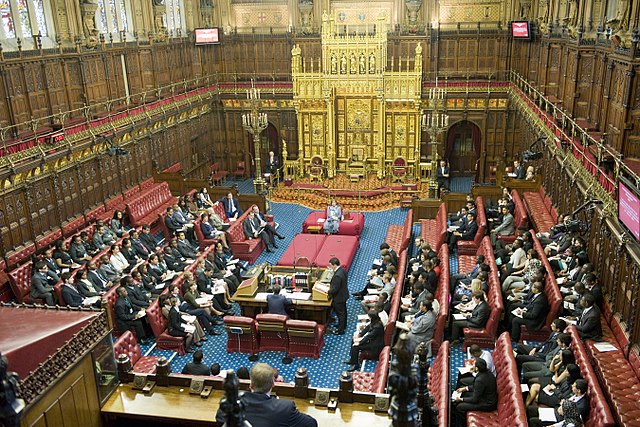
In Allan’s assessment, he wondered whether the mandated encryption and age verification regulations would apply to all services, or just critical services.
Allan considered a number of services, but I’m just going to hone in on two of them: WhatsApp and Wikipedia.
The Online Safety Bill and WhatsApp
WhatsApp is owned by a large American company called Meta, which causes two problems for regulators in the United Kingdom (and in Europe):
- Meta is a large company.
- Meta is an American company.
WhatsApp itself causes another problem for UK regulators:
- WhatsApp encrypts messages.
Because of these three truths, UK regulators are not necessarily inclined to play nice with WhatsApp, which may affect whether WhatsApp will be required to comply with the Online Safety Bill’s regulations.
Allan explains the issue:
One of the powers the Bill gives to OFCOM (the UK Office of Communications) is the ability to order services to deploy specific technologies to detect terrorist and child sexual exploitation and abuse content….
But there may be cases where a provider believes that the technology it is being ordered to deploy would break essential functionality of its service and so would prefer to leave the UK rather than accept compliance with the order as a condition of remaining….
If OFCOM does issue this kind of order then we should expect to see some encrypted services leave the UK market, potentially including very popular ones like WhatsApp and iMessage.
From https://www.regulate.tech/online-safety-bill-some-futures-25th-july-2023/
And this isn’t just speculation on Allan’s part. Will Cathcart has been complaining about the provisions of the draft bill for months, especially since it appears that WhatsApp encryption would need to be “dumbed down” for everybody to comply with regulations in the United Kingdom.
Speaking during a UK visit in which he will meet legislators to discuss the government’s flagship internet regulation, Will Cathcart, Meta’s head of WhatsApp, described the bill as the most concerning piece of legislation currently being discussed in the western world.
He said: “It’s a remarkable thing to think about. There isn’t a way to change it in just one part of the world. Some countries have chosen to block it: that’s the reality of shipping a secure product. We’ve recently been blocked in Iran, for example. But we’ve never seen a liberal democracy do that.
“The reality is, our users all around the world want security,” said Cathcart. “Ninety-eight per cent of our users are outside the UK. They do not want us to lower the security of the product, and just as a straightforward matter, it would be an odd choice for us to choose to lower the security of the product in a way that would affect those 98% of users.”
From https://www.theguardian.com/technology/2023/mar/09/whatsapp-end-to-end-encryption-online-safety-bill
In passing, the March Guardian article noted that WhatsApp requires UK users to be 16 years old. This doesn’t appear to be an issue for Meta, but could be an issue for another very popular online service.
The Online Safety Bill and Wikipedia
So how does the Online Safety Bill affect Wikipedia?

It depends on how the Online Safety Bill is implemented via the rulemaking process.
As in other countries, the true effects of legislation aren’t apparent until the government writes the rules that implement the legislation. It’s possible that the rulemaking will carve out an exemption allowing Wikipedia to NOT enforce age verification. Or it’s possible that Wikipedia will be mandated to enforce age verification for its writers.
Let’s return to Richard Allan.
If they do not (carve out exemptions) then there could be real challenges for the continued operation of some valuable services in the UK given what we know about the requirements in the Bill and the operating principles of services like Wikipedia.
For example, it would be entirely inconsistent with Wikipedia’s privacy principles to start collecting additional data about the age of their users and yet this is what will be expected from regulated services more generally.
From https://www.regulate.tech/online-safety-bill-some-futures-25th-july-2023/
Left unsaid is the same issue that affects encryption: age verification for Wikipedia may be required in the United Kingdom, but may not be required for other countries.
It’s no surprise that Jimmy Wales of Wikipedia has a number of problems with the Online Safety Bill. Here’s just one of them.
(Wales) used the example of Wikipedia, in which none of its 700 staff or contractors plays a role in content or in moderation.
Instead, the organisation relies on its global community to make democratic decisions on content moderation, and have contentious discussions in public.
By contrast, the “feudal” approach sees major platforms make decisions centrally, erratically, inconsistently, often using automation, and in secret.
By regulating all social media under the assumption that it’s all exactly like Facebook and Twitter, Wales said that authorities would impose rules on upstart competitors that force them into that same model.
From https://www.itpro.com/business-strategy/startups/370036/jimmy-wales-online-safety-bill-could-devastate-small-businesses
And the potential regulations that could be imposed on that “global community” would be anathema to Wikipedia.
Wikipedia will not comply with any age checks required under the Online Safety Bill, its foundation says.
Rebecca MacKinnon, of the Wikimedia Foundation, which supports the website, says it would “violate our commitment to collect minimal data about readers and contributors”.
From https://www.bbc.com/news/technology-65388255
Regulation vs. Privacy
One common thread between these two cases is that implementation of the regulations results in a privacy threat to the affected individuals.
- For WhatsApp users, the privacy threat is obvious. If WhatsApp is forced to fully or partially disable encryption, or is forced to use an encryption scheme that the UK Government could break, then the privacy of every message (including messages between people outside the UK) would be threatened.
- For Wikipedia users, anyone contributing to the site would need to undergo substantial identity verification so that the UK Government would know the ages of Wikipedia contributors.
This is yet another example of different government agencies working at cross purposes with each other, as the “catch the pornographers” bureaucrats battle with the “preserve privacy” advocates.
Meta, Wikipedia, and other firms would like the legislation to explicitly carve out exemptions for their firms and services. Opponents say that legislative carve outs aren’t necessary, because no one would ever want to regulate Wikipedia.
Yeah, and the U.S. Social Security Number isn’t an identificaiton number either. (Not true.)

 Bredemarket
2 Comments