
We’ve talked about Levels 1 and 2 of iBeta’s confirmation that particular biometric implementations meet the requirements of ISO 30107-3. But now with Yoti’s confirmation, we can talk about iBeta Level 3.
From iBeta:
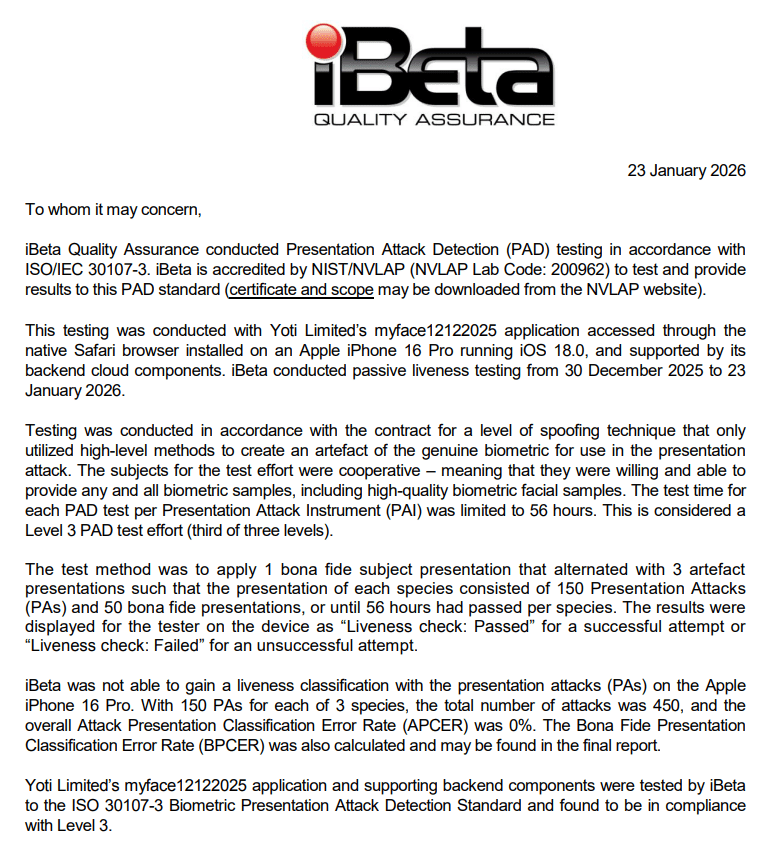
“The test method was to apply 1 bona fide subject presentation that alternated with 3 artefact presentations such that the presentation of each species consisted of 150 Presentation Attacks (PAs) and 50 bona fide presentations, or until 56 hours had passed per species. The results were displayed for the tester on the device as “Liveness check: Passed” for a successful attempt or “Liveness check: Failed” for an unsuccessful attempt.
“iBeta was not able to gain a liveness classification with the presentation attacks (PAs) on the Apple iPhone 16 Pro. With 150 PAs for each of 3 species, the total number of attacks was 450, and the overall Attack Presentation Classification Error Rate (APCER) was 0%. The Bona Fide Presentation Classification Error Rate (BPCER) was also calculated and may be found in the final report.
“Yoti Limited’s myface12122025 application and supporting backend components were tested by iBeta to the ISO 30107-3 Biometric Presentation Attack Detection Standard and found to be in compliance with Level 3.”
More from Yoti itself.
“Yoti’s MyFace is the first passive, single-selfie liveness technology in the world to conform to iBeta’s Level 3 testing under ISO/IEC 30107-3 – their highest level for liveness checks.”
Also see Biometric Update and UK Tech.
After all, facial age estimation is of no meaning whatsoever if the face is fake. So it was important that Yoti receive this confirmation.

 Bredemarket
2 Comments