

In this edition of The Repurposeful Life, I’m revisiting a prior post (“Is the Quantum Security Threat Solved Before It Arrives? Probably Not.“) and extracting just the part that deals with the National Institute of Standards and Technology (NIST) Federal Information Processing Standard (FIPS) 204.
Thales used the NIST “FIPS 204 standard to define a digital signature algorithm for a new quantum-resistant smartcard: MultiApp 5.2 Premium PQC.”
The NIST FIPS 204 standard, “Module-Lattice-Based Digital Signature Standard,” can be found here. This is the abstract:
“Digital signatures are used to detect unauthorized modifications to data and to authenticate the identity of the signatory. In addition, the recipient of signed data can use a digital signature as evidence in demonstrating to a third party that the signature was, in fact, generated by the claimed signatory. This is known as non-repudiation since the signatory cannot easily repudiate the signature at a later time. This standard specifies ML-DSA, a set of algorithms that can be used to generate and verify digital signatures. ML-DSA is believed to be secure, even against adversaries in possession of a large-scale quantum computer.”
ML-DSA stands for “Module-Lattice-Based Digital Signature Algorithm.”
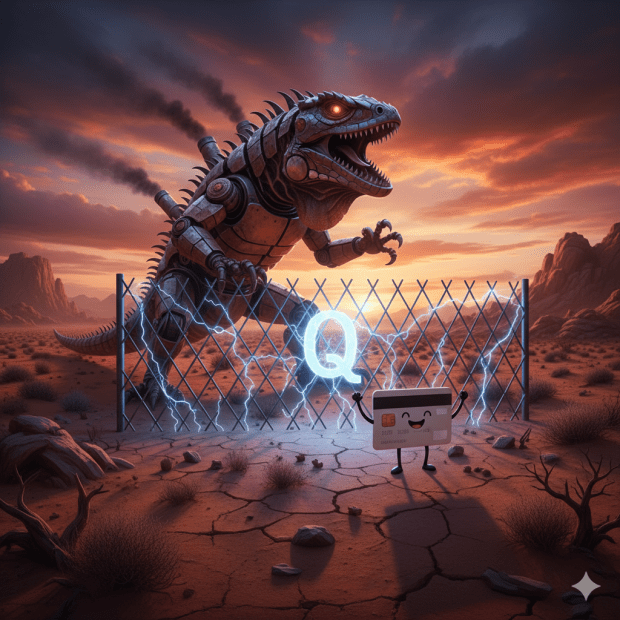
Now I’ll admit I don’t know a lattice from a vertical fence post, especially when it comes to quantum computing, so I’ll have to take NIST’s word for it that modules and lattice are super-good security.
But wait, there’s more!
Since I wrote my original post in October, I’ve read NordVPN’s definition of a lattice on its lattice-based access control (LBAC) page.
“A lattice is a hierarchical structure that consists of levels, each representing a set of access rights. The levels are ordered based on the level of access they grant, from more restrictive to more permissive.”
You can see how this fits into an access control mechanism, whether you’re talking about a multi-tenant cloud (NordVPN’s example) or a smartcard (Thales’ example).
Because there are some things that Tom Sawyer can access, but Injun Joe must not access.


 Bredemarket
2 Comments