
(Part of the biometric product marketing expert series)
I love how Biometric Update bundles a bunch of stories into a single post. Chris Burt outdid himself on Wednesday, covering a slew of stories regarding use and possible misuse of facial recognition by Texas bounty hunters, the NYPD, and cities ranging from Chicago, Illinois to Houlton, Maine.
But those stories aren’t the ones that I’m focusing on. Before I get to my focus, I want to go off on a tangent and address something else.
Read us any rule, we’ll break it

By the time you read this, the first full post by my counterpart “Bredebot” will have published on the Bredemarket blog. This is a completely AI-generated post in which a bot DID write the first draft. More posts are coming.
What I didn’t expect was that competition would arise between me and my bot. I’m writing these words on August 27, two days before the first Bredebot post appears, and I’m already feeling the heat.
What if Bredebot’s posts receive more traffic than the ones I write myself? What does that mean for my own posts…and for the whole premise of hiring Bredemarket to write for others?
I’m treating this as a challenge, vowing to outdo my fast bot counterpart.
And in that spirit, let’s revisit Milwaukee.
Give us any chance, we’ll take it

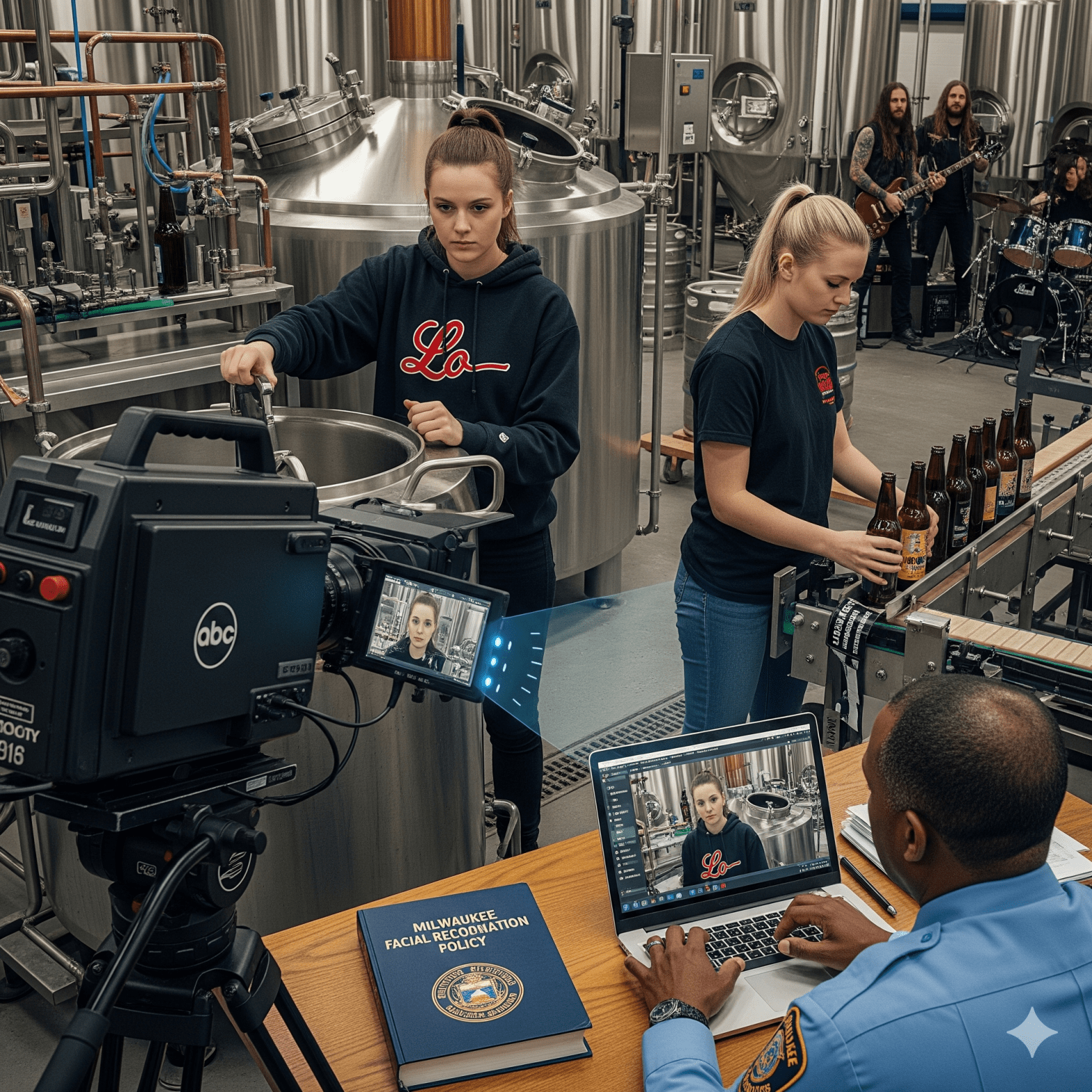
When Biometric Update initially visited Milwaukee in its April 28 post, the main concern was the possible agreement for the Milwaukee Police Department to provide “access” to facial data to the company Biometrica in exchange for facial recognition licenses. I subsequently explored the data issue in my own May 6 guest post for Biometric Update.
But today the questions addressed to Milwaukee don’t focus on the data, but on the use of facial recognition itself. The Biometric Update article links to a Wisconsin Watch article with more detail. The arguments are familiar to all of you: facial recognition is racist, facial recognition is sometimes relied upon as the sole piece of evidence, facial recognition data can be sent to ICE, and facial recognition can be misused.
However, before Milwaukee’s Common Council can approve facial recognition use, one requirement has to be met.
“Since the passage of Wisconsin Act 12, the only official way to amend or reject MPD policy is by a vote of at least two-thirds of the Common Council, or 10 members.
“However, council members cannot make any decision about it until MPD actually drafts its policy, often referred to as a “standard operating procedure.”
“Ald. Peter Burgelis – one of four council members who did not sign onto the Common Council letter to Norman – said he is waiting to make a decision until he sees potential policy from MPD or an official piece of legislation considered by the city’s Public Safety and Health Committee.”
The Milwaukee Police Department agrees that such a policy is necessary.
“MPD has consistently stated that a carefully developed policy could help reduce risks associated with facial recognition.
“’Should MPD move forward with acquiring FRT, a policy will be drafted based upon best practices and public input,’ a department spokesperson said.”
An aside from my days at MorphoTrak, when I would load user conference documents into the CrowdCompass mobile app: one year the topic of law enforcement agency facial recognition policies was part of our conference agenda. One agency had such a policy, but the agency would not allow me to upload the policy into the CrowdCompass app. You see, the agency had a policy…but it wasn’t public.
Needless to say, the Milwaukee Police Department’s draft policy WILL be public…and a lot of people will be looking at it.
Although I don’t know if it will make everyone’s dreams come true.

 Bredemarket
4 Comments