

(Imagen 4)
Back in May 2021 I was in the midst of ghostwriting case studies for a Bredemarket client. I didn’t know at the time that I’d end up creating a dozen of them.
At the time I wrote about how I obtained the raw material for the case study.
“As part of the work that I do for one of my clients, I participate in half-hour interviews with the client’s customers and ask them questions about the client’s software. Before the interview begins, the client asks the customer for permission to record the conversation. After the interview is over, I can then refer to that recording to extract nuggets of information.”
Except that I didn’t refer to the recording, but to a TRANSCRIPT of the recording in Microsoft Word. I describe how I created the transcript here.
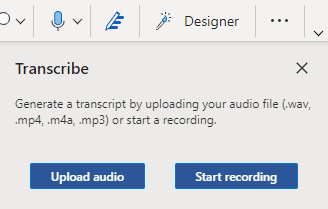
But that was in 2021. Four years later we can access easy-to-use generative AI transcribers.
Now what?
But obtaining the raw interview material is only the beginning.
Now you need to extract relevant text and fit in into the STAR method: Situation, Task, Action, and Result.
No you don’t.
Rather than arrange our case studies into four parts, my client and I agreed on a three-part outline that effectively combined “S” and “T.” Our outline? Problem, Solution, and Result. The STAR people were horrified, but we didn’t care. The client was a maverick anyway.
I should note that before the interview took place, the client had already provided me with a general idea of what its end customer faced: the problem, the application of the client’s solution, and the results that solved the problem.
So we already knew what we wanted the case study to say, and the interview let us concentrate on the sexy points and correct any facts we had wrong before the interview. Yes, the client’s software delivered the solution in 8.675309 seconds. No, it didn’t use laser technology to do it.
So when I drafted the case study, I wrote it in the problem, solution, results format. And then I increased its effectiveness by sprinkling customer quotes throughout the case study.
Adapted slightly.
Since the original transcribed text looked like this:
“(SPEAKER 3) So then I um submit the search and the system gave me a candidate list pretty quickly like in 5 seconds or so excuse me I still got this cold sorry and um the boyfriend was second on the list.”
In my draft the raw text was reworded ever so slightly.
“According to Sgt. Preston of the Yukon Detachment, ‘I submitted the face search to SuperInvestigator, and the system gave me a candidate list in 5 seconds. Connie’s boyfriend was second on the list, giving us an investigative lead for further analysis.’”
(Because you ALWAYS have to treat facial recognition results as investigative leads.)
Once my text was combined with the end customer’s quotes and the client’s graphics, we had a collection of powerful case studies that resonated with the client’s prospects. Because bad boyfriends are in many jurisdictions.
What about your prospects?
So that’s how my client and I worked together to create effective case studies.

Why I always write the first draft
As a postscript, I want to provide a peek into how this post came to be.
Actually, I already provided the peek in an early morning post in the Bredemarket Technology Firm Services Facebook group. I’ll just give you the TL;DR version: here’s what Google Gemini gave me for a title and abstract.
“From Conversation to Conversion: Leveraging Interview Transcripts for Marketing Magic
“Abstract: The spoken word holds immense value for your marketing content, especially with the rise of transcription tools. This post examines how to transform raw audio from customer interviews into compelling case studies, testimonials, and other marketing assets. We’ll discuss the process of extracting key insights and transforming them into persuasive written content, bridging the gap between customer conversations and tangible marketing results.”
As you can see, I avoided some of the wording (“marketing magic”???) but kept the basic idea.
Thanks Danie. And if I’m stuck for future content I have four additional ideas.

 Bredemarket
2 Comments