

Remember in January when OpenAI announced some great achievement, and then a few days later we learned that the Chinese firm DeepSeek could boast the same performance, only much better?
These Chinese leapfrogs don’t only happen in artificial intelligence.
One kilometer facial capture
In February, I wrote about something that I initially heard of via Biometric Update. My post, “How to Recognize People From Quite a Long Way Away,” told of an effort at Heriot-Watt University in Edinburgh, Scotland in which the researchers used light detection and ranging (LiDAR) to capture and evaluate faces from as far as a kilometer away.
In normal circumstances, we capture faces from a distance of mere meters. So one kilometer facial capture is impressive.
Or is it?
One hundred kilometer facial capture
Some Chinese researchers replied, “Hold my Tsingtao,” according to a Chinese Journal of Lasers paper (in Chinese) that was reported on by Live Science (in English). (And again, I learned of this via Biometric Update.)
Scientists in China have created a satellite with laser-imaging technology powerful enough to capture human facial details from more than 60 miles (100 kilometers) away….
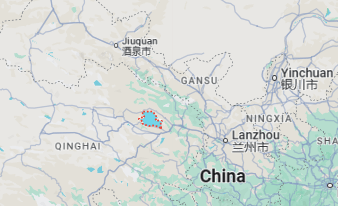
According to the South China Morning Post, the scientists conducted a test across Qinghai Lake in the northwest of the country with a new system based on synthetic aperture lidar (SAL), a type of laser radar capable of constructing two-dimensional or three-dimensional images.
Writers will note that the acronym SAL incorporates the L from the acronym LiDAR. This is APO, or acronym piling on.
Since I cannot read the original report, I don’t know if the researchers actually performed tests with actual faces. But supposedly SAL “detected details as small as 0.07 inches (1.7 millimeters),” based in part upon the benefits of its technology:
[T]his new system operates at optical wavelengths, which have much shorter wavelengths than microwaves and produce clearer images (though microwaves are better for penetrating into materials, because their longer wavelengths aren’t scattered or absorbed as easily).
All the cited articles make a big deal about the 100 kilometer distance’s equivalence to the boundaries of space. But before you get too excited, remember that a space-hosted SAL will be ABOVE any human subjects, and therefore will NOT capture the face at an optimal angle…

…unless you’re lying on the beach sunbathing and therefore facing TOWARD space where all the Chinese satellites can see you.

Oh, and one more thing. The Chinese tests were conducted in optimal weather conditions, and obviously you can’t get the same results in bad weather.
But in the ideal conditions, perhaps you CAN be identified remotely.
(Snowman from Imagen 3)

 Bredemarket