
Have you ever been told to do something because one of your competitors does it?
Or have you ever been told to do something because it worked for an expert?
(A little secret: it didn’t work for the expert either. If it did, the expert would be like Myspace Tom and retire completely, rather than hawking The Expert Method of Success in Whatever.)
You be you. And the people who feel like you do will gravitate to you.
Justin Welsh (usually) trusts himself
Last Saturday, Justin Welsh wrote about learning to trust yourself. Here’s the TL;DR version:
The most profitable decisions I’ve made came from trusting my instincts….
Every time, someone with more success than me said I was wrong. And every time, my intuition ended up being right. Not because I’m the smartest person in the world. I’m not. My intuition is right because I know what works best for me.
We each have a way we want to conduct business (and life). The way that someone else conducts business is literally alien to us. I couldn’t be Larry Ellison if I tried…and Larry Ellison couldn’t be me.
I (usually) trust myself
As an example, take the title of my blog post “Do You Feel Like We Do,” and how wrong it is.
- Let’s start with the first thing I did wrong: I referred to a song title that many of you don’t recognize.
- Now the second thing I did wrong: The reason you don’t recognize the song title is because the song in question is a half-century old. In a world where people discount work that relies on sources predating 2000, this is a fatal move.
- Can I move on to my third grievous error? The primary reason that I used that title is because when I repurpose this text (originally a blog post) as an Instagram post, I know exactly which audio I’m going to use.
- And number four takes the cake. I’m illustrating this piece with a CURRENT picture of Frampton, in which he looks decidedly different when he said…whatever he said on his talk box.
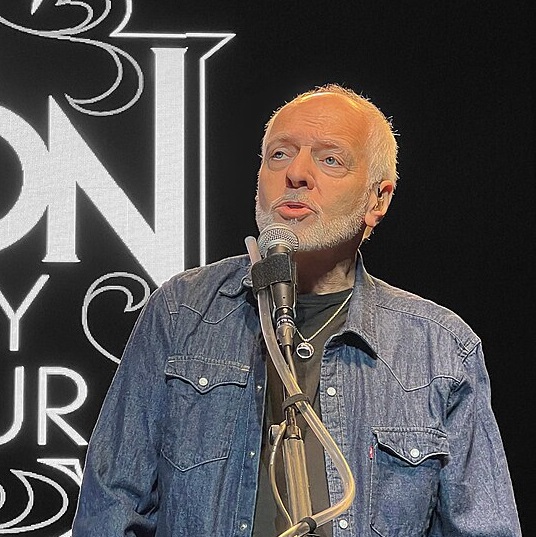
But what’s done is done. So I’m posting this on my blog (and elsewhere) and probably won’t delete later.
What does this mean for YOUR communication?
Now as part of Bredemarket’s content creation process, I will write words for other people.
But I don’t want them sounding like me and talking about wildebeests and citing 50 year old songs.
For example, I won’t write in a Sage tone when my client requires a Maverick tone.
So how do I ensure that the text I write for you sounds like you?
Once I know why you do things, how you do them, and so forth, any resulting content will reflect your unique tone and values.
And your involvement at critical points in the process ensures that the final piece sounds right.
If you can use Bredemarket’s content services, or my proposal or analysis services, contact me.

You won’t see this part of the post on Instagram
As I mentioned above, this blog post is being repurposed on Instagram, but you won’t see this part.
Because Instagram doesn’t like YouTube videos.
Warning: for those who are not familiar with the album “Frampton Comes Alive,” the live version of “Do You Feel Like We Do” is long.

 Bredemarket
1 Comment